

Shipping a car from California to Canada involves more than just booking a carrier—it requires coordination across long distances, compliance with cross-border regulations, and proper vehicle preparation. Whether you’re relocating, selling a vehicle, or sending a car to family, understanding how this process works can help you avoid delays and unexpected costs.
This guide walks you through everything you need to know, from transport methods and pricing factors to customs requirements and choosing the right carrier.
How California to Canada car shipping works
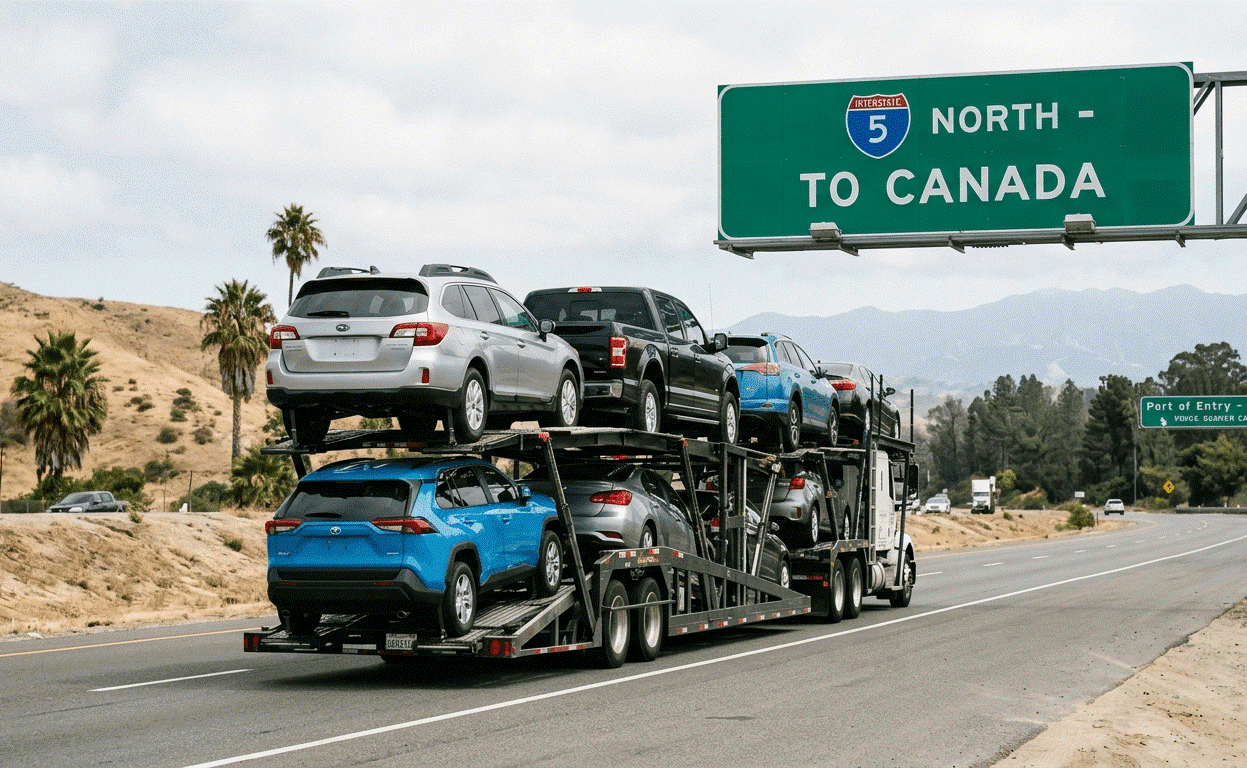
Shipping a vehicle from California to Canada follows a structured process designed to ensure smooth transport and legal compliance.
First, you request a quote and confirm your shipment details, including pickup and delivery locations, vehicle type, and preferred shipping method. Once scheduled, a carrier is assigned to pick up your vehicle from your specified location in California.
The vehicle is then transported via truck to a designated border crossing. Before crossing into Canada, the shipment must go through U.S. export procedures, which typically require submitting documentation to U.S. Customs in advance. After clearance, the vehicle enters Canada and undergoes import processing, including inspections and duties if applicable.
Finally, your vehicle is delivered to your destination in Canada, either directly to your address or to a nearby terminal.
For a broader understanding of cross-border processes, you can explore our cross-border car shipping guides.
Practical tip: Always confirm whether your shipment will be door-to-door or terminal-to-terminal, as this affects both convenience and pricing.
Cost factors that affect this route
Shipping a car from California to Canada can vary significantly in cost depending on several key factors.
Distance and destination
California is far from most Canadian provinces, so distance plays a major role. Shipping to nearby provinces like British Columbia may cost less than shipping to Ontario or Quebec.
Vehicle size and weight
Larger vehicles such as SUVs, trucks, and vans typically cost more to transport due to the space and weight they occupy on the carrier.
Transport type
- Open transport: More affordable and commonly used
- Enclosed transport: Offers added protection but comes at a premium
Seasonal demand
Prices tend to increase during peak moving seasons, such as summer and early winter, when demand for cross-border transport is higher.
Pickup and delivery accessibility
Urban areas are generally easier and cheaper to service than remote or rural locations.
Customs duties and taxes
Depending on the vehicle’s origin and your residency status, you may need to pay import duties, Goods and Services Tax (GST), or provincial taxes.
Practical tip: If your schedule is flexible, consider booking during off-peak months to secure better rates.
To learn more about shipping vehicles within the state before export, visit the California shipping page.
Transit time and border-crossing expectations
Transit time from California to Canada depends on your exact pickup and delivery locations, as well as border processing timelines.
Estimated delivery timelines:
- West Coast Canada (e.g., Vancouver): 5–8 days
- Central Canada (e.g., Toronto): 8–12 days
- Eastern Canada (e.g., Montreal): 10–14 days
Border crossings can introduce delays if documentation is incomplete or inspections are required. U.S. Customs typically requires export paperwork to be submitted at least 72 hours before the vehicle reaches the border.
On the Canadian side, processing times vary depending on whether your vehicle complies with Canadian import regulations and whether additional inspections are needed.
Practical tip: Build a buffer into your schedule to account for possible customs delays, especially during busy seasons or holidays.
Documents and vehicle prep before pickup
Proper documentation and preparation are critical when shipping a car across the border.
Required documents
You will typically need:
- Original vehicle title
- Bill of sale (if applicable)
- Valid government-issued ID
- Letter of authorization (if someone else is handling the shipment)
- Completed customs forms for export and import
If your vehicle is financed or leased, you may also need a lienholder authorization letter.
Vehicle compliance requirements
Canada has strict import regulations. Your vehicle must meet standards set by the Registrar of Imported Vehicles (RIV), which may include:
- Daytime running lights
- Metric speedometer
- Child safety anchor systems
Non-compliant vehicles may require modifications before they can be registered in Canada.
Vehicle preparation checklist
Before pickup:
- Clean your vehicle to allow for accurate inspection
- Remove personal belongings
- Ensure the gas tank is about ¼ full
- Disable alarms
- Check for leaks and mechanical issues
Practical tip: Take clear photos of your vehicle before pickup to document its condition in case of any disputes.
How to choose the right carrier for this lane
Choosing a reliable carrier is one of the most important steps in ensuring a smooth shipping experience.
Look for cross-border experience
Not all carriers are familiar with international shipping requirements. Choose one with proven experience handling U.S.–Canada routes.
Verify licensing and insurance
Ensure the carrier is properly licensed and provides adequate insurance coverage for your vehicle during transit.
Understand pricing transparency
A trustworthy carrier will provide a detailed quote that outlines all costs, including transport fees, customs handling, and potential surcharges.
Check communication and support
Clear communication is essential for cross-border shipments. Choose a company that keeps you informed throughout the process.
Review delivery options
Some carriers offer flexible delivery options, including expedited shipping or guaranteed delivery windows.
Practical tip: Avoid choosing a carrier based solely on the lowest price—reliability and experience are equally important.
Get started with your shipment
Shipping a car from California to Canada doesn’t have to be complicated when you understand the process and plan ahead. By preparing your documents, choosing the right transport method, and working with an experienced carrier, you can ensure a smooth and efficient experience.
If you’re ready to move forward, you can get a cross-border car shipping quote tailored to your route and vehicle.
Primary CTA: Request a quote for your route
In the final step of your journey, working with a trusted provider like US Canada Auto Transport helps ensure your vehicle is handled professionally from pickup in California to delivery anywhere in Canada.
Frequently Asked Questions (FAQ)
How much does it cost to ship a car from California to Canada? Costs typically range from $1,200 to $2,500 or more, depending on distance, vehicle type, transport method, and seasonal demand.
How long does shipping take? Transit times usually range from 5 to 14 days, depending on your destination in Canada and border processing times.
Do I need to be present at pickup or delivery? In most cases, either you or an authorized representative must be present to release and receive the vehicle.
Can I ship personal items inside my car? It’s generally not recommended, as personal items are not covered by carrier insurance and may cause delays at customs.
What happens if my car doesn’t meet Canadian standards? You may need to modify the vehicle to comply with Canadian regulations before it can be registered.