
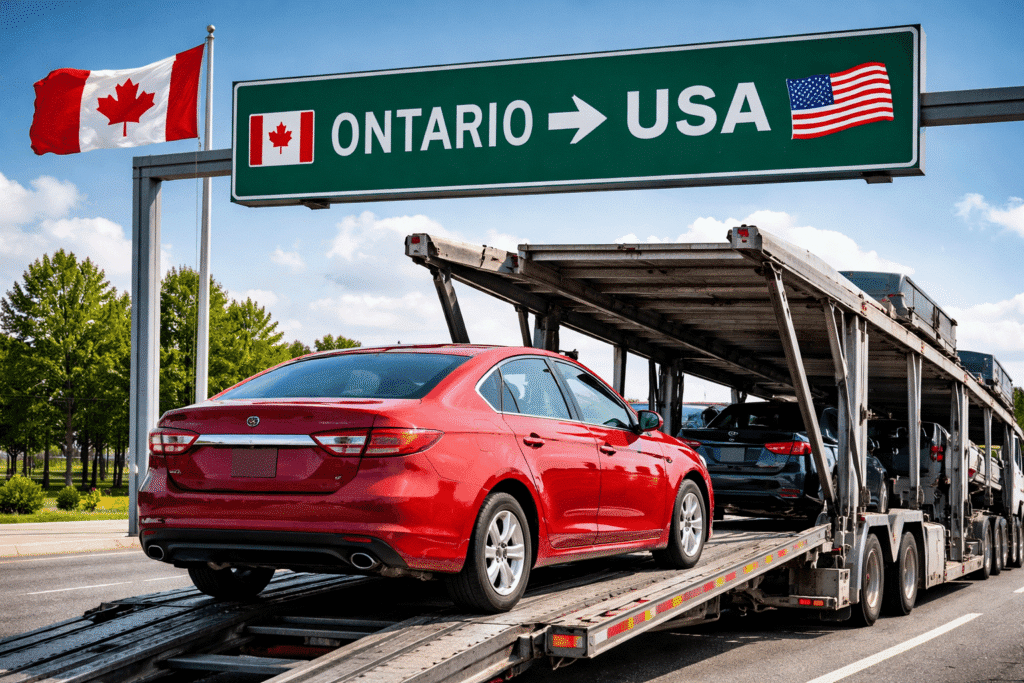
Shipping a car from Ontario to the USA involves more than just arranging transport—it requires proper documentation, understanding US import rules at the Canada–US border, and choosing the right shipping method. Whether you’re relocating, selling a vehicle, or sending a car to family, knowing how the process works can help you avoid delays and unexpected costs.
This guide walks you through everything you need to know, from logistics and pricing to paperwork and carrier selection, so you can ship your vehicle with confidence.
How Ontario to the USA car shipping works
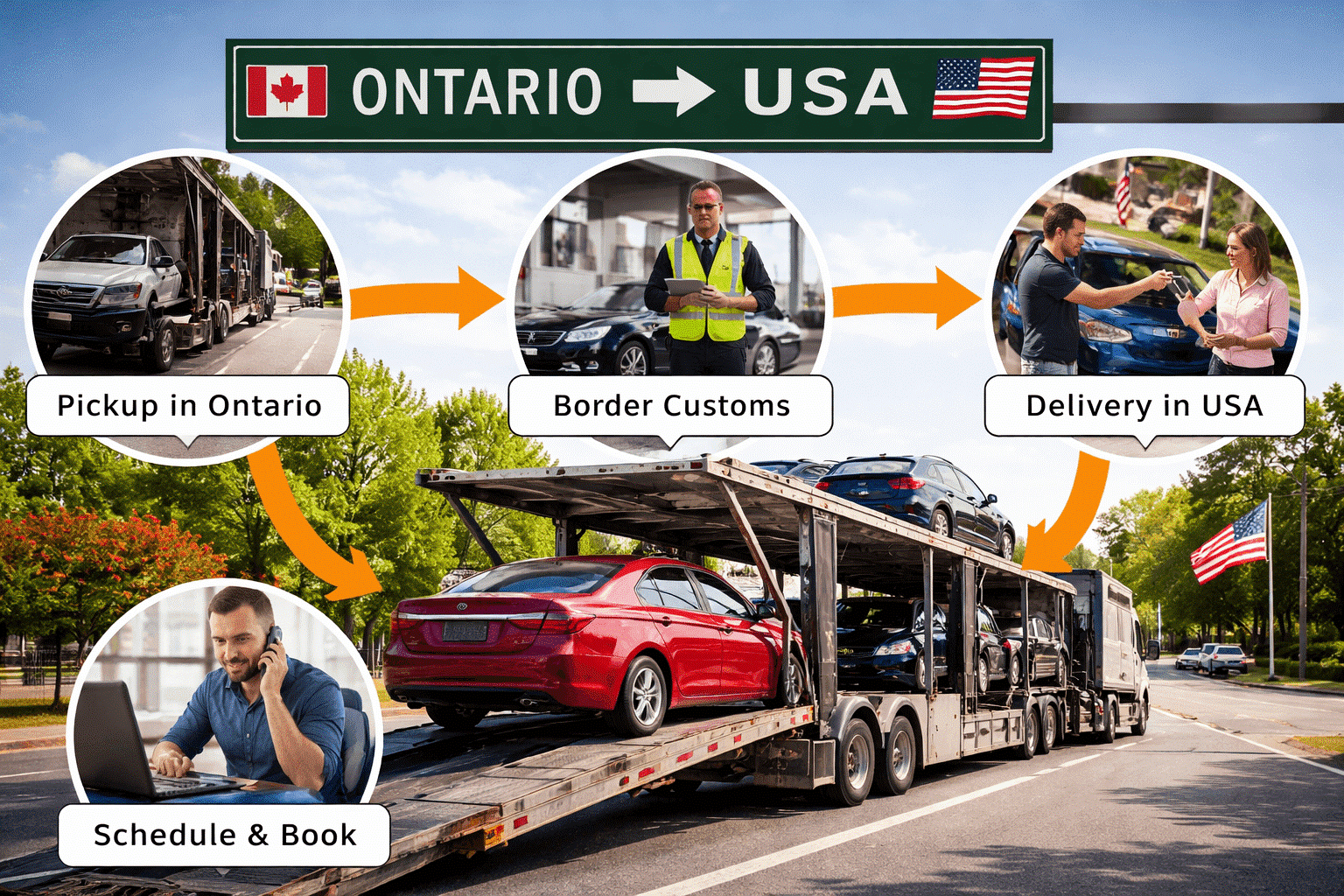
Shipping a car from Ontario to the U.S. follows a structured cross-border process designed to ensure compliance with both Canadian and American regulations.
It typically begins with booking your shipment through a licensed carrier or broker. Once scheduled, your vehicle is picked up from your specified location in Ontario—this could be your home, a dealership, or a designated terminal. The carrier then transports your vehicle toward the U.S. border, usually through Windsor–Detroit, Sarnia–Port Huron, or Fort Erie–Buffalo.
Canada generally doesn’t require an export declaration for vehicles going to the US, so most of the paperwork is on the US side. Your import entry and supporting documents are filed with US Customs and Border Protection (CBP) in advance, and the vehicle must comply with U.S. import regulations. Once cleared, the carrier continues the journey and delivers the vehicle to your destination in the U.S.
You generally have two shipping options:
- Open transport: A cost-effective and commonly used method where your car is shipped on an open trailer.
- Enclosed transport: Offers added protection for high-value or classic vehicles by transporting them in a covered trailer.
If you’re new to cross-border shipping, our guide to how vehicles are shipped between the US and Canada provides additional clarity on the process.
Practical tip: Always confirm whether your pickup and delivery locations are accessible for large carriers. If not, you may need to arrange a nearby meeting point.
Cost factors that affect this route
Shipping costs from Ontario to the U.S. can vary significantly depending on several factors. Understanding these can help you plan your budget more accurately.
1. Distance and destination
The farther your destination is from Ontario, the higher the cost. For example, shipping to nearby states like Michigan or New York will typically cost less than shipping to California or Texas.
2. Vehicle type and size
Larger or heavier vehicles such as SUVs, trucks, and vans require more space and fuel, increasing the overall cost compared to standard sedans.
3. Transport method
- Open transport is more affordable and widely available.
- Enclosed transport costs more due to limited capacity and added protection.
4. Seasonal demand
Shipping rates can fluctuate depending on the time of year. Snowbird season (fall and spring) often sees higher demand for cross-border transport, which may increase prices. See our Canada-to-Florida snowbird guide.
5. Fuel prices and route conditions
Changes in fuel costs and road conditions (such as winter weather in Ontario) can also impact pricing.
6. Pickup and delivery flexibility
If you need expedited shipping or have strict timelines, expect to pay a premium. Flexible scheduling can help reduce costs.
7. Customs, brokerage and tariffs
If you’re importing the vehicle permanently, budget for customs brokerage and any US duty or tariffs. Most vehicles under 25 years old face the 25% Section 232 tariff (applied only to non-US content for USMCA-qualifying vehicles), while vehicles 25 years or older are excluded. See our tariffs page for current rates.
For more location-specific details, visit the Ontario shipping page.
Practical tip: Request multiple quotes and compare what’s included—some lower prices may exclude important services like customs assistance or insurance coverage.
Transit time and border-crossing expectations
Shipping a car from Ontario to the U.S. typically takes anywhere from 3 to 10 days, depending on the destination and logistics.
What affects transit time?
- Distance: Shorter routes to nearby states can take as little as 2–4 days.
- Carrier schedule: Availability and route planning can influence pickup and delivery timing.
- Border processing: Customs clearance may add 1–2 days depending on documentation accuracy and border traffic.
Border-crossing process
Before your vehicle reaches the border, your import documents should be with your carrier or customs broker so the entry can be filed with CBP in advance. Once the vehicle arrives at the border:
- U.S. customs reviews the entry and compliance documents.
- Any duty or tariff owed is paid.
- The carrier proceeds once clearance is granted.
Delays can occur if documents are incomplete or if inspections are required.
Practical tip: Avoid last-minute bookings. Allow enough time for document preparation and submission to prevent unnecessary delays.
Documents and vehicle prep before pickup
Proper documentation is essential when shipping a vehicle across the border. Missing or incorrect paperwork is one of the most common causes of delays.
Required documents
You will typically need:
- Proof of ownership: Your Ontario vehicle permit, clear of liens or accompanied by a lienholder authorization letter.
- Bill of sale (if applicable): Especially important for newly purchased vehicles.
- Government-issued ID or passport: To verify ownership and identity.
- U.S. import forms: EPA Form 3520-1, DOT Form HS-7, and CBP Form 7501 for formal entry.
- Manufacturer’s letter of compliance: Confirms your Canadian-market vehicle meets US standards. See our compliance letter guide.
If your vehicle does not meet U.S. standards, a Registered Importer may need to modify it before import. Vehicles 25 years or older are exempt from EPA and DOT standards. For the full process, read how to import a car from Canada to the US.
Vehicle preparation checklist
Before pickup, ensure your vehicle is ready for transport:
- Clean the car to allow accurate inspection.
- Remove all personal belongings and toll tags.
- Check for leaks and mechanical issues.
- Leave the fuel tank about ¼ full.
- Disable alarms to avoid disruptions during transport.
A condition report will be completed at pickup and delivery to document the vehicle’s state.
Practical tip: Take photos of your vehicle from multiple angles before pickup. This provides added peace of mind and documentation in case of disputes.
How to choose the right carrier for this lane
Choosing the right carrier is critical for a smooth shipping experience. Not all transport providers specialize in cross-border shipping, so it’s important to select one with the right expertise.
Key factors to consider
- Cross-border experience: Look for carriers familiar with Ontario–U.S. routes and customs procedures. This reduces the risk of delays and compliance issues.
- Licensing and insurance: Ensure the carrier is properly licensed for cross-border transport, including a valid USDOT number, and carries adequate cargo insurance.
- Transparent pricing: A reliable provider offers clear, detailed quotes without hidden fees.
- Customer support: Responsive communication is essential, especially when coordinating documentation and tracking your shipment. Check customer reviews.
- Transport options: Choose a carrier that offers both open and enclosed transport so you can select the best option for your vehicle.
Red flags to avoid
- Extremely low quotes that seem too good to be true
- Lack of clear contract terms
- Poor or inconsistent communication
Practical tip: Ask whether the carrier handles customs documentation or if you need to manage it yourself. Full-service providers can simplify the process significantly. When you’re ready, get a cross-border car shipping quote tailored to your route and vehicle.
FAQ: Shipping a Car From Ontario to the USA
How much does it cost to ship a car from Ontario to the USA?
Transport typically costs $700 to $2,000 or more depending on distance, vehicle type, and transport method. Shorter routes to Michigan or New York are more affordable, while long-distance or enclosed shipping increases the price. Customs fees and any tariffs are separate.
How long does shipping take?
Transit time usually falls between 3 and 10 days. Routes to nearby states can take as little as 2 to 4 days. Delays may occur due to weather, scheduling, or border processing.
Will I pay a US tariff when importing a car from Ontario?
It depends on the vehicle. Most vehicles under 25 years old are subject to the 25% Section 232 tariff, applied only to the non-US content of USMCA-qualifying vehicles built in Canada. Vehicles 25 years or older are excluded. See our tariffs page for current rates.
What documents are required for cross-border shipping?
You’ll need proof of ownership (your Ontario vehicle permit), ID, a bill of sale if applicable, EPA Form 3520-1, DOT Form HS-7, CBP Form 7501 for formal entry, and a manufacturer’s letter of compliance for Canadian-market vehicles. See our US-Canada customs documents guide.
Do I need to be present at pickup or delivery?
In most cases, yes. If you cannot be present, you can assign a trusted representative with a signed letter of authorization.
Can I ship personal items inside my car?
No. Remove all personal belongings before pickup. Personal items aren’t covered by carrier insurance and can cause problems at customs.
Can I bring my Ontario car into the US temporarily?
Yes. Nonresidents can import a vehicle duty-free for personal use for up to one year, as long as it isn’t sold and is exported within that time. See US Customs rules for Canadian snowbirds.
Ready to Ship Your Car From Ontario to the USA?
Get a free, no-obligation quote for your Ontario-to-US route.
We’ll handle pickup anywhere in Ontario, the border crossing and customs coordination, and delivery to your US address.