
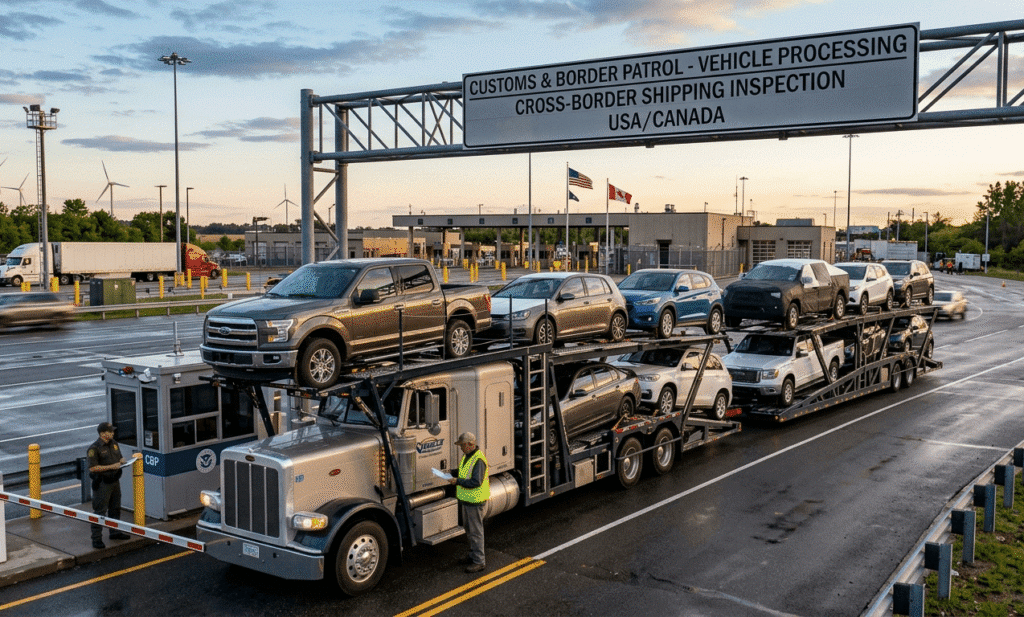
When you decide to ship your car between the United States and Canada, the final price rarely matches the first number you see online. Cross-border moves involve more variables than a simple domestic haul—customs rules, currency shifts, and international logistics all play a role. Understanding exactly what drives those costs helps you budget realistically and prevents sticker shock when the invoice arrives. In this guide, you’ll learn the five biggest factors that shape your quote so you can plan smarter and move with confidence.
Distance, route density, and border crossing choice

The mileage between your pickup and delivery point remains the single largest driver of price. A 500-mile run from Detroit to Toronto costs far less than a 2,500-mile journey from Miami to Vancouver simply because the carrier spends fewer hours on the road and burns less fuel. Yet distance alone doesn’t tell the full story. Route density matters just as much: corridors with steady traffic—think Buffalo to Toronto or Seattle to Vancouver—enjoy lower rates because carriers keep trucks full in both directions and compete aggressively for loads.
Your choice of border crossing can swing the total by hundreds of dollars. Popular gateways such as the Ambassador Bridge or Peace Arch process thousands of vehicles daily, so carriers already have streamlined procedures and predictable wait times. Remote crossings in rural areas often add extra fees for pilot cars, longer inspection windows, or even overnight storage if paperwork slows things down. Practical tip: plug your exact addresses into a border wait-time app before you request quotes. Shifting your pickup or drop-off by 30 miles to a high-volume crossing sometimes cuts your price without changing your overall travel plans.
Vehicle size, operability, and trailer type
Not every car travels the same way. A compact sedan slides onto a multi-car hauler with room to spare, while a full-size pickup or lifted SUV eats up extra deck space and may require a dedicated trailer spot. Carriers factor in both dimensions and weight, so you’ll pay more for anything that limits how many other vehicles fit on the same load.
Operability creates another clear split. If your car starts, drives, and brakes normally, loaders roll it on and off quickly at minimal extra charge. An inoperable vehicle—whether it’s a project car with a dead battery or a salvage title—needs winches, dollies, or even a flatbed, which adds labor and insurance risk. The difference often runs $200 to $500 depending on the route.
Trailer choice gives you a final lever. Open transport is the default for most shipments because it keeps costs down and fits standard haulers. Enclosed trailers protect against weather and road debris, but they also travel solo or in smaller groups, so rates climb 30 to 60 percent higher. Practical tip: measure your vehicle’s exact length, width, and height before you shop. If you own a luxury or classic car, calculate the premium for enclosed service against the peace of mind it delivers—sometimes the math favors open transport with a quality tarp.
Seasonality and snowbird demand
Cross-border shipping prices rise and fall with the calendar. Snowbirds—Canadians heading south each fall and Americans returning north each spring—create predictable surges. October through December sees heavy southbound traffic as retirees move their daily drivers to Florida or Arizona; March through May reverses the flow. Carriers raise rates during these windows because demand outstrips truck availability, and you compete with thousands of other seasonal shippers.
Weather adds another layer. Northern routes can close or slow dramatically during heavy snow or ice storms, forcing carriers to reroute or delay. Summer construction zones on major highways have the same effect. The quietest—and often cheapest—periods fall between mid-January and early March or late June and August, when fewer people move vehicles. Practical tip: if your schedule is flexible, book 60 to 90 days ahead during shoulder seasons. You’ll lock in lower rates and give carriers time to build efficient loads around your shipment.
Pickup, delivery, and paperwork complexity
Door-to-door service sounds convenient, yet it costs more than terminal-to-terminal because the driver must navigate residential streets, wait for you to be home, and sometimes make multiple attempts. Terminal drops at major hubs let you handle the final leg yourself—renting a trailer or using a friend with a ramp—and shave $150 to $300 off the quote.
Paperwork complexity raises the price in ways many shippers overlook. Cross-border moves require export declarations from the U.S. side and import paperwork on the Canadian side, including proof of ownership, VIN verification, and sometimes duty calculations if the vehicle fails certain age or value rules. Missing or incomplete documents trigger storage fees at the border or force the carrier to hold the load while you scramble. If you’re shipping a leased vehicle, you’ll also need lender release letters.
Practical tip: create a digital folder with your title, registration, bill of sale, and any lien-release paperwork at least two weeks before pickup. Double-check Canadian import rules for your specific province so you avoid last-minute surprises that delay the entire move.
Check here and discover how our cross-border car shipping cost hub helps.
How to compare quotes the right way
Requesting three or four quotes feels smart, but only if you compare them on equal footing. Start by giving every carrier identical details: exact pickup and delivery addresses, vehicle make/model/year, operable status, and desired trailer type. Vague requests produce vague numbers that look attractive until hidden fees appear.
Next, read the fine print. Does the quote include full door-to-door service, or just transport? Is cargo insurance part of the base rate or an add-on? Ask about fuel surcharges, border-crossing fees, and storage policies if delays occur. A $200 lower quote that excludes insurance or requires you to drive to a distant terminal may end up costing more. Finally, check the carrier’s track record—on-time performance, handling of inoperable vehicles, and responsiveness to questions—rather than price alone. Practical tip: create a simple spreadsheet with columns for total cost, included services, estimated transit days, and any extra conditions. The lowest number rarely wins once you line everything up side by side.
Get a cross-border car shipping quote and see real-time pricing tailored to your situation.
FAQs
How much does distance really add to the price? Expect roughly $1.00 to $1.80 per mile for most standard open-transport loads, though high-density routes often beat that range. A 1,000-mile trip typically lands between $1,200 and $1,800 before any seasonal or vehicle-specific adjustments.
Will an inoperable car always cost hundreds more? Yes in most cases, because extra equipment and labor are required. However, combining an inoperable shipment with other vehicles on the same route can sometimes reduce the premium if the carrier already has a winch-equipped truck scheduled.
Does choosing enclosed transport ever save money in the long run? It can if your car is brand-new, vintage, or has sensitive paint. The higher upfront cost often offsets potential repair bills from road debris or weather exposure during a long winter crossing.
When is the absolute cheapest month to ship? Mid-January through February usually offers the lowest rates, as snowbird traffic has slowed and summer vacation demand has not yet begun. Avoid the two weeks before and after major holidays.
Do I need to pay Canadian duties on my personal vehicle? Most personal vehicles that you have owned for at least six months qualify for duty-free import under the Canada-U.S. Free Trade Agreement, but you must still file the proper forms and pay any provincial sales tax.
Can I lower my quote by changing the pickup or delivery location? Often yes. Moving either address 20–50 miles to a major terminal or high-volume border crossing frequently drops the rate without adding meaningful inconvenience.
Cross-border car shipping prices reflect a mix of distance, vehicle details, timing, logistics, and paperwork that you can control once you know the levers. Review your route and vehicle specs, choose the right season, and compare quotes using the checklist above. You’ll arrive at a number that feels fair instead of surprising.
For a complete breakdown of current rates and to see how these factors apply to your exact move, check our US-Canada car shipping cost guide. US Canada Auto Transport specializes in smooth, transparent moves across the border so you can focus on the road ahead instead of the paperwork behind.