

Importing a vehicle from Canada into the United States can be a smart move—whether you’re relocating, purchasing a vehicle, or expanding your business fleet. But how do you make sure cross-border shipping goes smoothly without delays, penalties, or unexpected costs?
Understanding the process ahead of time is key. From documentation and compliance requirements to border procedures and transport logistics, each step matters. This guide walks you through exactly how to import a car from Canada to the US, so you can confidently ship your vehicle across the border.
Who Can Import a Car From Canada to the US
Importing a car from Canada to the US is generally allowed for US citizens, permanent residents, and even businesses—as long as the vehicle meets US regulations. If you’re relocating or purchasing a vehicle from Canada, you can legally import it provided you follow the proper procedures.
The most important requirement is compliance with US standards. Vehicles must meet regulations set by the Environmental Protection Agency (EPA) and the Department of Transportation (DOT). Many vehicles manufactured for the Canadian market are similar to US models, but not all are automatically compliant.
If the vehicle was originally built to meet US standards, the process becomes significantly easier. In most cases, you’ll need a letter of compliance from the manufacturer confirming this—see our Toyota and Kia compliance letter guide for an example. If the vehicle was not built to US standards, modifications or additional certifications may be required before entry is allowed. Vehicles 25 years or older are exempt from EPA and DOT compliance requirements.
For a broader overview of cross-border vehicle movement, refer to our US-Canada car import guide.
Documents Required Before the Vehicle Moves
Preparation is where most successful imports begin. Missing even one document can delay your shipment or result in denied entry at the border.
You’ll need the original vehicle title to prove ownership. If there is a lien on the vehicle, you must provide written authorization from the lienholder. A bill of sale is also required, especially if the car was recently purchased.
Identification is essential, so be prepared with a valid passport or government-issued ID. In addition, you’ll need EPA Form 3520-1 and DOT Form HS-7 to confirm the vehicle meets US environmental and safety standards, along with the manufacturer’s letter of compliance where required.
On the Canadian side, most vehicles going to the US don’t need an export declaration, so the key paperwork happens when the vehicle is entered with US Customs and Border Protection. See our US-Canada customs documents page for the full checklist.
Working with a professional auto transport company can simplify this process significantly. They can help verify paperwork, ensure compliance, and coordinate timing so nothing is missed.
Step-by-Step Border and Customs Process
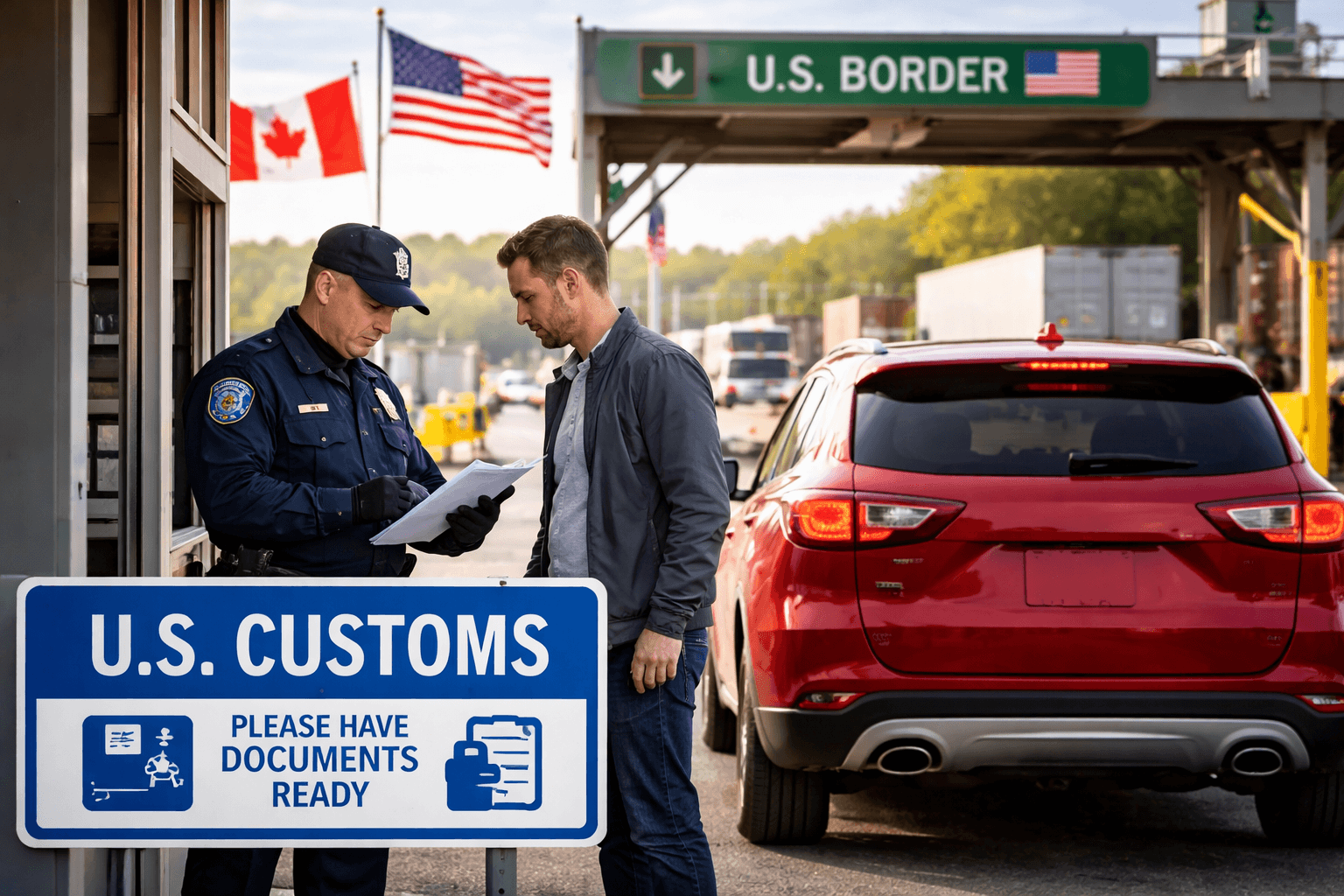
The actual import process involves several coordinated steps between Canadian and US authorities. Understanding this flow can help you avoid costly delays.
First, prepare the vehicle and its documents for the crossing. For most vehicles leaving Canada for the US, no Canadian export declaration is required, but the title, compliance letter and US import forms should all be ready before pickup.
Next comes transportation to the US border. Whether you choose open or enclosed transport, timing and coordination are critical to ensure all documents are ready upon arrival. See how cars are shipped between the USA and Canada.
At the US border, customs officials will review your documents, including the title, bill of sale, and EPA/DOT forms. They will verify that the vehicle complies with US regulations and calculate any applicable duties or tariffs.
After clearance, the vehicle is officially imported and can proceed to its final destination. Depending on your state, you may also need to complete registration and inspection requirements locally.
For region-specific logistics, you can explore our Canadian province shipping pages to better understand route options and transit considerations.
Typical Duties, Taxes, and Carrier Fees
One of the most common questions is: how much does it cost to import a car from Canada to the US?
- Vehicles built in North America: Vehicles that qualify under USMCA are free of regular duty. However, the 25% Section 232 tariff can apply to the vehicle’s non-US content.
- Vehicles built outside North America: Regular duty is typically 2.5% of the vehicle’s value for passenger cars. Vehicles under 25 years old also face the 25% Section 232 tariff.
- Vehicles 25 years or older: Excluded from Section 232, though regular duty and, for some countries of origin, a Section 301 tariff can still apply.
Tariff rules have changed several times since 2025, so check our tariffs and import fees page for current rates.
Transport costs will vary depending on distance, vehicle type, and shipping method. Open transport is more affordable, while enclosed transport offers added protection at a higher price.
Additional costs may include customs brokerage fees, documentation handling, and potential state taxes or registration fees once the vehicle arrives.
It’s important to budget for all these elements upfront to avoid surprises. Getting a detailed quote from a trusted provider ensures you understand the full cost before committing.
Common Mistakes That Delay Cross-Border Delivery
Even small errors can cause significant delays when importing a vehicle. One of the most frequent issues is incomplete or incorrect documentation. Missing forms, mismatched details, or unsigned paperwork can result in the vehicle being held at the border.
Another common mistake is failing to confirm vehicle compliance. Not all Canadian vehicles meet US standards, and assuming they do—or arriving without the manufacturer’s letter of compliance—can lead to unexpected complications.
Timing is another critical factor. Arriving at the border before your documents are complete can delay the entire process.
Some importers also underestimate the complexity of customs procedures. Trying to manage everything without professional assistance can increase the risk of errors and delays.
Working with an experienced auto transport company helps you avoid these pitfalls. From document verification to logistics coordination, expert support ensures a smoother and faster import process.
FAQ About Importing a Car From Canada to the US
How long does it take to import a car from Canada to the US?
The process can take anywhere from a few days to a couple of weeks, depending on documentation readiness, transport distance, and border processing times.
Do all Canadian vehicles meet US standards?
No, not all vehicles are automatically compliant. You must verify EPA and DOT requirements before importing, usually with a letter of compliance from the manufacturer.
What is a letter of compliance?
It’s a letter from the vehicle’s manufacturer confirming that a Canadian-market vehicle meets US safety and emissions standards. Most Canadian vehicles need one to be imported into the US. See our Toyota and Kia compliance letter guide for an example.
Is import duty always required?
Not always. Vehicles that qualify as North American under USMCA are free of regular duty, though the Section 232 tariff can apply to their non-US content. Vehicles built outside North America pay 2.5% duty, and those under 25 years old also face the 25% Section 232 tariff. See our tariffs page for current rates.
Are cars over 25 years old easier to import into the US?
Yes. Vehicles 25 years or older are exempt from EPA and DOT compliance requirements and from the Section 232 tariff, though regular duty can still apply.
Do I need to notify Canadian customs before exporting a car to the US?
For most vehicles going to the US, Canada does not require an export declaration. The main paperwork happens on the US side, when the vehicle is entered with US Customs and Border Protection.
Can I drive the car across the border myself?
Yes, but you still need to complete all export and import requirements. Using a transport company can simplify the process.
What happens if my paperwork is incomplete?
Incomplete documentation can delay or even prevent entry at the border. It’s essential to double-check all requirements before shipping.
Ready to Import Your Car With Confidence?
Importing a car from Canada to the US may seem complex at first, but when you understand the steps, prepare the right documents, and plan ahead, the process becomes much more manageable. From confirming vehicle eligibility to navigating customs and handling final delivery, every stage plays a role in ensuring a smooth and delay-free experience.
Instead of risking costly mistakes or unexpected hold-ups, working with a reliable cross-border auto transport provider gives you peace of mind and efficiency from start to finish. When you’re ready to move your vehicle, get a cross-border car shipping quote and let experienced professionals handle the details for you.
Ready to Ship Your Vehicle Across the Border?
Get a free, no-obligation quote, and we’ll handle everything from pickup to delivery.