
Importing a vehicle into the United States can be a smooth process—or a frustrating one—depending on how well you prepare your paperwork. If you show up at the border without the right documents, you risk delays, additional inspections, or even refusal of entry. On the other hand, having everything organized ahead of time allows your shipment to move efficiently and keeps your timeline on track.
This guide walks you through the exact documents you need, how to prepare them, and how to avoid common mistakes when importing a car into the U.S. If you’re still planning your full move, you can review our US-Canada car import guide for a broader overview.
Why import paperwork matters at the US border
When your vehicle crosses into the United States, customs officers are responsible for verifying ownership, compliance, and eligibility for import. Every document you provide supports one of those checks. Missing or incorrect paperwork creates uncertainty—and uncertainty leads to delays.
You need to understand that U.S. Customs and Border Protection (CBP) is strict about documentation accuracy. Even small discrepancies, such as mismatched names or VIN errors, can trigger additional inspections. These inspections take time and may involve storage fees or rescheduling your delivery.
Proper documentation also ensures your vehicle meets U.S. safety and environmental standards. Without proof of compliance, your car may be denied entry or require costly modifications before it can be legally driven.
The key takeaway is simple: your paperwork is not just a formality—it’s the foundation of your entire import process.
Core documents you will need before pickup
Before your vehicle is even scheduled for transport, you should have all essential documents ready. These are the core items required for nearly every cross-border vehicle import into the U.S.
First, you need the original vehicle title. This document proves ownership and must be clear of liens unless accompanied by a lienholder authorization letter. If the title is missing or incomplete, your shipment may be delayed before it even begins.
Next, you need a bill of sale. This document confirms the transaction details, including purchase price, buyer, and seller. Customs may use this information to assess duties or verify the legitimacy of the import.
You will also need a valid government-issued ID, such as a passport. This ensures that the importer’s identity matches the ownership documents. If someone else is handling the shipment on your behalf, a notarized authorization letter may be required.
Proof of insurance is another important document. While it may not always be required at the border, having coverage in place protects you and may be necessary for final registration in the U.S.
Finally, ensure you have the vehicle identification number (VIN) clearly documented and consistent across all paperwork. The VIN is the primary reference point used by customs, carriers, and regulatory agencies.
If your vehicle is coming from specific regions, reviewing Canadian departure province pages can help you understand local requirements that may affect your documents.
Customs forms and compliance paperwork to review
In addition to ownership documents, you must complete specific U.S. import forms. These forms confirm that your vehicle meets federal standards and is eligible for entry.
One of the most important is the CBP Entry Form (CBP Form 7501). This form records the details of your import and is used by customs to process your vehicle into the country. It must be accurate and complete to avoid delays.
You will also need the Environmental Protection Agency (EPA) Form 3520-1. This document certifies that your vehicle complies with U.S. emissions standards. If your vehicle was originally manufactured for the U.S. market, compliance is usually straightforward. If not, additional documentation or modifications may be required.
Another key form is the Department of Transportation (DOT) Form HS-7. This form confirms that your vehicle meets U.S. safety standards. Similar to EPA requirements, vehicles built to U.S. specifications typically pass without issue, while non-compliant vehicles may need modifications.
Some imports may require a manufacturer’s letter of compliance. This letter verifies that your vehicle meets all applicable U.S. standards. Without it, you may face delays or be required to work with a registered importer.
Carefully reviewing and completing these forms ahead of time significantly reduces the risk of issues at the border.
How to avoid delays with title and VIN issues
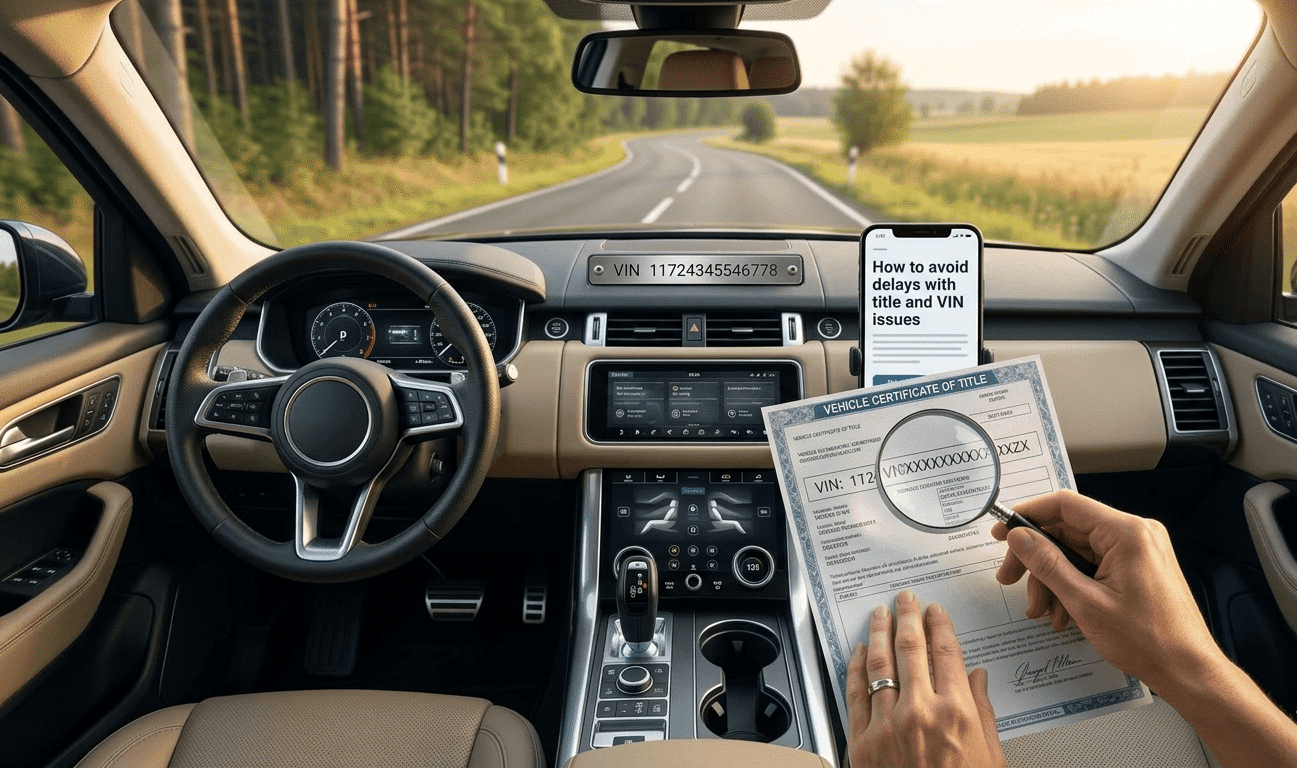
Title and VIN discrepancies are among the most common reasons for delays in vehicle imports. Fortunately, these issues are also among the easiest to prevent with proper preparation.
Start by ensuring that the name on the title matches your identification exactly. Even small differences—such as missing middle initials—can cause complications. If the vehicle was recently purchased, confirm that the title has been properly transferred before shipping.
Next, verify that the VIN is accurate and consistent across all documents. This includes the title, bill of sale, and customs forms. A single incorrect digit can lead to additional inspections or rejection at the border.
You should also check for liens on the title. If a lien exists, you must provide written authorization from the lienholder allowing the vehicle to be exported. Without this, customs may not allow the vehicle to leave Canada or enter the U.S.
Timing is another important factor. U.S. customs often requires advance notice before the vehicle arrives at the border. Submitting your documents ahead of time ensures they can be reviewed without delaying your shipment.
Taking the time to double-check these details can save you from costly delays and unnecessary stress.
When to use a carrier that handles cross-border moves
Importing a vehicle involves more than just paperwork—it requires coordination between customs, transport providers, and regulatory agencies. This is where choosing the right carrier makes a significant difference.
A carrier experienced in cross-border shipping understands the documentation requirements and helps ensure everything is prepared correctly before your vehicle moves. This reduces the likelihood of errors and keeps your timeline intact.
You also benefit from guidance throughout the process. Instead of navigating forms and regulations on your own, you receive support in organizing documents, scheduling shipments, and meeting compliance requirements.
Another advantage is efficiency. Experienced carriers know how to coordinate with border officials and handle inspections if needed. This minimizes delays and helps your vehicle reach its destination faster.
If you want a smoother experience, working with a professional team is one of the most effective ways to avoid complications. When you’re ready to move forward, you can get a cross-border car shipping quote tailored to your route.
Practical tips to keep your import process smooth
Preparation is your biggest advantage when importing a vehicle into the U.S. Start by organizing all documents in a single folder—both digital and physical copies. This makes it easy to access everything when needed.
Double-check every detail before submission. Names, VIN numbers, and dates should match across all documents. Small inconsistencies can cause major delays.
Plan ahead for timing. Submit required documents to customs in advance and confirm any deadlines with your carrier. Last-minute submissions often lead to unnecessary stress.
Communicate clearly with your transport provider. Make sure they have all required documents and understand your timeline. A well-informed carrier can help you avoid common pitfalls.
Finally, stay informed. Regulations can change, and requirements may vary depending on your specific situation. Keeping up to date ensures you remain compliant throughout the process.
Request a quote for your route
Importing a car into the U.S. doesn’t have to be complicated when you have the right guidance and preparation. With the correct documents in place and an experienced carrier handling your shipment, you can avoid delays and complete your import with confidence.
If you’re ready to move your vehicle across the border, now is the time to take the next step.
FAQs
1. Are there import taxes or duties when bringing a car into the US?
In many cases, vehicles manufactured in North America may qualify for duty-free import under trade agreements. However, if your car was built outside North America, you may need to pay import duty, typically around 2.5% of the vehicle’s value. It’s important to confirm your vehicle’s origin before shipping.
2. Can you import a car into the US temporarily instead of permanently?
Yes, temporary imports are allowed under certain conditions, such as for tourism, work assignments, or events. However, the vehicle must not be sold in the US and usually must leave the country within a specified timeframe.
3. What happens after your car clears US customs?
Once your vehicle clears customs, you still need to complete state-level requirements. This includes registering the vehicle, obtaining a US title, and meeting local emissions or inspection rules depending on the state where you plan to use the car.
4. Can you import a financed or leased vehicle into the US?
Yes, but you must get written permission from the lender or leasing company. Without this authorization, the vehicle may not be allowed to cross the border since you are not the full legal owner.
5. How long does the car import process usually take?
The timeline can vary depending on document preparation, customs clearance, and transport distance. In general, the process can take anywhere from a few days to a couple of weeks. Delays are more likely if documents are incomplete or inspections are required.