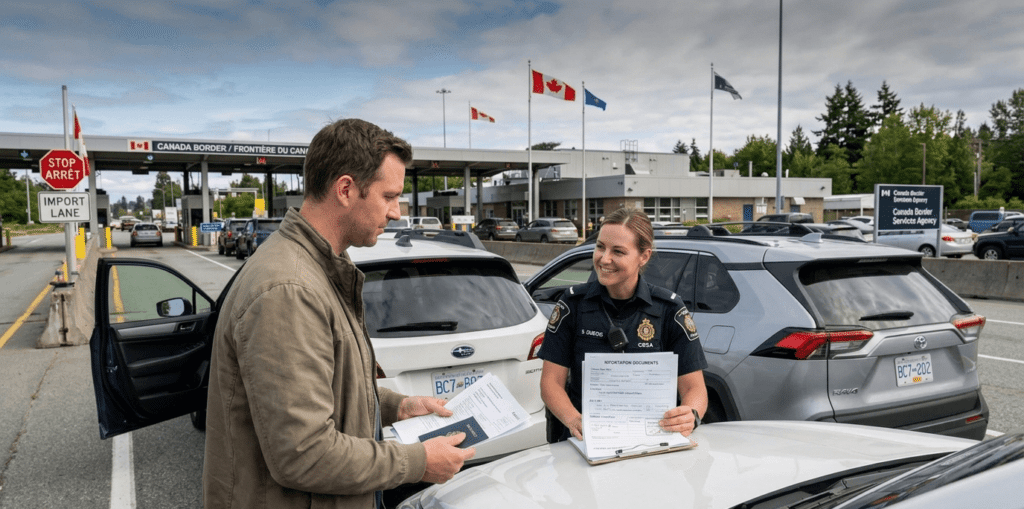
Importing a car into Canada from the United States requires careful preparation. Missing or incomplete paperwork can cause delays at the border or even prevent your vehicle from entering the country. Understanding the documents required, along with how to handle customs, admissibility, and recalls, ensures a smooth, stress-free process. This guide breaks down exactly what you need, along with practical tips to avoid common pitfalls.
Why import paperwork matters at the Canadian border
Border officials enforce strict regulations to protect Canadian safety standards, emissions requirements, and ownership rights. Proper documentation is your assurance that your car can enter the country without delays. Without complete paperwork, you may face:
- Vehicle seizure or fines: Officials can detain vehicles if documentation is incomplete or invalid.
- Extended processing times: Missing forms often result in hours-long delays at the border.
- Legal liability: Importing a car without meeting regulations can lead to compliance issues with Transport Canada.
Your paperwork demonstrates proof of ownership, adherence to safety and emissions standards, and compliance with customs requirements. Preparing documents in advance ensures you can cross the border efficiently and legally.
For more information about planning your import, check our US-Canada car import guide.
Core documents you will need before pickup
Before your vehicle leaves the United States, make sure you have these essential documents ready. Each plays a critical role in verifying ownership and legality:
- Vehicle Title
Your vehicle title proves you are the legal owner. If your car is financed, obtain a lien release from your lender. Without a clear title, Canadian customs cannot process your import. - Bill of Sale
This document confirms the purchase price and transfer of ownership. It is required for calculating duties and taxes at the Canadian border. Include signatures from both the buyer and seller for validity. - Registration Papers
These provide proof that your vehicle is currently registered in the United States. Border officials use them to confirm the vehicle’s history and legal status. - Photo ID
A government-issued ID, such as a driver’s license or passport, is required for identification purposes. Ensure it is current and matches the name on your title and bill of sale. - Recall Clearance Letter
Transport Canada requires all imported vehicles to be free of unresolved safety recalls. Contact the manufacturer to obtain a recall clearance letter before shipping. - Export Declaration (if required by the U.S.)
Certain vehicles may require filing an export declaration with U.S. Customs. Check with the border office or your carrier to confirm.
By gathering these documents before pickup, you reduce the likelihood of border complications and ensure your vehicle is legally recognized for import.
You can also explore specific requirements by state through our US pickup state pages to ensure compliance with local laws before pickup.
Admissibility and customs paperwork to review
Once your vehicle arrives at the Canadian border, customs documentation is crucial. These forms determine whether your car meets legal and safety requirements:
- Registrar of Imported Vehicles (RIV) Form
This form ensures your vehicle complies with Canadian safety standards. It is mandatory for all vehicles not originally manufactured for the Canadian market. - Canada Customs Declaration
Declare your vehicle’s value accurately to avoid fines or reassessment. Duties and taxes are based on this declared value. - Proof of Insurance
Canadian authorities require proof that your car is insured before you can drive it on Canadian roads. Contact your insurer to confirm coverage during and after the import process. - Vehicle Import Form (Form 1)
This document is issued by the Canada Border Services Agency (CBSA) and must be presented at the time of import. It includes vehicle details, ownership information, and an import declaration. - Payment of Duties and Taxes
Be prepared to pay the Goods and Services Tax (GST), any applicable provincial taxes, and duties based on your vehicle type and value. Payment receipts should be kept with your paperwork for verification.
Reviewing these documents in advance allows you to anticipate potential issues and ensures compliance with Canadian regulations. A carrier experienced in cross-border transport can help verify that all forms are correct.
How to avoid delays with title and recall issues
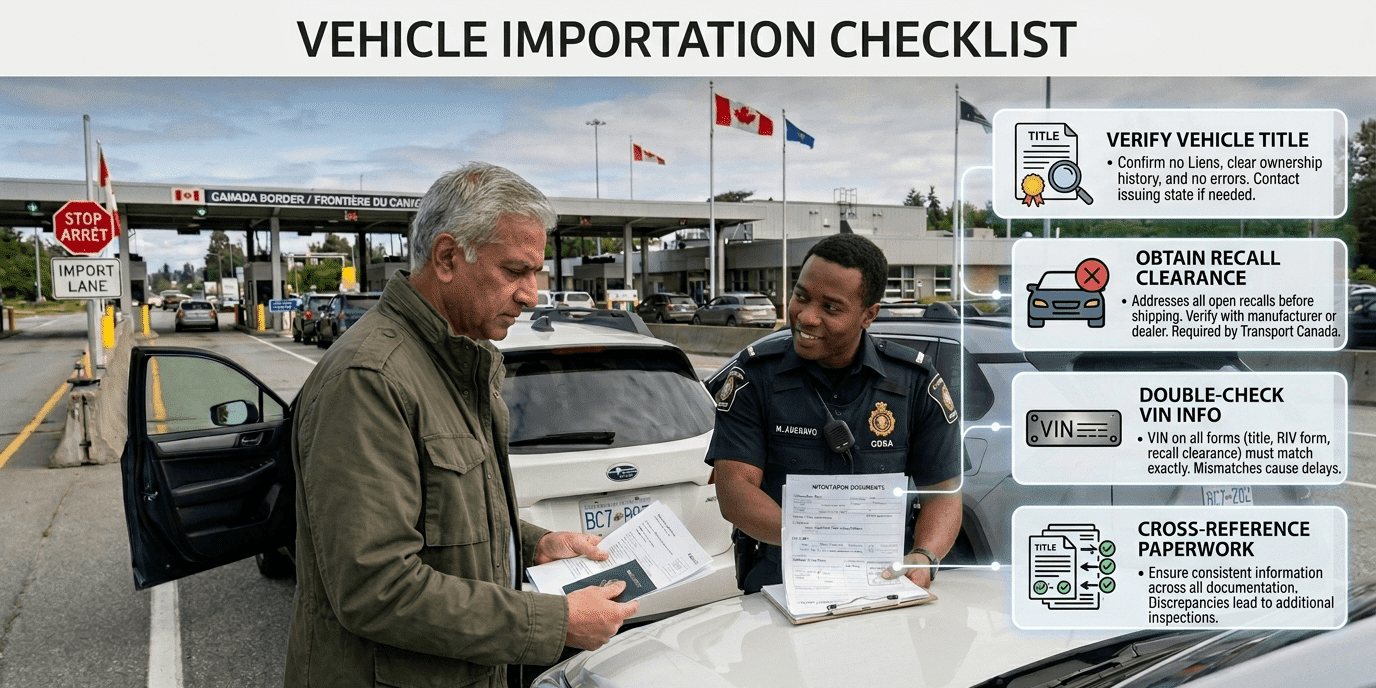
Delays at the border are often caused by common issues such as unclear titles or unresolved recalls. To prevent these:
- Verify the title: Confirm there are no liens or errors. If your title lists a previous owner incorrectly, contact the issuing state before shipping.
- Obtain recall clearance: Contact the manufacturer or dealership to ensure all recalls are addressed. Transport Canada will reject vehicles with open recalls.
- Double-check VIN information: Ensure the vehicle identification number (VIN) on all forms matches your car. Mistakes can cause unnecessary delays.
- Cross-reference paperwork: Compare your title, bill of sale, and registration documents for consistent information. Inconsistencies will trigger additional inspection.
Following these steps reduces the chance of border delays and ensures your vehicle arrives ready for registration in Canada.
When to use a carrier that handles cross-border moves
Using a professional carrier experienced in U.S.-Canada vehicle transport can simplify the import process. Here’s why:
- Expert knowledge: Carriers understand both U.S. and Canadian regulations, helping you avoid documentation errors.
- Time savings: They handle pickup, transportation, and drop-off, minimizing your involvement.
- Reduced stress: Professional carriers manage customs paperwork, safety inspections, and recall verification, preventing delays.
- Insurance coverage: Many carriers provide insurance during transport, protecting you in case of damage or loss.
If you want a hassle-free import experience, consider working with a carrier that specializes in cross-border auto transport. Get a cross-border car shipping quote to see the cost and options for your route.
Practical Tips for a Smooth Import
- Start early: Begin gathering documents several weeks before your planned shipment.
- Keep copies: Carry both digital and printed copies of all paperwork.
- Communicate with your carrier: Confirm which documents they need before pickup to prevent last-minute surprises.
- Check provincial requirements: Some provinces have additional inspection or emissions testing.
By following these tips, you reduce the risk of delays and make the import process straightforward.
Request a Quote for Your Route
Importing a car into Canada doesn’t have to be complicated. With the right preparation, documentation, and professional support, you can ensure your vehicle arrives safely and legally. Don’t risk delays or compliance issues—let US Canada Auto Transport handle your cross-border car shipping with confidence.
Frequently Asked Questions
What documents do you need to import a car into Canada?
You need the vehicle title, bill of sale, registration papers, and a valid photo ID. You should also prepare a recall clearance letter and, in some cases, an export declaration from the U.S. At the border, additional paperwork such as the RIV form, Vehicle Import Form (Form 1), customs declaration, and proof of insurance will be required.
Do you need a recall clearance letter to import your car?
Yes, your vehicle must be free of any unresolved safety recalls before it can be imported into Canada. A recall clearance letter from the manufacturer confirms that all issues have been addressed and is required by Transport Canada.
Can you import a financed vehicle into Canada?
Yes, but you must secure a lien release from your lender before exporting the vehicle. Without a clear title, Canadian customs will not allow the import process to proceed.
Should you hire a professional carrier for cross-border car shipping?
Using a carrier experienced in cross-border transport can make the process much easier. You benefit from expert handling of paperwork, reduced risk of delays, and added convenience from pickup to delivery.