
Shipping a car from British Columbia to the United States is a straightforward process when you understand the steps, requirements, and timing involved. Whether you’re relocating, selling a vehicle, or spending extended time in the U.S., planning ahead ensures your vehicle crosses the border smoothly and arrives safely.
This guide walks you through how the process works, what affects pricing, how long it takes, and how to prepare your vehicle for transport.
How British Columbia to the USA car shipping works
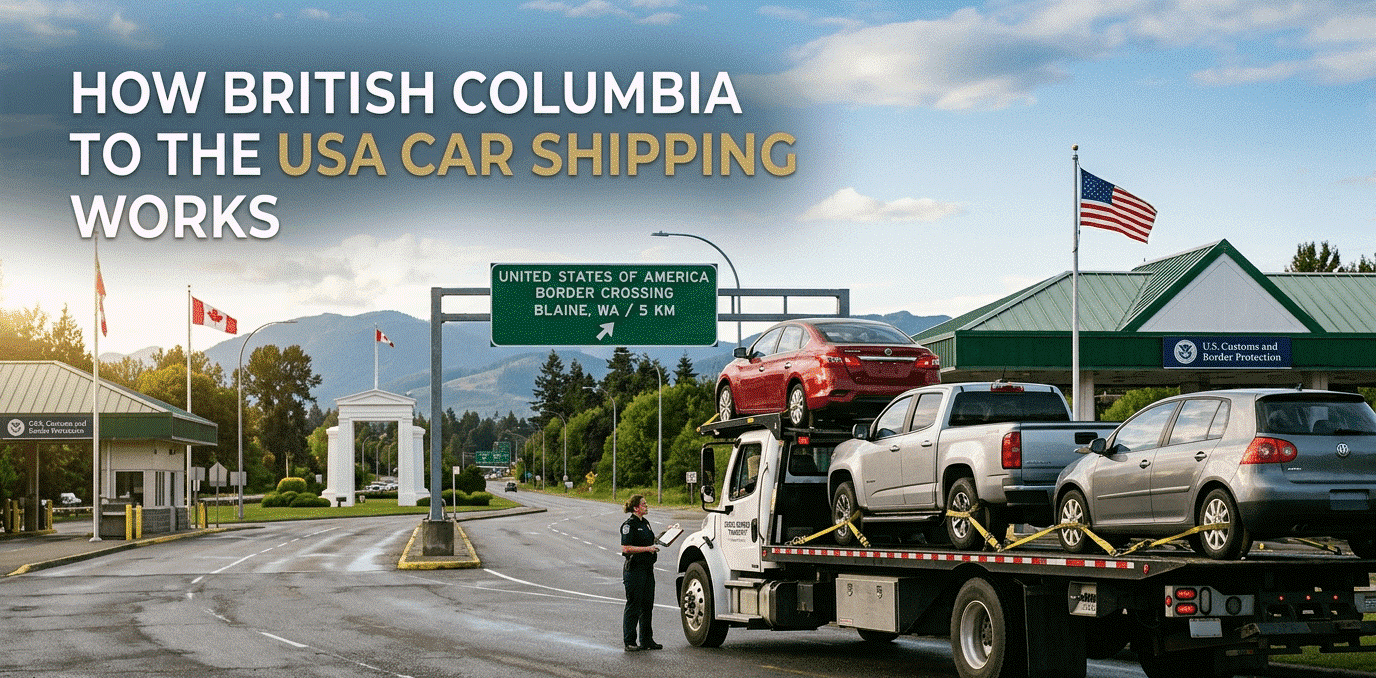
Shipping your car from British Columbia to the U.S. involves a coordinated process between you, the carrier, and customs authorities on both sides of the border.
It typically starts with booking your shipment and choosing between open or enclosed transport. Open carriers are more common and cost-effective, while enclosed trailers provide added protection for high-value or classic vehicles.
Once your booking is confirmed, your carrier schedules pickup from your specified location—whether that’s Vancouver, Surrey, Victoria, or a more remote area. Door-to-door service is common, but in tighter urban areas or remote regions, you may meet the driver at a nearby accessible location.
After pickup, your vehicle is transported toward a designated border crossing. Popular crossings from British Columbia include Blaine (Peace Arch), Pacific Highway, and Sumas, depending on your final destination in the U.S.
Before crossing, export documentation must be submitted to Canadian authorities, and import documentation is reviewed by U.S. Customs. Once cleared, your vehicle continues to its final destination.
If you’re new to the process, reviewing our cross-border car shipping guides can help you better understand the full journey.
Practical tip: Always confirm who is responsible for handling customs paperwork—some carriers include this service, while others require you to coordinate separately.
Cost factors that affect this route
The cost of shipping a car from British Columbia to the U.S. varies based on several key factors. Understanding these helps you estimate pricing more accurately and avoid surprises.
1. Distance and destination
Shipping from Vancouver to Seattle will cost significantly less than shipping to California, Texas, or the East Coast. Longer distances increase fuel, labor, and time costs.
2. Vehicle type and size
Larger vehicles such as SUVs, trucks, or vans take up more space and weigh more, increasing transport costs. Modified or oversized vehicles may require special handling.
3. Transport type (open vs. enclosed)
Open transport is more affordable and widely available. Enclosed transport offers added protection but typically costs 30–60% more.
4. Seasonality and demand
Snowbird seasons (fall and spring) often see higher demand, which can increase pricing. Weather conditions in British Columbia and northern U.S. states can also impact availability and cost.
5. Pickup and delivery locations
Urban centers like Vancouver are easier and cheaper to service than rural areas due to better carrier access and route frequency.
6. Customs handling and brokerage
If customs paperwork or brokerage services are included, this may affect your total cost. Some providers bundle this into the quote, while others list it separately.
For region-specific considerations, visiting the British Columbia shipping page can give you additional insights into local logistics.
Practical tip: Booking your shipment 1–2 weeks in advance often secures better pricing and availability compared to last-minute requests.
Transit time and border-crossing expectations
Shipping times depend on distance, route efficiency, and how quickly your shipment clears customs.
Typical transit timelines include:
- British Columbia to Washington or Oregon: 1–3 days
- To California: 3–6 days
- To central U.S. states: 5–8 days
- To East Coast destinations: 7–10+ days
Border crossing itself can take anywhere from a few hours to a couple of days, depending on documentation accuracy and inspection requirements.
Delays are most commonly caused by:
- Missing or incorrect paperwork
- Vehicle title discrepancies
- High traffic at major border crossings
- Random inspections
Practical tip: Ensure all documents are submitted ahead of time—many ports require export documents to be filed at least 72 hours before the vehicle arrives at the border.
Weather conditions can also impact transit times, especially during winter months when snow and ice affect roads in British Columbia and northern U.S. states.
Documents and vehicle prep before pickup
Proper documentation and vehicle preparation are critical for a smooth cross-border shipment.
Required documents typically include:
- Original vehicle title (or a certified copy)
- Bill of sale (if recently purchased)
- Valid government-issued ID
- Letter of authorization (if someone else is handling the shipment)
- Lienholder authorization (if the vehicle is financed)
For U.S. import, your vehicle must comply with Environmental Protection Agency (EPA) and Department of Transportation (DOT) standards. If your vehicle does not meet these standards, modifications or exemptions may be required.
Vehicle preparation checklist:
- Clean your car inside and out for inspection
- Remove all personal belongings
- Ensure the gas tank is about 1/4 full
- Disable alarms and toll tags
- Check for leaks or mechanical issues
- Take photos of the vehicle’s condition before pickup
Practical tip: Keep a copy of all documents with you, even if you’ve submitted them digitally. Having backups helps avoid delays if verification is needed.
How to choose the right carrier for this lane
Choosing the right carrier can make a significant difference in your overall experience. Not all carriers specialize in cross-border shipping, so it’s important to select one with the right expertise.
Look for these key qualities:
1. Cross-border experience
Carriers familiar with Canada–U.S. routes understand customs requirements and common challenges, reducing the risk of delays.
2. Licensing and insurance
Verify that the carrier is properly licensed for international transport and carries adequate insurance coverage.
3. Transparent pricing
Avoid vague quotes. A reliable provider clearly outlines costs, including transport, customs handling, and any additional fees.
4. Communication and tracking
Choose a company that provides regular updates and is responsive to your questions throughout the process.
5. Flexible transport options
Whether you need expedited shipping, enclosed transport, or specific delivery timing, flexibility matters.
Practical tip: Ask whether the carrier uses its own trucks or works with a network of drivers. Both models can work well, but transparency is key.
When you’re ready to move forward, you can get a cross-border car shipping quote tailored to your route and vehicle.
Frequently Asked Questions (FAQ)
How much does it cost to ship a car from British Columbia to the U.S.?
Costs typically range from $500 to $2,500+, depending on distance, vehicle type, and transport method.
How long does the process take?
Most shipments take between 3 and 10 days, including transport and border clearance.
Do I need to be present at pickup or delivery?
Not necessarily. You can authorize someone else to handle the process on your behalf.
Can I ship personal items inside my car?
It’s generally not recommended, as personal items are not covered by carrier insurance and may cause issues at customs.
What if my car doesn’t meet U.S. import standards?
You may need to modify the vehicle or work with a registered importer to ensure compliance.
Is insurance included in the shipping cost?
Most carriers include basic insurance, but additional coverage may be available for high-value vehicles.
Request a quote for your route
Shipping a car from British Columbia to the United States doesn’t have to be complicated. With the right preparation, clear documentation, and a trusted carrier, your vehicle can cross the border efficiently and arrive on time.
Whether you’re relocating, selling a vehicle, or planning a seasonal move, taking the next step starts with accurate pricing and expert guidance.
Request a quote for your route today and get a clear plan tailored to your needs. US Canada Auto Transport provides reliable cross-border vehicle shipping solutions designed to simplify every stage of the process.