
Shipping a car from Alberta to the United States involves more than simply booking transport—it requires proper documentation, customs coordination, and choosing a reliable carrier. Whether you’re relocating, selling a vehicle, or sending a car to family, understanding the process helps you avoid delays and unexpected costs.
This guide walks you through everything you need to know, from how cross-border transport works to pricing, timelines, and preparation steps.
How Alberta to the USA car shipping works
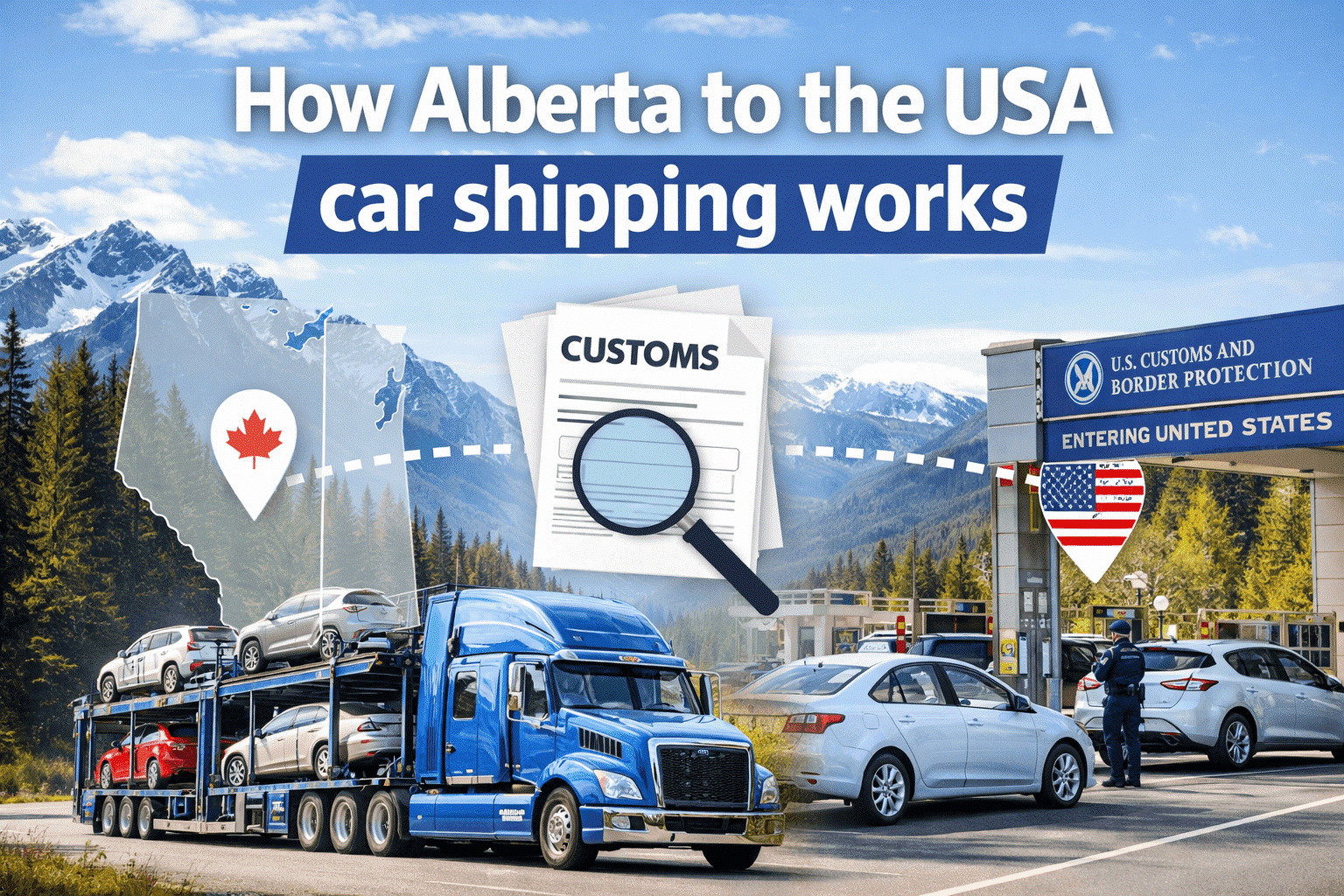
Shipping a vehicle from Alberta to the U.S. follows a structured process designed to ensure compliance with both Canadian export rules and U.S. import regulations.
It typically begins with booking your shipment and selecting either open or enclosed transport. Once scheduled, your carrier picks up the vehicle from your location or a nearby terminal. From there, the vehicle is transported toward a designated border crossing, where customs clearance takes place before continuing to its final destination in the United States.
Cross-border shipping requires coordination between multiple parties. Your carrier or broker handles most of the logistics, including submitting vehicle export details to Canadian authorities and ensuring the shipment meets U.S. import requirements. This step is critical—missing or incorrect paperwork can delay your shipment at the border.
If you’re unfamiliar with the broader process, reviewing our cross-border car shipping guides can provide helpful context before booking your route.
Door-to-door service is the most common option for this lane, offering convenience and minimizing the need for you to travel to a terminal. However, in some rural areas of Alberta, you may need to meet the carrier at a nearby accessible location.
Cost factors that affect this route
The cost of shipping a car from Alberta to the U.S. varies depending on several key factors. Understanding these helps you estimate your budget and choose the best transport option.
1. Distance and destination
Longer routes naturally cost more. Shipping from Calgary to Montana will be significantly cheaper than transporting a vehicle to Florida or California.
2. Vehicle size and weight
Larger vehicles like SUVs, trucks, and vans take up more space on a trailer and may incur higher shipping costs than standard sedans.
3. Transport type
Open transport is the most affordable and widely used option. Enclosed transport, while more expensive, provides added protection from weather and road debris—ideal for luxury, classic, or high-value vehicles.
4. Seasonal demand
Shipping rates can fluctuate throughout the year. Winter conditions in Alberta and peak moving seasons (spring and summer) often lead to higher prices.
5. Pickup and delivery locations
Urban centers such as Calgary and Edmonton typically offer lower rates due to easier carrier access. Remote or rural pickups may increase costs.
6. Customs and brokerage fees
Cross-border shipments may include additional fees for customs processing, documentation, and compliance checks.
To get a more precise estimate tailored to your route and vehicle, you can get a cross-border car shipping quote based on your specific details.
Transit time and border-crossing expectations
Shipping timelines from Alberta to the U.S. depend on distance, route complexity, and border processing efficiency.
Typical transit times:
- Western U.S. (Montana, Washington, Idaho): 2–5 days
- Central U.S. (Colorado, Texas, Illinois): 4–7 days
- Eastern U.S. (New York, Florida): 6–10 days
These estimates include both transport and border clearance.
Border crossings are a key factor in overall timing. Before the vehicle leaves Canada, export documentation must be submitted—usually at least 72 hours in advance. Once the vehicle reaches the border, U.S. customs will review import documents, verify compliance with environmental and safety standards, and clear the vehicle for entry.
Delays can occur if:
- Documents are incomplete or inaccurate
- The vehicle requires additional inspection
- Weather conditions impact transport schedules
Planning ahead and ensuring all paperwork is accurate can significantly reduce the risk of delays.
Documents and vehicle prep before pickup
Preparing your documents and vehicle properly is one of the most important steps in cross-border shipping.
Required documents typically include:
- Original vehicle title (or certified copy)
- Bill of sale (if applicable)
- Valid government-issued ID
- Letter of authorization (if a third party is handling the shipment)
- Completed customs forms for U.S. import
If your vehicle is financed or leased, additional authorization from the lienholder may be required before export.
Vehicle preparation checklist:
- Clean your vehicle inside and out for inspection
- Remove all personal belongings
- Ensure the fuel tank is about 1/4 full
- Check for leaks and mechanical issues
- Disable alarms to prevent disruptions during transit
- Take photos of your vehicle for condition records
Proper preparation helps ensure a smooth pickup and reduces the risk of complications during transport or customs inspection.
For region-specific considerations, including routes and logistics, you can explore the Alberta shipping page for more localized details.
How to choose the right carrier for this lane
Choosing the right carrier is critical for a successful cross-border shipment. Not all transport providers have experience handling international vehicle shipping, so it’s important to evaluate your options carefully.
Look for cross-border expertise
Ensure the carrier has proven experience with Canada–U.S. shipping, including customs requirements and documentation handling.
Verify licensing and insurance
Your carrier should be fully licensed and insured for both Canadian and U.S. operations. This protects your vehicle throughout the journey.
Check reviews and reputation
Customer feedback provides insight into reliability, communication, and overall service quality.
Understand service options
Choose between open and enclosed transport based on your vehicle type and budget. Confirm whether the service is door-to-door or terminal-based.
Ask about tracking and communication
A reliable carrier keeps you informed throughout the process, especially during border crossing stages.
Review pricing transparency
Clear, upfront pricing helps you avoid unexpected fees. Make sure your quote includes all relevant costs, including customs-related charges.
Selecting the right carrier ensures your vehicle is handled professionally from pickup in Alberta to delivery in the United States.
Practical tips for a smooth shipment
- Book early: Scheduling in advance gives you better pricing and more flexibility
- Double-check documents: Even small errors can delay your shipment at the border
- Stay flexible: Weather and border conditions can affect timing
- Communicate clearly: Keep in touch with your carrier for updates
- Choose the right transport type: Match your shipping method to your vehicle’s value and condition
These small steps can make a big difference in your overall experience.
Request a quote for your route
Shipping a car from Alberta to the United States doesn’t have to be complicated when you understand the process and work with the right partner. From documentation and customs clearance to transport and delivery, every step plays a role in ensuring a smooth experience.
For a reliable and efficient cross-border shipping solution, request a quote tailored to your route today. US Canada Auto Transport provides professional vehicle shipping services designed to simplify the process and deliver your vehicle safely across the border.
Frequently Asked Questions (FAQ)
Q1: How much does it cost to ship a car from Alberta to the USA?
Costs typically range from $800 to $2,500 depending on distance, vehicle type, and transport method. Shorter routes to nearby U.S. states cost less, while long-distance shipments to the East Coast are more expensive.
Q2: How long does shipping take?
Transit times generally range from 2 to 10 days, depending on the destination and border processing.
Q3: Do I need to be present at pickup or delivery?
You or an authorized representative must be present to release and receive the vehicle, complete inspections, and sign paperwork.
Q4: Can I ship personal items in my car?
Most carriers do not allow personal belongings due to customs regulations and insurance limitations.
Q5: What happens at the border?
Your vehicle undergoes export clearance from Canada and import processing into the U.S., including document verification and compliance checks.
Q6: Is my car insured during transport?
Yes, reputable carriers provide insurance coverage, but it’s important to confirm the details before booking.