
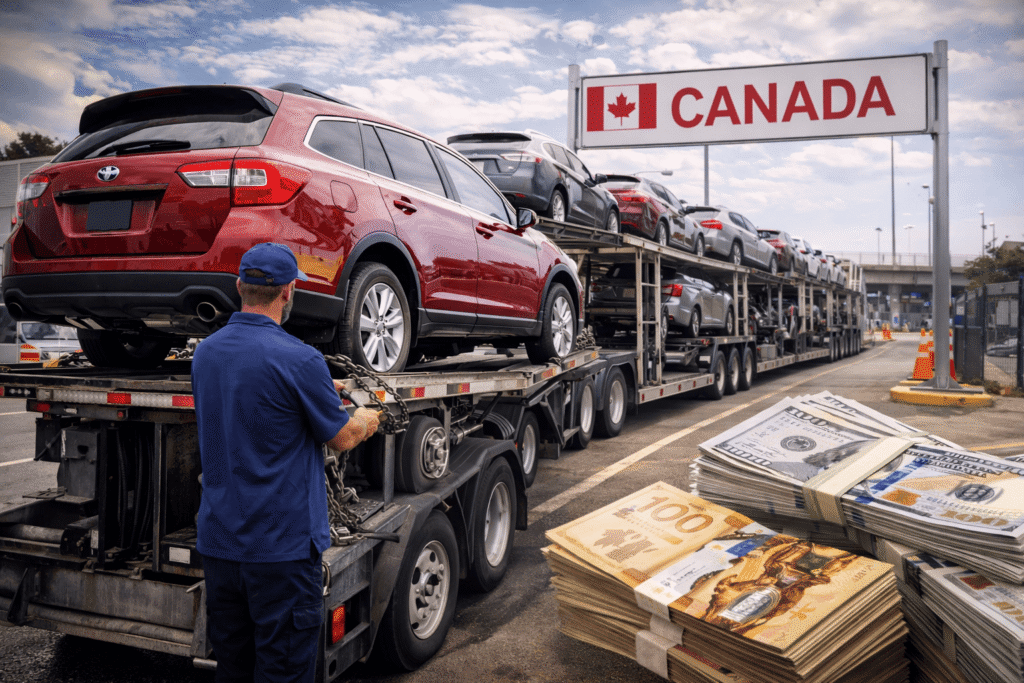
Shipping your car across the US-Canada border can feel overwhelming, but understanding the costs upfront helps you plan confidently. Whether you are relocating, buying a vehicle stateside, or moving back north, the average price to ship a car to Canada typically falls between $1,200 and $2,500 for most standard sedans and SUVs. This range depends on your specific route, vehicle details, and service choices. Shorter hauls near the border often start around $800–$1,200, while longer trips from California to Ontario or British Columbia can reach $1,800–$2,500 or more. These figures reflect 2026 market rates for reliable door-to-door or terminal-to-terminal transport and include the specialized handling required for cross-border logistics.
Cross-border shipping is more involved than domestic moves because carriers must coordinate with customs brokers, ensure compliance with both countries’ regulations, and account for potential delays at the border. The good news is that experienced transporters streamline the process so you avoid surprises. Below, you will discover exactly what drives the price, realistic ranges for your situation, and smart ways to keep costs manageable while protecting your vehicle.
For a complete overview, check our US-Canada car shipping cost guide.
What affects the cost on this cross-border route
Your vehicle’s size, weight, and condition also matter. A compact sedan fits easily on a standard carrier, but a lifted truck, electric vehicle with heavy battery, or oversized SUV may require specialized equipment or occupy more trailer space, increasing the rate. Seasonal demand plays a role too—summer and holiday periods see higher prices because more families move and snowbirds head north, while winter offers quieter roads and often lower rates.
Pickup and delivery options influence the total as well. Door-to-door service brings the truck right to your driveway or garage, which is convenient but slightly more expensive than terminal-to-terminal, where you drop off and collect at designated yards near major cities. Fuel surcharges, carrier availability, and any required escorts for oversized loads can add modest amounts. By reviewing these details early, you avoid last-minute upcharges and ensure your quote matches reality.
You’ll also find detailed US state shipping pages to help refine your estimate before you begin.
Typical price range by vehicle and season
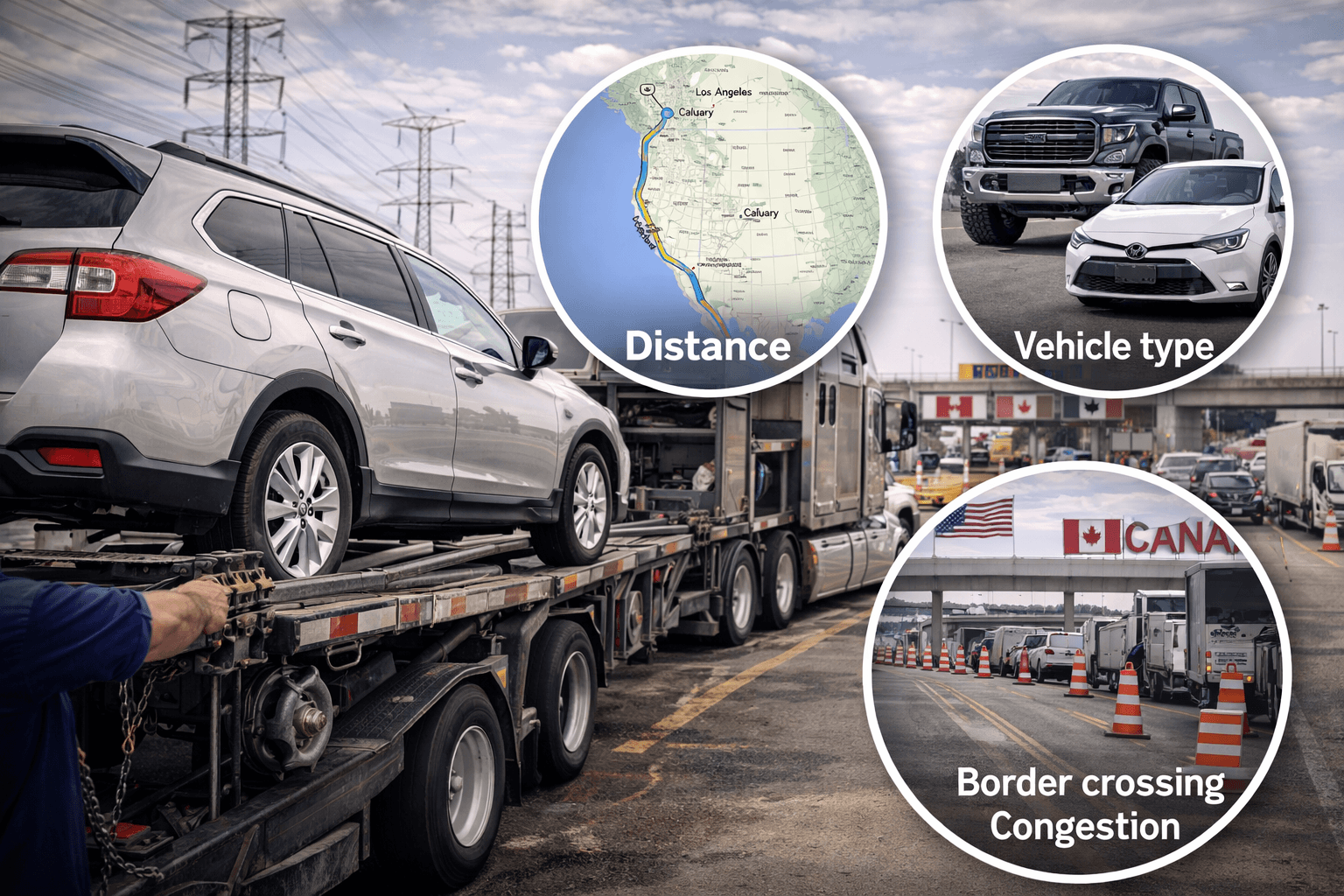
Expect to pay $1,000–$1,800 for a standard sedan or crossover on a medium-length route (500–1,200 miles) during shoulder seasons like spring or fall. For example, shipping a Honda Civic from Seattle to Calgary might land around $1,300, while the same car traveling from Miami to Montreal could hit $1,900 because of the longer distance and international coordination.
Larger vehicles such as full-size pickups or luxury SUVs push the range to $1,500–$2,500 on the same routes. Exotic or classic cars often require extra care and fall at the higher end. Electric vehicles sometimes carry a small premium due to weight but benefit from growing carrier experience with battery safety protocols.
Seasonal swings add 15–30% during peak summer months (June–August) when demand spikes. Winter shipments (December–February) frequently drop 10–20% below average because fewer people move and roads stay clear once snow is managed. These variations are normal in the industry, so timing your move for off-peak periods can deliver meaningful savings without compromising service quality.
Practical tip: Measure your exact route mileage and note any seasonal travel restrictions in border states or provinces before you get a cross-border car shipping quote.
Open vs enclosed trailer pricing
Most shippers choose open transport for its balance of affordability and reliability. Your car rides on a multi-level trailer exposed to the elements but securely strapped down, protected by professional loading practices. Open carriers move multiple vehicles per load, which keeps costs down—typically 30–60% less than enclosed options. For a typical US-to-Canada route, open transport might run $1,200–$2,000 total.
Enclosed trailers provide full protection inside a sealed trailer, shielding your vehicle from road debris, weather, and prying eyes. This option suits luxury cars, classics, or any vehicle you want to keep pristine. The trade-off is the higher price: expect to add $400–$900 or more, depending on distance. Enclosed service limits capacity to fewer vehicles per trailer, so availability can be tighter and lead times longer.
Choose based on your car’s value and your peace of mind. For daily drivers and modern vehicles, open transport delivers excellent value and proven safety records. If your vehicle is worth protecting from every possible scratch, enclosed is worth the investment. Either way, reputable carriers maintain strict tie-down standards and offer real-time tracking so you stay informed throughout the journey.
Border fees, duties, and other added costs
Cross-border shipping involves more than just the truck ride. You will encounter several standard fees that carriers often help coordinate but you ultimately cover. For most North American-made vehicles (those qualifying under USMCA rules), import duty is zero. However, you still pay Canada’s 5% GST on the vehicle’s value at the border. Provincial sales tax (PST or HST) applies later when you register the car in your province.
Additional fixed costs include the RIV (Registrar of Imported Vehicles) fee of roughly $325, a $100 air-conditioning excise tax for most vehicles, and any provincial levies. US export paperwork—handled by the transporter—usually costs $100–$300 and ensures smooth clearance. Customs brokerage fees, if your carrier arranges them, add another $150–$400 depending on complexity.
Other potential extras include storage fees if border delays occur (rare with experienced teams), fuel surcharges that fluctuate with market prices, and optional insurance beyond the carrier’s standard coverage. By preparing your documents in advance—title, registration, bill of sale, and recall clearance letter—you minimize processing time and keep these costs predictable rather than reactive.
How to lower your shipping cost without cutting corners
You can reduce your total spend through smart planning rather than risky shortcuts. First, remain flexible with pickup and delivery windows. Offering a 7–10 day range instead of demanding a specific date lets carriers fill trailers more efficiently and pass the savings to you.
Second, book during off-peak months whenever your schedule allows. Winter and early spring often bring the best rates. Third, compare multiple quotes from established cross-border specialists and ask about terminal-to-terminal options if you can drive a short distance to a yard; this frequently saves 10–20% compared with full door-to-door.
Prepare your vehicle properly: remove personal items, fill the gas tank to one-quarter level, ensure it starts and stops reliably, and document any existing damage with photos. These steps prevent extra handling fees or disputes later. Consider bundling with other services your carrier offers, such as combined US state legs, to unlock volume discounts.
Finally, work with transporters who specialize in the US-Canada corridor. They maintain relationships at major border points, which speeds clearance and avoids unexpected detention charges. Small efficiencies like these add up to hundreds of dollars saved while keeping your car safe and your timeline on track.
Shipping your car to Canada does not have to be stressful or overly expensive when you work with the right partner. US Canada Auto Transport specializes in these routes and can guide you through every step with clear communication and competitive pricing.
FAQs
How long does it take to ship a car to Canada? Most shipments take 5–14 days depending on distance and border wait times. Shorter routes near major crossings can arrive in as little as 3–7 days, while coast-to-coast moves may stretch to 10–14 days. Reliable carriers provide tracking updates so you know exactly where your vehicle is.
Do I need special paperwork to ship my car across the border? Yes, but your transporter usually coordinates it. You will need the vehicle title, registration, bill of sale or ownership proof, and a recall clearance letter from the manufacturer. For permanent imports, CBSA handles GST collection at the border.
Is my car insured while being transported? Reputable carriers carry cargo insurance as standard. You can also purchase additional coverage for full replacement value if you prefer extra protection. Always confirm the policy limits before booking.
Can I ship a non-running or modified vehicle? Yes, but it may cost more. Non-running cars require special loading equipment and sometimes flatbed service, which increases the price. Disclose modifications upfront so the carrier assigns the right trailer and avoids on-site surprises.
What happens if my shipment is delayed at the border? Delays are uncommon with experienced teams, but when they occur, carriers monitor the situation and communicate with you. Most include a reasonable grace period in their quotes, and storage fees only apply after that window.
Should I choose door-to-door or terminal service? Door-to-door offers maximum convenience and is ideal if you have limited mobility or tight timing. Terminal service saves money if you can handle a short drive to a secure yard near the border or your destination city.