
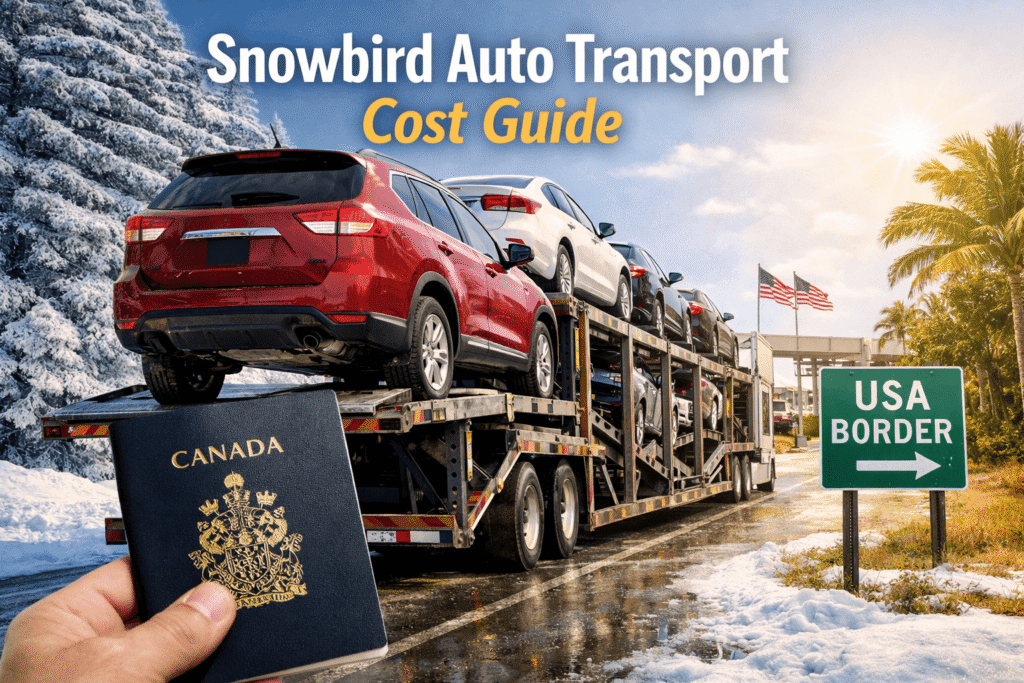
As a snowbird, you head south each winter to escape the cold, and shipping your car from Canada to the US often makes more sense than driving it yourself or flying and renting. You avoid long road fatigue, border lineups in your vehicle, and extra wear on your tires and engine. But the big question is always the same: what will it actually cost?
Cross-border snowbird routes vary widely, but understanding typical price ranges, seasonal swings, and your service options helps you budget smartly and avoid surprises. This guide breaks down real-world costs for Canada-to-US routes so you can compare quotes confidently and plan your next migration with clarity. For a broader look at all factors, check our US-Canada car shipping cost guide.
Typical snowbird route price ranges
Western routes show similar patterns. Vancouver to Phoenix or Los Angeles usually lands between $1,250 and $1,800, while Calgary or Edmonton to Arizona averages $1,300 to $1,900. These figures cover roughly 1,800 to 2,500 miles and assume an operable passenger vehicle during shoulder periods.
Vehicle type matters immediately. Compact cars and sedans stay at the lower end. Mid-size SUVs add 10–15 percent, while full-size trucks or luxury models push prices up another 20–30 percent because of weight and height restrictions on carriers. Expect the total to climb if your vehicle is inoperable or oversized.
These ranges reflect 2025–2026 market data and include fuel, tolls, and basic insurance. Border paperwork adds no separate line item but influences carrier availability and transit windows. For full details on every route type, visit the snowbird car transport hub.
What drives seasonal pricing up or down
Snowbird season creates predictable price waves. Southbound demand surges in October and November as thousands of vehicles roll toward Florida and Arizona. Carriers fill quickly, so rates climb 15–25 percent above summer lows. Northbound returns in late February through April create a second spike, especially out of Florida.
Fuel prices, border wait times, and carrier supply also play roles. A sudden rise in diesel can add $50–$150 across long routes. When multiple snowbirds request the same three-day pickup window, carriers raise quotes to manage capacity. Conversely, booking for mid-September or early December often saves you hundreds because demand dips between the two big rushes.
Weather adds another layer. Early winter storms in Ontario or Quebec can delay pickups and tighten schedules, nudging prices higher. The practical insight here is simple: flexibility pays. A seven-day pickup window instead of a single preferred day frequently unlocks lower quotes without changing your travel plans.
Open vs enclosed transport for snowbirds
Open transport remains the go-to choice for most snowbirds because it keeps costs down and offers plenty of availability. Your vehicle rides on an open trailer alongside others, protected enough for everyday cars on paved highways. You save 30–60 percent compared with enclosed options—often $400–$700 on a Toronto-to-Florida run.
Enclosed transport places your car inside a fully covered trailer, shielding it from road debris, weather, and UV exposure. Choose this if you drive a classic, exotic, or brand-new luxury vehicle worth protecting. The trade-off is higher cost and fewer carriers, so lead time grows. Many snowbirds with standard SUVs or sedans stick with open transport and simply wash the car after delivery—no issues reported on routine routes.
A quick decision tip: if your vehicle has aftermarket paint, wraps, or you simply hate seeing dust on arrival, enclosed makes sense. Otherwise, open transport delivers reliable value without compromising safety.
Door-to-door vs terminal delivery cost differences
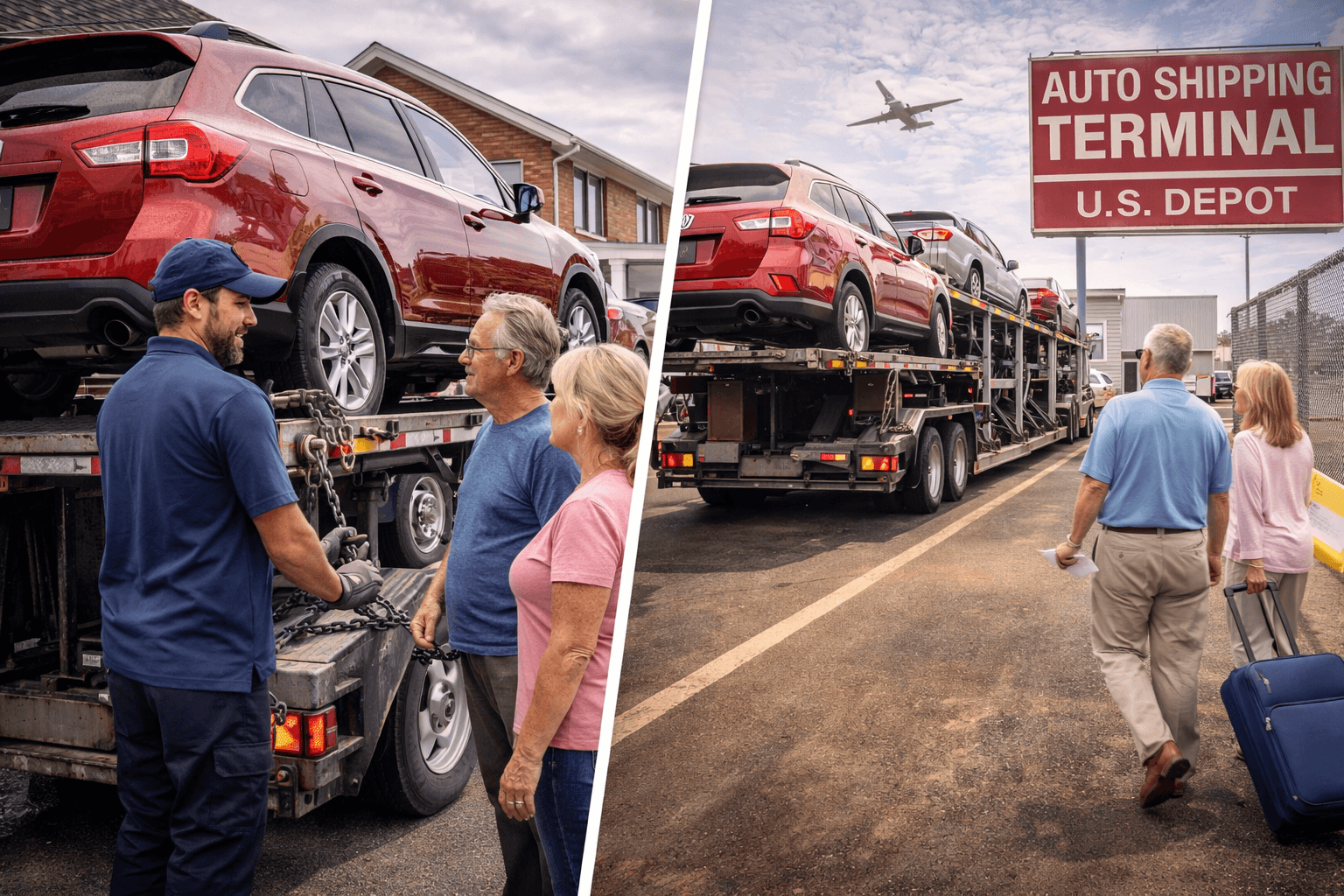
Door-to-door service lets the carrier pick up your car from your driveway in Canada and deliver it to your destination address in the US. You skip extra trips, and the convenience usually adds $100–$300 to the total quote. For busy snowbirds coordinating flights and condo check-ins, that premium often feels worth it.
Terminal-to-terminal shipping drops costs by routing through established depots. You deliver your vehicle to a Canadian terminal and collect it from a US one near your winter home. The savings come from consolidated routing, but you handle the short drives yourself—factor in gas, time, and possible short-term storage fees if your flight lands early.
Most snowbirds prefer door-to-door for the first-time experience or when traveling with family. Repeat shippers sometimes switch to terminal once they know the process and want to trim the budget. Either way, confirm exact terminal locations early so you avoid last-minute surprises.
How early booking affects snowbird rates
Booking early is the single smartest move you can make. Carriers open their calendars 4–8 weeks ahead, and the first snowbirds to reserve secure lower rates and preferred pickup dates. Waiting until the week before your flight can add $200–$400 because capacity fills and carriers apply surge pricing.
Aim for 3–6 weeks in advance for southbound trips. If you know your exact Florida arrival date by early September, lock in October pickup then. The same rule applies northbound: book by mid-February for March or April return. Flexible dates amplify the savings—carriers love filling gaps in their schedules.
Early booking also gives you time to gather border documents, schedule a pre-trip inspection, and compare multiple quotes. You stay in control instead of rushing and paying premium last-minute fees.
Most Frequently Asked Questions
1. How long does Canada-to-US snowbird car shipping usually take? Most routes take 4–8 days once loaded. Border clearance can add 1–2 days on busy corridors, so plan your flight around a comfortable buffer.
2. What documents do I need for cross-border auto transport? You’ll need your vehicle registration, proof of ownership, a valid passport, and a temporary import declaration. Your carrier typically handles the paperwork, but having everything ready speeds things up.
3. Is insurance included in the quoted price? Standard cargo insurance (usually $250,000–$500,000 coverage) is included. You can upgrade for high-value vehicles—ask about the cost when you request your quote.
4. Can I ship an electric vehicle or hybrid as a snowbird? Yes. EVs and hybrids ship on open or enclosed trailers, though some carriers apply a small surcharge for battery weight. Confirm the carrier’s EV policy upfront.
5. What if my car won’t start on pickup day? Inoperable vehicles can still ship, but expect an extra fee for winching or special loading. Mention it when you book so the right equipment arrives.
6. How do I prepare my car for shipping? Clean the interior and exterior, remove personal items, fill the gas tank to one-quarter, and disable any alarms. Take photos of the vehicle’s condition before handover.
Shipping your car as a snowbird removes stress and keeps your winter routine smooth. You focus on sunshine and relaxation instead of highway miles or rental-car hassles. Every route and vehicle is different, so the most accurate number comes from a personalized quote tailored to your exact cities, dates, and vehicle details.
Ready to lock in your route? Request a quote for your route today and see how simple and affordable your next cross-border move can be. US Canada Auto Transport specializes in these exact snowbird lanes and handles every detail so you don’t have to. Get a cross-border car shipping quote.