

If you’re getting ready to move your car, SUV, or truck from Florida back to Canada—whether as a snowbird heading north after winter or handling a one-time relocation—knowing the shipping cost from Florida to Canada helps you plan without surprises. Typical quotes for open transport range from $1,200 to $2,500 or more, depending on your exact pickup city (Miami, Orlando, or Tampa), the Canadian destination (Toronto, Montreal, or farther west), vehicle size, and timing. These figures cover door-to-door or terminal-to-terminal service on a professional carrier. Enclosed shipping adds 30-50% to the base rate for extra protection.
Long-distance hauls like this aren’t the same as shipping within the lower 48 states. You face border paperwork, seasonal demand spikes, and carrier availability that can swing prices quickly. Understanding these details puts you in control. For a broader look at pricing across every major lane, see our US-Canada car shipping cost guide.
Why Florida-to-Canada routes price differently
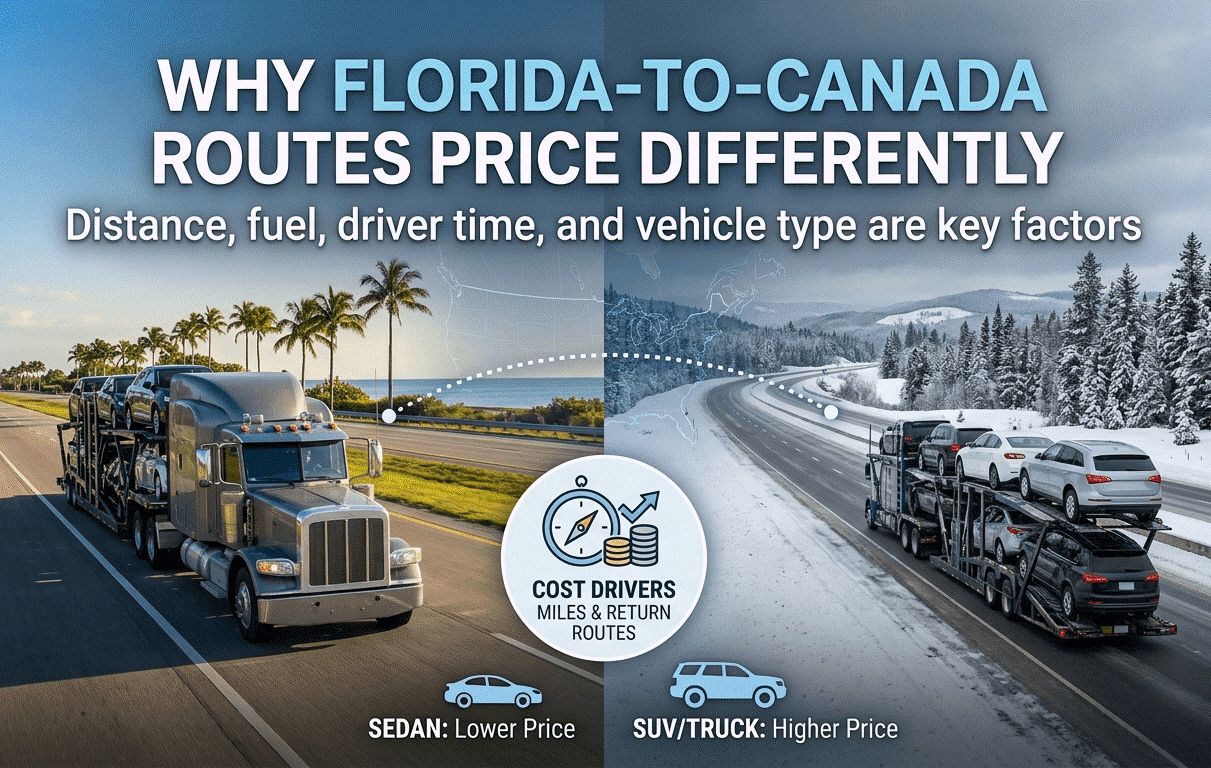
Florida sits at the southeastern edge of the U.S., while most Canadian destinations lie 1,300 to 2,000 miles north. That distance alone drives up fuel, driver time, and equipment wear compared to shorter East Coast runs. Carriers often return empty after dropping vehicles in Canada, so they price Florida-to-Canada lanes to cover both legs of the trip.
Route popularity also matters. Snowbird corridors between Ontario and Florida see steady traffic, but the northbound leg in spring can feel the pinch of limited carrier capacity. Pickup locations inside Florida add another layer: coastal cities like Fort Lauderdale offer easier access than inland spots, keeping quotes lower. Vehicle type plays a role too—standard sedans ship cheaper than full-size SUVs or lifted trucks that take more trailer space.
Practical tip: Measure your route distance yourself using major highways (I-95 north to I-75 or I-81). A quick online calculator gives you a realistic baseline before you request quotes. This prevents sticker shock and helps you spot fair pricing right away.
Seasonality and snowbird demand on this lane
Timing your shipment can change the price more than almost anything else. Snowbirds create two clear peaks. Southbound traffic (Canada to Florida) surges from October to March, filling trucks heading down. When those same vehicles head back north in March through May, carriers see heavy demand on the return leg. Prices can climb 15-25% during April and May because everyone wants their car home before summer.
Summer and early fall usually bring the best rates. Fewer snowbirds move, so carriers fill trucks with other cargo and pass savings along. Winter shipments (December-February) stay moderate unless a holiday rush hits.
Here’s a real-world insight: Book 4-6 weeks ahead during peak northbound season. Last-minute requests force carriers to scramble, and you’ll pay a premium. Flexible dates—say, a 7-day window instead of a specific pickup—can save hundreds because drivers can combine your load with others nearby.
If you want state-specific advice from the Florida side, check the Florida car shipping page.
What changes the final quote from Florida
Several variables sit between your initial estimate and the final invoice. Start with vehicle details. A compact sedan costs less than a heavy-duty pickup or electric SUV that needs extra securing or specialized ramps. Inoperable vehicles add towing fees and sometimes require flatbed service.
Delivery options matter too. Door-to-door service (carrier picks up at your Florida driveway and drops at your Canadian address) costs more than terminal-to-terminal, but it saves you time and hassle. Fuel surcharges fluctuate with diesel prices, and expedited service—moving your car to the front of the queue—adds a surcharge.
Insurance coverage is another decision point. Most carriers include basic transit protection up to $100,000-$250,000, but you can buy extra for high-value cars. Finally, Canadian destination remoteness counts. Toronto or Montreal keep costs standard; smaller towns in the Maritimes or Prairie provinces add mileage and handling fees.
Practical tip: Provide accurate vehicle dimensions, running condition, and exact addresses before you get a cross-border car shipping quote. Vague details lead to adjustments later. Clean your car inside and out before pickup—carriers inspect for damage and may refuse overloaded or dirty vehicles, causing delays.
Transit time and border factors to expect
Expect 7-14 days total transit once the carrier loads your vehicle. The drive itself takes 3-5 days under normal conditions, but border clearance adds 1-3 days. Professional auto transporters manage the paperwork, so you don’t stand in line, but delays can still happen if inspectors need extra time.
For snowbirds using temporary import, no duties or taxes usually apply as long as you follow Transport Canada’s temporary import rules (up to one year with proper Form 1). You’ll need your vehicle title, registration, passport or enhanced license, and proof of insurance valid in Canada. Permanent imports require Registrar of Imported Vehicles (RIV) compliance and possible duties—something most seasonal shippers avoid.
Carriers handle U.S. export and Canadian import declarations. Your job is to ensure the car has at least a quarter tank of gas, no personal belongings (most carriers prohibit them for insurance reasons), and working brakes and lights if it’s drive-on.
Practical insight: Track your shipment daily through the carrier’s portal. Weather, construction on I-95, or a busy border crossing can shift arrival by a day or two. Build buffer time into your plans—especially if you need the car for a specific date.
How to save money on a Florida-to-Canada shipment
Smart planning turns a big expense into a manageable one. First, compare open versus enclosed only when your vehicle needs protection (luxury, classic, or new). Open transport works perfectly for 90% of shipments and costs far less.
Second, stay flexible. A 10-14 day pickup window lets carriers optimize routes and pass savings to you. Third, remove unnecessary weight—empty the trunk and glove box. Every 100 pounds can affect pricing on longer hauls.
Fourth, bundle services. If you’re shipping multiple vehicles or pairing with household goods, ask about multi-vehicle discounts. Fifth, book early in the off-season. Carriers reward advance reservations with locked-in rates that beat last-minute spikes.
One more tip most people miss: Choose a reputable broker or carrier that specializes in cross-border lanes. They already have trusted Canadian partners and pre-cleared border processes, which means fewer surprises and smoother delivery.
Frequently Asked Questions
How much does it typically cost to ship a car from Florida to Canada? Open transport from major Florida cities to Toronto or Montreal usually lands between $1,400 and $2,200. SUVs and trucks run $200-$400 higher. Exact quotes depend on current fuel prices, your vehicle, and dates.
How long will my vehicle take to reach Canada? Most shipments arrive in 7-14 days. The actual road time is 3-5 days, with the rest spent on loading, border processing, and final delivery.
Do I pay duties or taxes on a temporary snowbird shipment? No. Temporary imports for Canadian residents (up to one year) normally incur no duties when you follow Transport Canada guidelines and complete the required forms.
Can I leave personal items inside the car? Most carriers prohibit loose belongings for safety and insurance reasons. Pack only factory items like spare tires or jacks, and remove everything else.
Is enclosed shipping worth the extra cost? Enclosed protects against weather and road debris and suits luxury, new, or classic cars. For everyday vehicles making a seasonal move, open transport delivers safely at a lower price.
What documents do I need to provide? You’ll need the vehicle title or registration, a valid passport or enhanced driver’s license, current insurance proof, and any temporary import forms. The carrier guides you through the rest.
Shipping your car from Florida to Canada doesn’t have to feel overwhelming once you know the numbers and the process. With the right timing, clear preparation, and a trusted partner, you protect your vehicle and your budget at the same time. Ready to move forward? Request a quote for your route today and let US Canada Auto Transport handle the details so you can focus on the road ahead—wherever it leads you next.