Ship a Car to/from Washington & Canada
Cross-border auto transport for Washington drivers, with full customs handling from pickup to Canadian entry.
We coordinate door-to-door vehicle shipments from Seattle and Spokane to destinations like Vancouver, BC or Calgary, managing export and import clearance along the way. Routes are planned around Washington’s Pacific Northwest corridors, border proximity, and seasonal mountain pass conditions to keep cross-border moves predictable and compliant.
🛡️ Fully Licensed (MC #676789)
📦 Open & Enclosed Vehicle Transport Available
Fast turnaround · No hidden fees · Cross-border specialists since 1985

⭐ 200 Google Reviews — 4.6 Rating
🚚 100,000+ Cars Shipped Since 1985
🛃 Full Customs Handling (CAN/USA)
🕒 Same-Day Drop-Off Available
Washington ↔ Canada Auto Transport Overview
Vehicle shipping between Washington and Canada is commonly tied to cross-border moves, extended stays, and vehicle purchases that make long-distance driving impractical. Retirees splitting time between countries, professionals relocating for work, and buyers importing specific models often choose transport to avoid wear, mileage, and border complications.
Shipments move in both directions, from Canadian cities like Vancouver or Calgary into Washington, as well as from Washington locations such as Seattle and Tacoma into Canada. Each direction involves different documentation and timing considerations, depending on whether the vehicle is entering the U.S. or Canada and where final delivery is scheduled. For complete established US–Canada auto transport services, visit our main US Canada Auto Transport page.
Washington routes differ from other border states due to coastal geography, mountain passes, and weather-sensitive corridors. Seasonal rain, winter snow in the Cascades, and Pacific Northwest traffic patterns influence routing and transit planning, particularly during fall and winter cross-border moves.
Popular Washington Car Shipping Destinations
Cross-border vehicle shipments in Washington tend to concentrate around population centers, freight corridors, and regions with predictable access to Canada-facing routes.
Seattle Metro Corridor
Seattle serves as the primary hub, with frequent pickups and deliveries across Bellevue, Tacoma, Everett, and Renton. The density of carriers operating along I-5 and nearby port-adjacent infrastructure allows scheduling flexibility for both U.S.- and Canada-bound moves without requiring long detours.
Eastern Washington Routes
Spokane and the Tri-Cities area follow a different routing pattern, often tied to inland highways and longer cross-border runs toward Alberta or interior British Columbia. These moves require tighter coordination due to distance, fewer carrier lanes, and seasonal factors affecting eastern mountain passes.
Statewide & Rural Areas
Beyond major cities, vehicle transport is available across smaller communities, agricultural regions, and remote areas such as the Olympic Peninsula or parts of the Palouse. Service in these locations depends on carrier availability and routing feasibility, with pickups typically coordinated through nearby population centers rather than direct daily access.
Transport Options for Shipping Cars Between Washinton & Canada
Customers moving vehicles between Washington and Canada typically choose between open and enclosed transport, depending on how the vehicle will be used and where it is headed. Factors such as exposure tolerance, cross-border transit timing, and overall cost usually determine which option fits best. Both methods are commonly used on long-haul routes connecting the Pacific Northwest with Canadian destinations.
Open Transport vs. Closed Transport Options
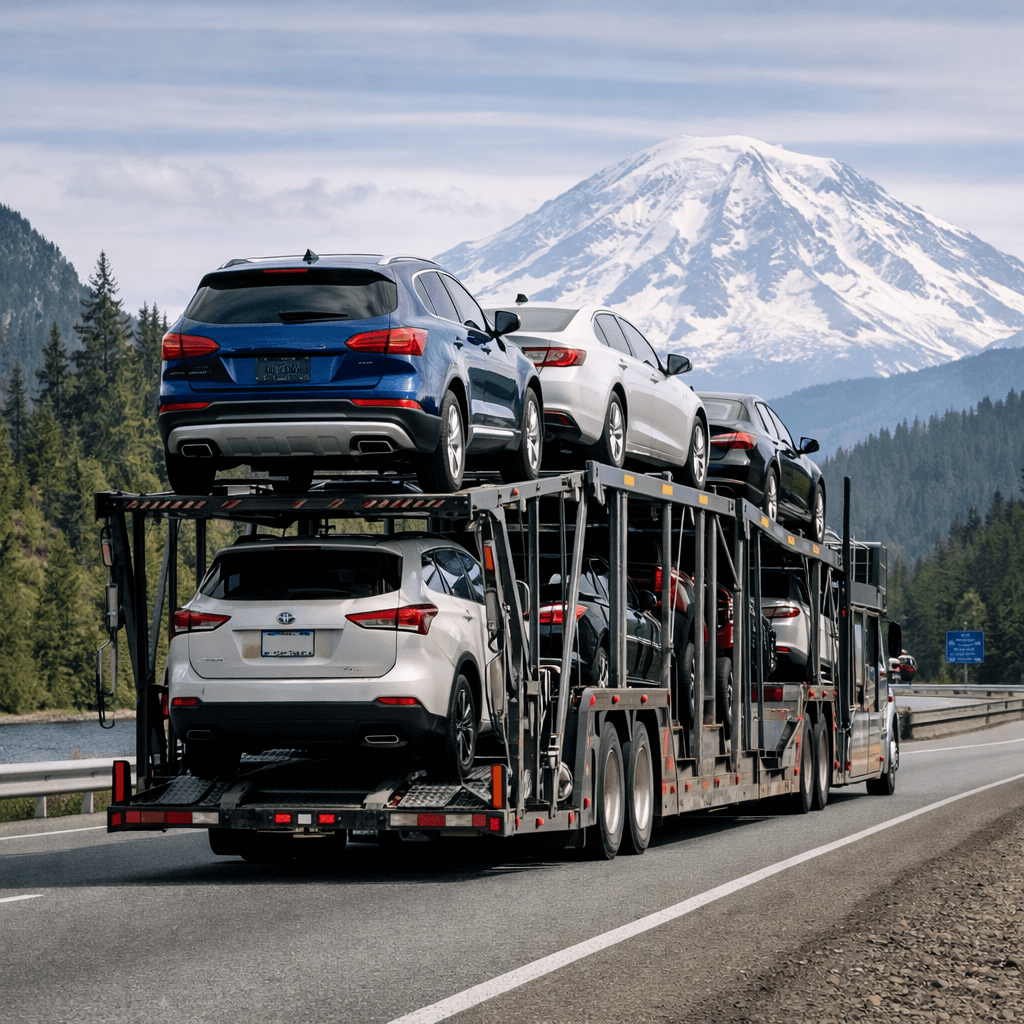
Open Transport
- Common use cases: Open carriers are frequently selected for standard passenger vehicles being relocated between Washington cities and Canada, especially along established I-5 and inland highway corridors.
- Cost considerations: This option generally offers lower transport costs because multiple vehicles are moved on the same trailer, which is practical given Washington’s steady cross-border route volume.
- Availability and frequency: Open carriers run regularly through western and eastern Washington due to consistent demand and shorter distance to the Canadian border compared to interior states.
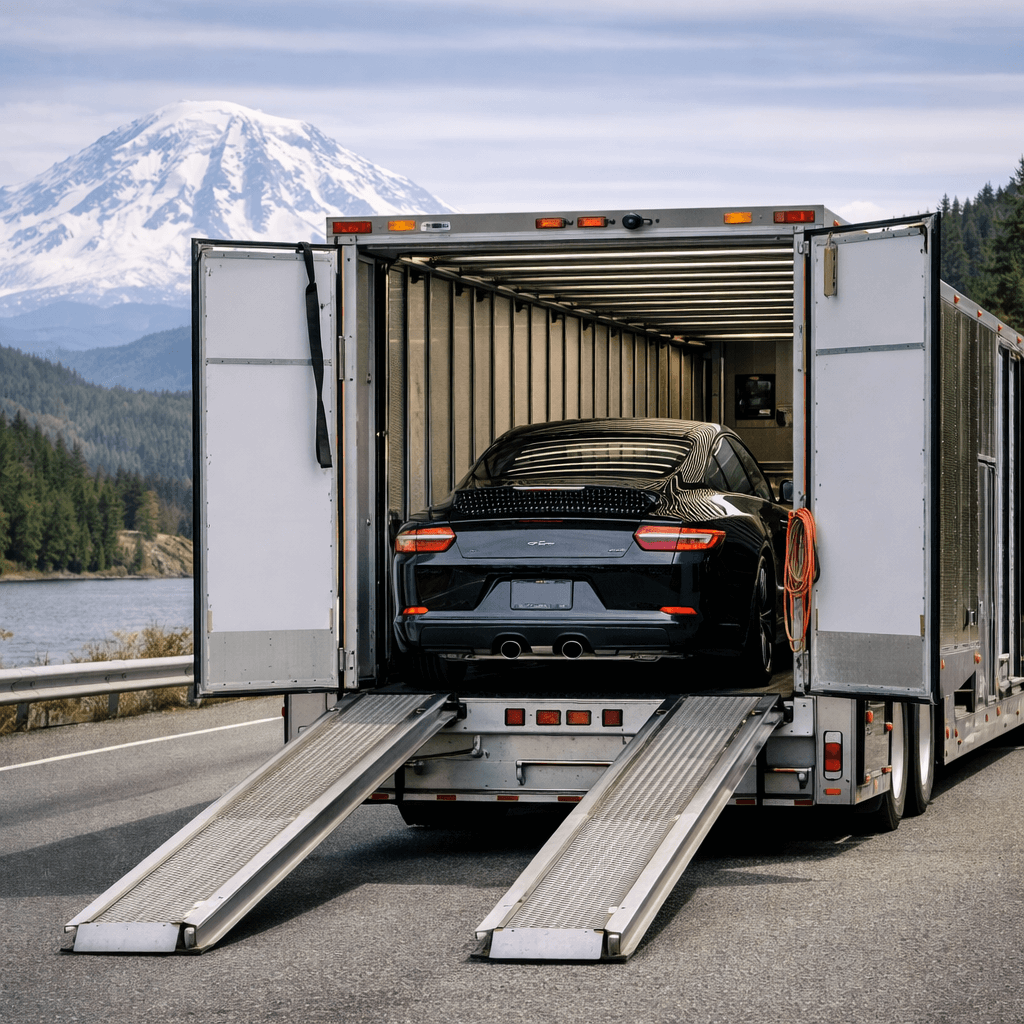
Closed Transport
Protection level: Enclosed transport provides full coverage from road debris and weather, which can be relevant for vehicles moving through Washington’s wet coastal climate or snowy mountain routes.
Typical vehicle types: This option is often chosen for high-value, collectible, or newly purchased vehicles requiring controlled handling during cross-border transit.
Tradeoffs: Enclosed shipments cost more and may involve narrower scheduling windows, as fewer carriers operate these trailers on Washington–Canada lanes.
Both open and enclosed transport are viable options for cross-border vehicle shipments involving Washington. The appropriate choice depends on the vehicle’s condition, protection needs, timing constraints, and budget priorities.
Washington ↔ Canada Auto Transport Pricing
| From | To | Starting Price (USD) |
|---|---|---|
| Toronto | Seattle | 2,350+ |
| Vancouver | Seattle | 850+ |
| Montreal | Seattle | 2,450+ |
| Calgary | Seattle | 1,850+ |
| Edmonton | Seattle | 1,850+ |
| Ottawa | Seattle | 2,450+ |
| Winnipeg | Seattle | 2,350+ |
| Regina | Seattle | 2,375+ |
| Saskatoon | Seattle | 2,375+ |
* Starting prices are estimates. Actual cost varies by vehicle size, timing, route, and duties/taxes.
Rates for Washington–Canada routes reflect the state’s proximity to the border and the concentration of carrier traffic moving through the I-5 corridor near Seattle. Pricing accounts for shorter line-haul distances, border crossing coordination, and seasonal capacity shifts that affect carrier availability in the Pacific Northwest.
How the Washington ↔ Canada Car Shipping Process Works
Shipping a vehicle between Washington and Canada is handled through coordinated scheduling, door-to-door transport, and structured customs processing designed around Pacific Northwest routes. The process focuses on reducing border delays while aligning pickup and delivery with Washington-based access points and carrier lanes.
Step 1: Request a Quote
Get a free, no-obligation quote based on your vehicle, route, timing, and transport preference. Pricing includes logistics planning and cross-border coordination.
Step 2: Schedule Pickup
Pickup scheduling in Washington is planned around city access, regional carrier density, and established corridors such as western I-5 routes or inland highways serving eastern parts of the state, allowing flexibility based on location and timing.
Step 3: Vehicle Inspection & Preparation
Your vehicle is inspected at pickup and documented for condition. We’ll guide you on simple preparation steps to ensure a smooth transport.
Step 4: Cross-Border Transport & Customs
We handle all required customs paperwork and border coordination while your vehicle is transported safely across the U.S.–Canada border.
Step 5: Door-to-Door Delivery
Your vehicle is delivered to its destination, where a final inspection confirms it arrives in the same condition as pickup.
From pickup through final delivery, all routing, documentation, and logistics are coordinated as a single, continuous process.
Customer Reviews for Washington ↔ Canada Shipping
Feedback in this section reflects customer experiences shipping vehicles through Washington routes, including cross-border moves involving Seattle-area pickups and inland deliveries connected to Canadian destinations.
Customer Review
“I had a great experience with US Canada Auto Transport when shipping my vehicle from Seattle, Washington to Montreal, Quebec. The car arrived in the same condition as it was when picked up and within the expected timeframe. The entire process was smooth and straightforward, from my initial contact with the company to the pickup and delivery of the vehicle.”


Washington ↔ Canada Auto Transport FAQs
This FAQ section addresses typical questions about cross-border vehicle transport from Washington, including timing, routing, and customs procedures.
Many Washington shipments pass through major Canadian entry points, particularly when vehicles are headed to British Columbia, taking advantage of well-established I-5 and inland highway corridors. Routes from Seattle or Spokane are often coordinated with nearby hubs to streamline delivery, and some inland moves connect efficiently to Oregon before crossing the border. This planning helps maintain predictable timing and carrier access across the Pacific Northwest.
Get a Washington ↔ Canada Shipping Quote
No hidden fees
Full customs handling
Real humans, not brokers