
Ship a Car to/from Colorado & Canada
Cross-border auto transport serving Colorado, with coordinated customs handling for vehicles moving between the U.S. and Canada.
Vehicles are moved from locations in Denver and Fort Collins to Canadian destinations such as Edmonton or Vancouver with pickup and delivery arranged at the address you specify. Long-distance routing from Colorado’s interior to the northern border is planned with mountain grades, seasonal weather, and full export and import customs clearance handled as part of the shipment.
🛡️ Fully Licensed (MC #676789)
📦 Open & Enclosed Vehicle Transport Available
Fast turnaround · No hidden fees · Cross-border specialists since 1985

⭐ 191+ Google Reviews — 4.6 Rating
🚚 100,000+ Cars Shipped Since 1985
🛃 Full Customs Handling (CAN/USA)
🕒 Same-Day Drop-Off Available
Colorado ↔ Canada Auto Transport Overview
Vehicles are commonly shipped between Colorado and Canada for long-term relocation, seasonal residence changes, and cross-border vehicle purchases that are not practical to drive long distances. Colorado’s central location also makes it a pickup or delivery point for owners coordinating moves that span multiple regions of North America.
Transport services operate in both directions, whether moving a vehicle from Toronto or Calgary into Colorado cities such as Denver or Boulder, or sending a Colorado-based vehicle north to destinations like Vancouver or Edmonton. Each shipment follows country-specific export and import requirements depending on the direction of travel. For complete reliable cross-border vehicle transport services, visit our main US Canada Auto Transport page.
Colorado routes present unique planning considerations due to elevation changes, winter weather, and the distance to the nearest northern border crossings. Transit timing often accounts for mountain passes, seasonal road conditions, and longer overland hauls before reaching customs facilities.
Popular Colorado Car Shipping Destinations
Colorado car shipments are often concentrated in areas where interstate corridors, elevation changes, and proximity to Front Range population centers make carrier coordination more practical for cross-border routes.
Denver–Aurora Corridor
The Denver metro area, including Aurora, Lakewood, Centennial, and Thornton, serves as a central hub for vehicle pickups and deliveries moving between Colorado and Canada. Its position along I-25 and I-70 allows carriers to stage loads efficiently before heading north toward border crossings or receiving vehicles arriving from Canada
Northern Colorado Routes
Shipments involving Fort Collins and Greeley are typically planned with northern routing in mind, reducing repositioning time before reaching Wyoming and onward Canadian corridors. These routes are often scheduled differently from Denver-area moves due to lower carrier density and seasonal traffic tied to university schedules and agricultural activity.
Rural and Mountain Regions
Beyond metro areas, vehicles are transported from mountain towns, plains communities, and smaller population centers across the state. Access in these areas depends on road conditions, equipment size, and carrier availability, with some shipments requiring coordinated meet points rather than direct driveway access.
Transport Options for Shipping Cars Between Colorado & Canada
Vehicles moving between Colorado and Canada are typically shipped using either open transport or enclosed transport. The appropriate option depends on the type of vehicle, the level of exposure acceptable during transit, scheduling requirements, and overall transport cost across a long, cross-border route.
Open Transport vs. Closed Transport Options
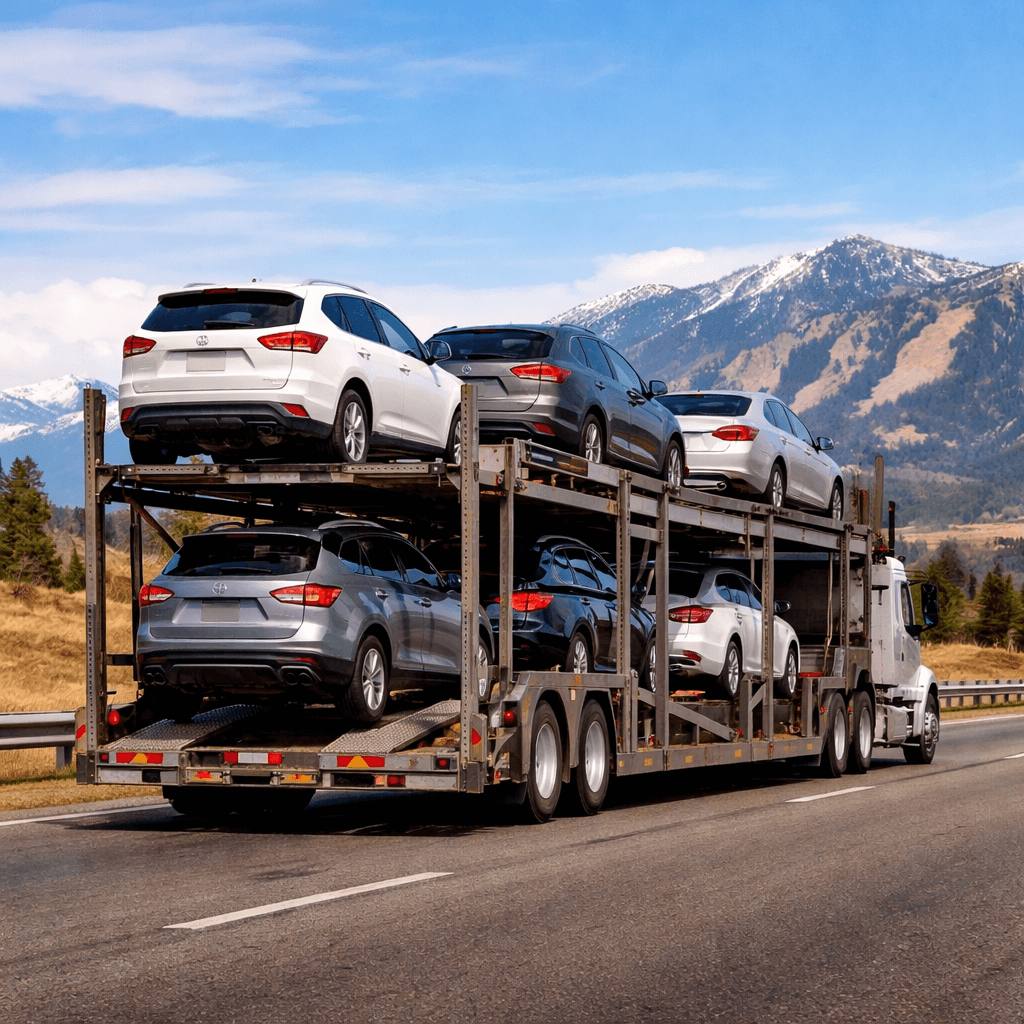
Open Transport
Open transport is commonly used for standard passenger vehicles, SUVs, and light trucks that are regularly driven in varied weather conditions. It generally offers lower overall transport costs, especially for long-distance moves from Colorado’s interior to Canadian border crossings. Due to frequent carrier traffic along I-25 and I-70, open carriers are more readily available for Colorado routes, even during peak relocation
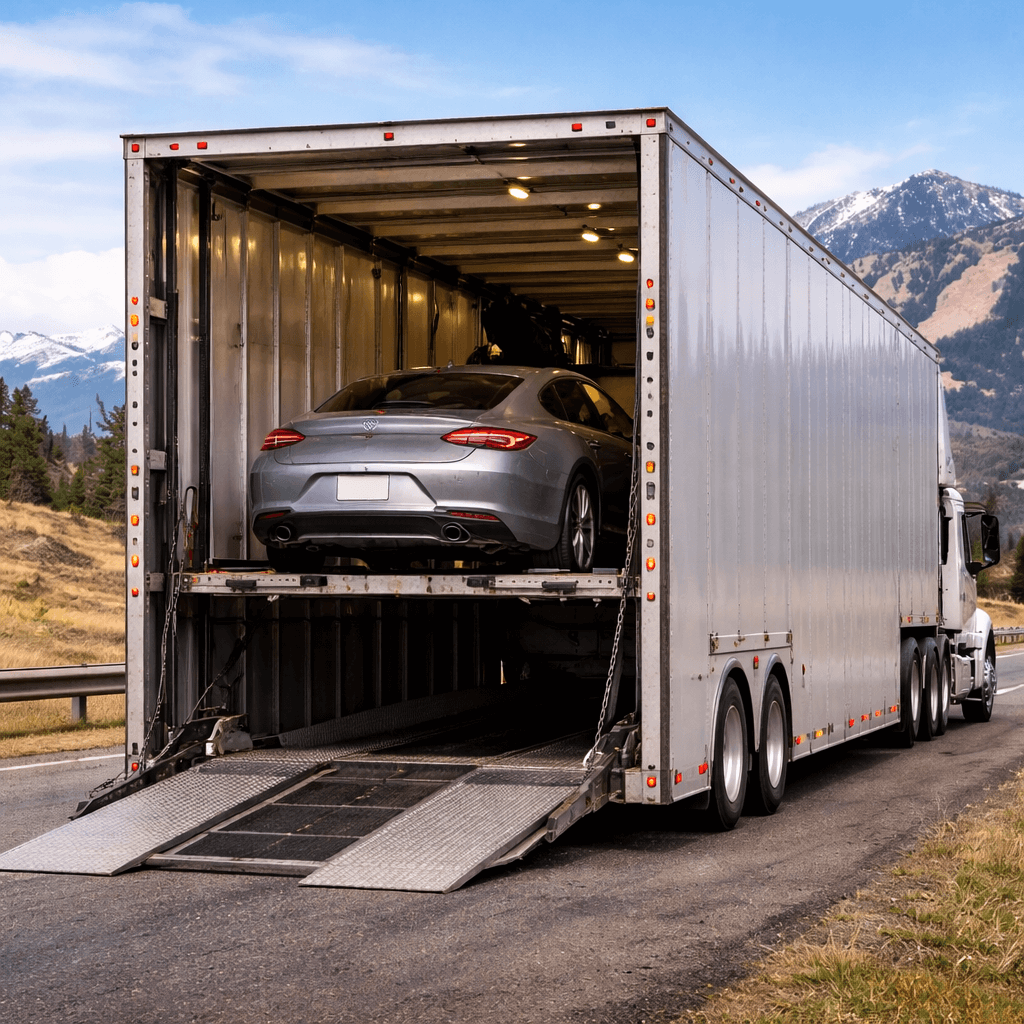
Closed Transport
Enclosed transport provides full protection from road debris, weather, and environmental exposure throughout the trip. This option is often selected for high-value, classic, or low-clearance vehicles moving to or from Colorado, particularly when winter conditions or long mountain segments are involved. The added protection comes with higher costs and more limited scheduling flexibility, as enclosed carriers operate on tighter routing plans.
Both open and enclosed transport are used for cross-border vehicle shipments involving Colorado, depending on the vehicle and route requirements. The final choice is based on balancing protection needs, timing considerations, and budget priorities for each shipment.
Colorado ↔ Canada Auto Transport Pricing
| From | To | Starting Price (USD) |
|---|---|---|
| Toronto | Denver | 1,950+ |
| Vancouver | Denver | 1,850+ |
| Montreal | Denver | 2,150+ |
| Calgary | Denver | 2,150+ |
| Edmonton | Denver | 2,150+ |
| Ottawa | Denver | 2,150+ |
| Winnipeg | Denver | 1,975+ |
| Regina | Denver | 2,150+ |
| Saskatoon | Denver | 2,150+ |
* Starting prices are estimates. Actual cost varies by vehicle size, timing, route, and duties/taxes.
Pricing reflects the longer overland distance from Colorado’s Front Range cities, such as Denver, to northern border crossings and major Canadian hubs, accounting for routing through mountain passes and carrier staging along I‑25 and I‑70 corridors. Seasonal traffic and limited northern Colorado carrier availability also influence the cost structure for these cross-border shipments.
How the Colorado ↔ Canada Car Shipping Process Works
Vehicles shipped between Colorado and Canada move through a coordinated process that ensures door-to-door delivery while handling all necessary customs documentation. The system is structured to keep the shipment straightforward and manageable for owners across long-distance, cross-border routes.
Step 1: Request a Quote
Get a free, no-obligation quote based on your vehicle, route, timing, and transport preference. Pricing includes logistics planning and cross-border coordination.
Step 2: Schedule Pickup
Colorado pickups can be scheduled with flexibility to accommodate carrier availability along major corridors like I‑25 and I‑70, allowing convenient timing for both urban and suburban locations.
Step 3: Vehicle Inspection & Preparation
Your vehicle is inspected at pickup and documented for condition. We’ll guide you on simple preparation steps to ensure a smooth transport.
Step 4: Cross-Border Transport & Customs
We handle all required customs paperwork and border coordination while your vehicle is transported safely across the U.S.–Canada border.
Step 5: Door-to-Door Delivery
Your vehicle is delivered to its destination, where a final inspection confirms it arrives in the same condition as pickup.
Every stage, from scheduling to final delivery, is organized to handle coordination, paperwork, and logistics seamlessly on your behalf.
Reviews from Colorado-Bound Customers
Customers sharing their experiences describe vehicle shipments to and from Colorado cities like Denver and Fort Collins, including timing, route coordination, and handling during long-distance cross-border transport.


Colorado ↔ Canada Auto Transport FAQs
This section answers frequently asked questions about vehicle shipping to and from Colorado, covering logistics, border crossings, and transit timing for cross-border routes.
For shipments from Colorado heading north, vehicles often follow established corridors toward British Columbia to connect with major Canadian highways. When transporting goods from Colorado to Canada, carriers often route through Wyoming to bypass the heavy mountain grades of the Colorado Rockies (I-70) and to align with major federally designated international trade corridors.
Get a Colorado ↔ Canada Shipping Quote
No hidden fees
Full customs handling
Real humans, not brokers