
Complete Guide to Importing Cars Between the USA and Canada
Importing a car between the United States and Canada involves more than simply transporting a vehicle across the border. Because both countries maintain strict safety, environmental, and customs regulations, cross-border vehicle shipping requires proper documentation, compliance with federal agencies, and coordination with customs authorities on both sides.
Every year thousands of vehicles move between the United States and Canada due to relocation, vehicle purchases, family transfers, snowbird travel, or permanent imports. While the two countries share one of the world’s most integrated automotive markets, importing a vehicle still requires understanding the correct procedures, taxes, and transport logistics.
This guide explains the complete process for importing cars between the USA and Canada, including required documents, customs duties, compliance rules, and the safest ways to transport a vehicle across the border.
Whether you are relocating permanently, buying a vehicle internationally, or sending a car to family members, understanding the cross-border import process will help you avoid delays and unexpected costs.

Understanding Cross-Border Vehicle Import Rules
Vehicle imports between the United States and Canada are regulated by multiple federal agencies responsible for safety standards, emissions compliance, and customs processing.
In the United States, the primary agencies involved include:
- U.S. Customs and Border Protection (CBP)
- Environmental Protection Agency (EPA)
- Department of Transportation (DOT)
- National Highway Traffic Safety Administration (NHTSA)
When importing a vehicle into Canada, the primary authorities include:
- Canada Border Services Agency (CBSA)
- Transport Canada
- Registrar of Imported Vehicles (RIV)
- Environment and Climate Change Canada
These agencies ensure that imported vehicles meet national safety and environmental standards before they can be legally registered and driven.
Safety and Emissions Compliance
Both countries maintain vehicle standards that imported vehicles must meet.
In the United States, imported vehicles must comply with:
- Federal Motor Vehicle Safety Standards (FMVSS)
- EPA emissions regulations
Vehicles that are at least 25 years old are generally exempt from most DOT and EPA requirements, which simplifies the import process.
Canada has a similar system requiring vehicles to meet Canadian Motor Vehicle Safety Standards (CMVSS). When importing into Canada, many vehicles must go through the Registrar of Imported Vehicles (RIV) program, which verifies compliance before registration.
Temporary vs Permanent Imports
Not every vehicle crossing the border is permanently imported.
Temporary vehicle imports commonly occur when:
- Snowbirds spend winter months in the United States
- Canadians temporarily relocate for work
- U.S. residents travel to Canada for extended stays
Temporary imports typically do not require full compliance with import regulations as long as the vehicle returns to its country of registration.
Permanent imports occur when:
- Someone relocates to another country
- A vehicle is purchased internationally
- A vehicle is gifted to a family member across the border
Permanent imports require full customs processing, documentation, and compliance with national safety regulations.
Documents Required to Import a Car Across the Border
Importing a vehicle between the United States and Canada requires several key documents to verify ownership, compliance, and customs eligibility. Having the correct paperwork ready before transport helps avoid delays at the border and ensures smooth customs clearance.
Vehicle Title and Ownership Documents
The most important document required for cross-border vehicle shipping is the original vehicle title or proof of ownership.
Customs officials require this document to verify that:
- The vehicle is not stolen
- The exporter has legal authority to transfer the vehicle
- The VIN matches official records
If the vehicle is financed, additional authorization from the lienholder may be required before the vehicle can be exported.
Bill of Sale
If the vehicle was recently purchased, customs may request a bill of sale to confirm the transaction value.
This document may be used to determine applicable duties and taxes during the import process.
Identification Documents
Importers must also present personal identification when importing a vehicle.
Typical documents include:
- Passport
- Driver’s license
- Proof of residency in the destination country
These documents help customs officials confirm the importer’s eligibility for certain exemptions or tax rules.
Import Declaration Forms
Additional customs forms may be required depending on the direction of the shipment.
Examples include:
For importing into the United States:
- EPA Form 3520-1
- DOT Form HS-7
For importing into Canada:
- Vehicle Import Form (Form 1)
- RIV documentation if required
Professional auto transport companies familiar with cross-border shipping often help coordinate the paperwork needed for customs processing.
Import Duties and Taxes for Cross-Border Vehicle Shipping
Import duties depend largely on where the vehicle was manufactured, rather than where it was purchased or registered. The first character of a vehicle’s VIN typically identifies the country of manufacture, which determines tariff eligibility.
Vehicles Manufactured in North America
Vehicles built in the United States, Canada, or Mexico often qualify for zero import duty under North American trade agreements when imported between the United States and Canada.
However, even when no duty applies, importers may still be responsible for certain taxes or administrative fees.
Vehicles Manufactured Outside North America
Vehicles manufactured outside North America may be subject to import duties depending on their origin.
Common examples include vehicles built in:
- Europe
- Japan
- South Korea
- China
- Other international manufacturing locations
Tariff rates may vary based on current trade agreements and customs policies.
Sales Taxes and Provincial Taxes
When importing vehicles into Canada, additional taxes may apply including:
- Goods and Services Tax (GST)
- Provincial Sales Tax (PST)
- Harmonized Sales Tax (HST)
These taxes are typically based on the vehicle’s declared value at the time of import.
In the United States, state taxes may apply later during vehicle registration depending on local requirements.
Exemptions and Special Situations
Some imports may qualify for reduced duties or exemptions, such as:
- Returning residents importing previously owned vehicles
- Vehicles older than 25 years
- Certain diplomatic or government exemptions
Understanding the applicable duty and tax rules before importing a vehicle helps avoid unexpected costs.
Vehicle Transport Options Between the USA and Canada
Once customs requirements are understood, the next step is determining how the vehicle will physically move across the border. Several vehicle transport options are available depending on budget, timing, and personal preference.
Professional Auto Transport
The safest and most common method is hiring a professional auto transport company that specializes in cross-border shipping. These companies coordinate:
- Carrier scheduling
- Customs documentation
- Border crossing logistics
- Delivery to the final destination
Professional carriers help reduce the risk of delays and ensure vehicles are transported securely. Many customers choose cross-border car shipping services when moving vehicles internationally because the process can be complex for individuals unfamiliar with customs procedures.
Open Carrier Transport
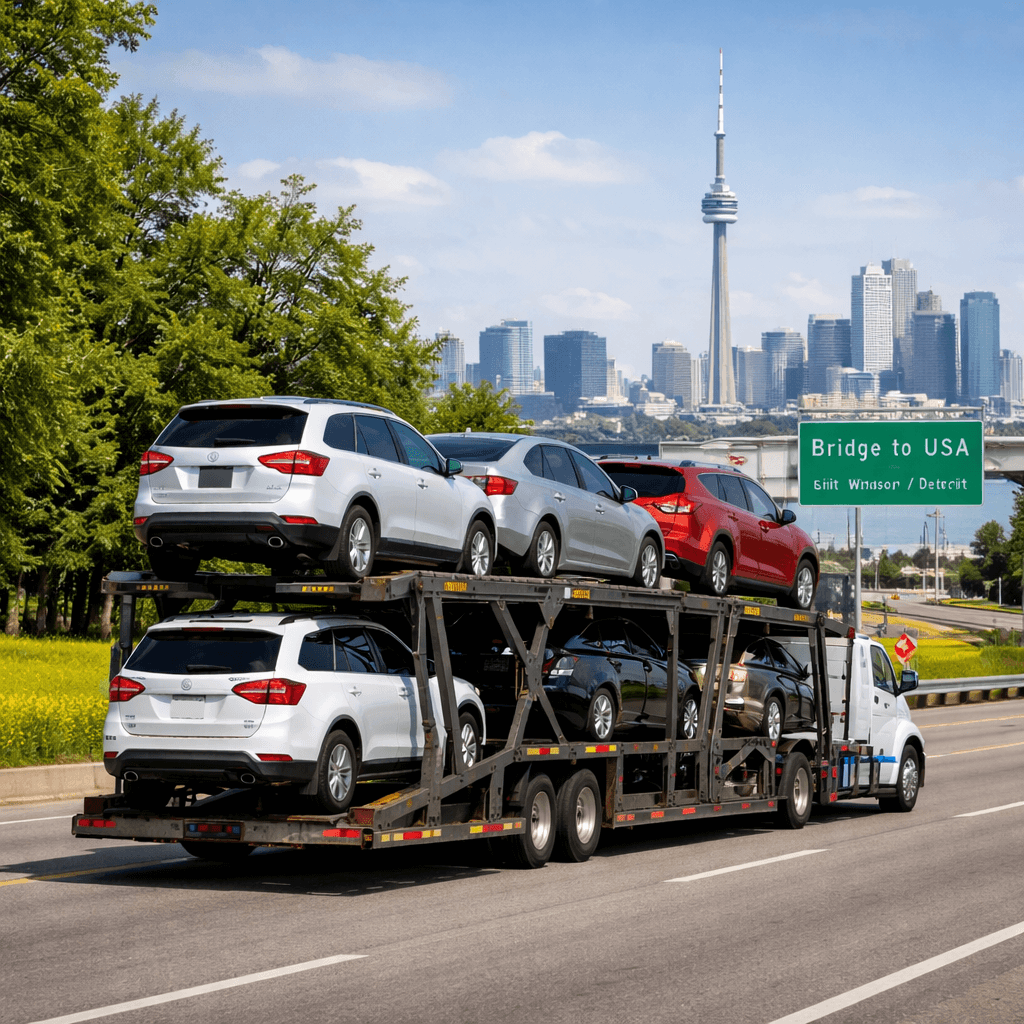
Open carrier transport is the most common and cost-effective shipping method.
Vehicles are transported on multi-vehicle trailers similar to those used for dealership deliveries. This option is ideal for standard passenger vehicles and offers reliable service at competitive rates.
Enclosed Carrier Transport
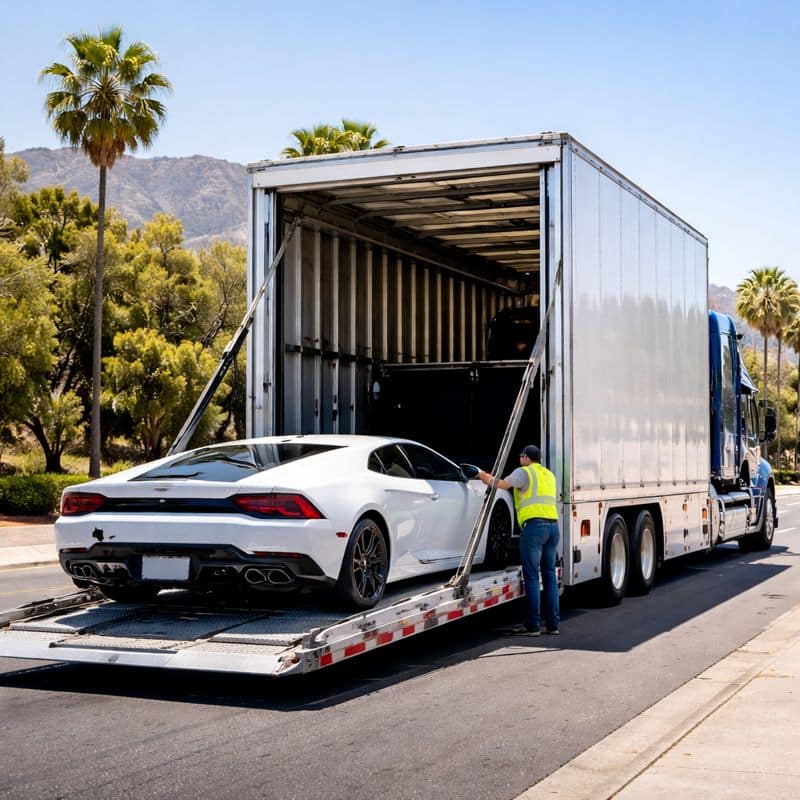
Enclosed auto transport provides additional protection from weather and road debris.
This option is commonly used for:
- Classic cars
- Luxury vehicles
- High-value sports cars
Although enclosed transport costs more than open transport, it provides greater protection for valuable vehicles.
Detailed Guides for Importing Vehicles Between the USA and Canada
Vehicle import procedures can vary depending on the origin and destination of the shipment. For example, importing a car from a specific U.S. state into Canada may involve different logistics compared to importing from a Canadian province into the United States.
For regional guidance, you can review detailed shipping information for specific locations such as ship a car from California to Canada or explore guides covering provincial routes.
If you are importing a vehicle from eastern Canada, our guide on shipping a car from Ontario to the United States explains the specific considerations for that route.
These regional guides provide additional details on transport corridors, pickup locations, and border crossing procedures commonly used for those shipments.
Popular Cross-Border Vehicle Shipping Routes
Several major transport corridors are frequently used for vehicle shipments between the United States and Canada. These routes connect major population centers and border crossings commonly used for commercial vehicle transport.
Some of the most common cross-border routes include:
- California to British Columbia
- Texas to Ontario
- Florida to Quebec
- Washington State to Alberta
- New York to Ontario
These routes are often serviced by established carrier networks, which can help reduce transit times and transportation costs. For example, vehicles moving from the western United States into Canada frequently pass through border crossings in Washington State before continuing into British Columbia or Alberta.
Similarly, shipments moving between Ontario and the northeastern United States often use border crossings connecting Ontario with New York or Michigan. Because these routes are commonly used for automotive logistics, experienced carriers are often able to coordinate efficient shipments along these corridors.
Frequently Asked Questions About Importing Cars Between the US and Canada
Get an USA ↔ Canada Shipping Quote
No hidden fees
Full customs handling
Real humans, not brokers