
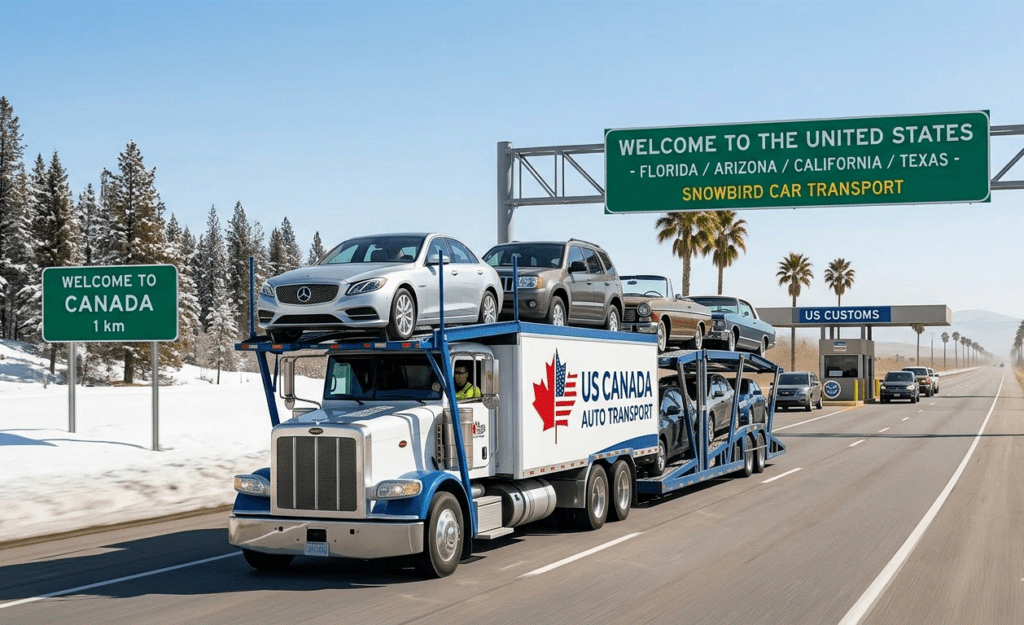
As a snowbird, you spend months planning your escape from Canadian winters to warmer U.S. destinations. Your vehicle is often the last piece of the puzzle. Driving thousands of kilometres yourself means border delays, fatigue, and extra wear on your car. Professional snowbird car transport eliminates those headaches. US Canada Auto Transport handles the entire process, so you can focus on enjoying your winter escape.
This detailed guide walks you through every aspect of shipping your car across the border. You will learn the exact steps, ideal booking windows, required documents, pricing factors, and delivery options. Whether your route takes you to Florida, Arizona, Texas, or California, the right preparation makes the move effortless. For even more in-depth planning tips, see our snowbird car transport guide.
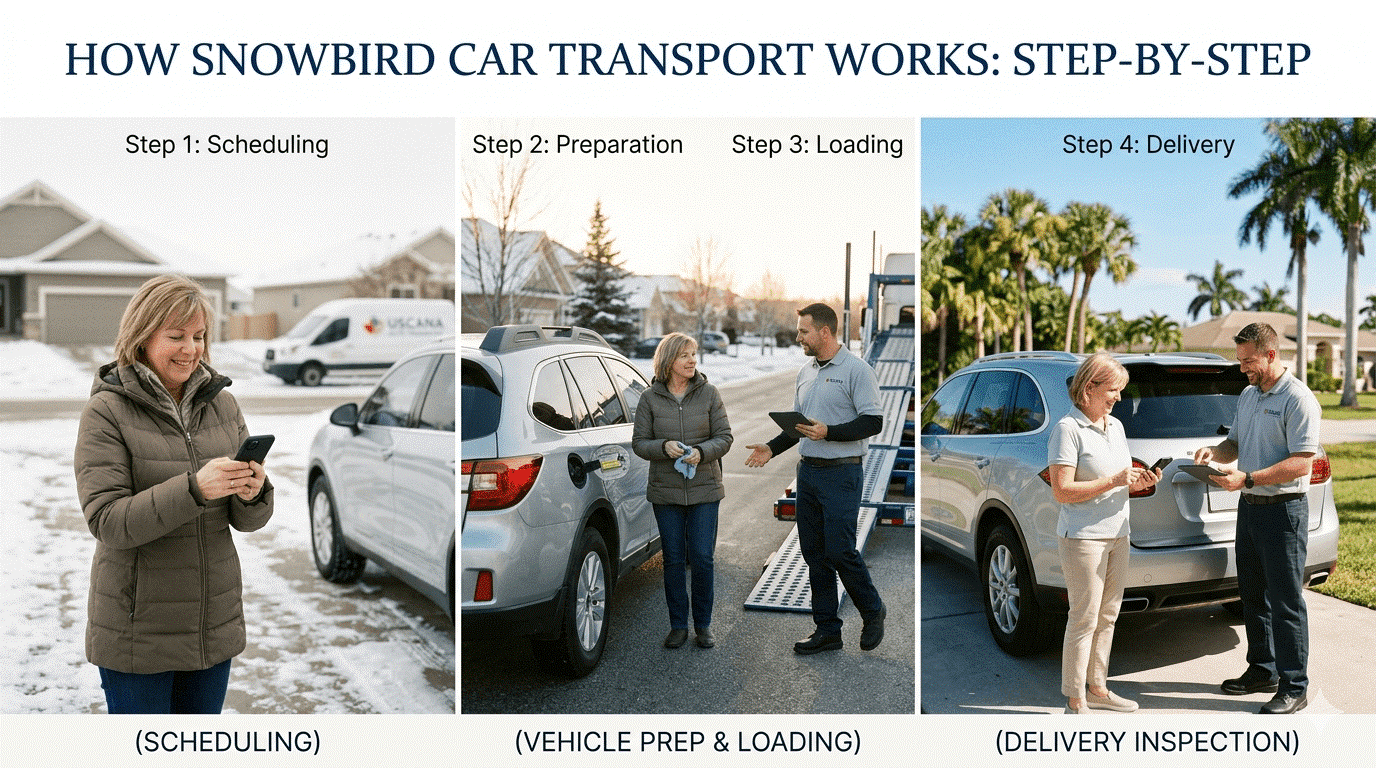
How snowbird car transport works step by step
The process begins with a quick quote request. You supply your Canadian pickup city, U.S. delivery address, vehicle details, and preferred dates. Within hours, US Canada Auto Transport returns a transparent price and timeline tailored to your route.
Next comes scheduling. Once you confirm, the team books a bonded carrier and sends you a confirmation with pickup window and driver contact information. Practical tip: choose a two-day pickup window instead of a single day. This flexibility accounts for unexpected traffic or weather delays common in late fall.
Vehicle preparation follows. Remove all personal belongings, toll devices, and loose items. Leave only a quarter tank of fuel—enough for loading but light enough to reduce weight. Clean the exterior and interior thoroughly; carriers inspect vehicles on pickup and delivery. Take dated photos of any existing scratches or dents. This step protects you and speeds up the inspection process.
On pickup day, the driver arrives with your bill of lading. You hand over the keys, review the condition report together, and sign off. Your car is then secured on an open or enclosed trailer, depending on your preference and vehicle value.
Transit takes seven to fourteen days on most Canada-to-U.S. routes. The carrier manages customs clearance at the border using pre-cleared paperwork. You receive GPS tracking updates every few days so you always know your car’s location.
Delivery completes the journey. The driver contacts you twenty-four to forty-eight hours before arrival. You meet at your southern home, a storage facility, or even an airport parking lot. Another joint inspection happens, you sign the delivery receipt, and your keys are returned. The entire handoff takes under thirty minutes.
This streamlined workflow keeps your vehicle protected and your schedule intact. Many snowbirds report zero surprises when they follow these steps exactly. Get a cross-border car shipping quote today!
When to book your seasonal shipment
Timing separates smooth shipments from stressful ones. Book your southbound transport four to six weeks before your planned departure from Canada. September and October see the heaviest demand as thousands of snowbirds head south simultaneously. Booking earlier locks in preferred dates and often secures lower rates before peak pricing kicks in.
Northbound return trips in April and May follow the same logic. Reserve six weeks ahead to avoid the spring rush when everyone heads home at once. If your schedule is flexible, consider shifting pickup by a week or two. Carriers fill slots quickly during shoulder seasons, and last-minute requests can cost 20–30 percent more.
Practical insight: monitor long-range weather forecasts for your Canadian pickup city. Early snowstorms can delay loading. Shipping services offer free date changes up to fourteen days before pickup on most bookings, giving you peace of mind.
Mark both southbound and northbound dates in your calendar the moment you book flights or condo reservations. This single habit prevents the frantic calls many first-time snowbirds make in late October.
Documents snowbirds should prepare in advance
Strong documentation prevents border delays and keeps your shipment on schedule. Start with your vehicle registration and proof of ownership. The shipping company needs a clear photocopy or scan at least ten days before pickup.
Carry your Canadian driver’s licence and valid passport. These identify you as the owner during customs declarations. If your car is leased, include the lease agreement with permission-to-ship clause. Insurance proof for both countries is essential—most U.S. policies activate automatically once the vehicle crosses the border, but confirm coverage dates.
Additional items that speed everything up include a signed power of attorney if you cannot attend pickup and a letter authorizing the carrier to handle customs on your behalf. Digital copies stored in your phone’s cloud folder save time if paper versions are misplaced.
Practical tip: create a dedicated “Snowbird Car Folder” on your phone. Scan every document in colour, add the carrier’s emergency number, and share the folder with a family member. This simple system has saved countless snowbirds from last-minute panic at the border.
What affects cost on popular winter routes
Pricing for snowbird car transport varies by four main factors. Distance tops the list. A Toronto-to-Orlando route (roughly 2,300 kilometres) typically runs $1,800–$2,600, while Vancouver-to-Phoenix adds several hundred dollars due to extra mileage.
Transport type also matters. Open carriers suit most sedans and SUVs and cost less. Enclosed trailers protect classic cars, convertibles, or luxury models and add $400–$700 to the total. Seasonal demand pushes rates higher from mid-September through November. Booking in early August can save you hundreds.
Fuel prices, tolls, and driver availability influence the final quote too. Popular winter routes like Montreal to Tampa or Calgary to Scottsdale see predictable pricing patterns. Larger vehicles or those with roof racks require extra securing and may incur slight surcharges.
Insight: request quotes for both open and enclosed options. The difference often surprises clients who assume enclosed is always out of reach. US Canada Auto Transport provides itemized breakdowns so you see exactly where every dollar goes—no hidden fees.
For snowbirds heading to Florida specifically, check the dedicated Florida snowbird shipping page for route-specific tips and current rate ranges.
How delivery works at your southern destination
Delivery options give you maximum flexibility. Door-to-door service brings the truck right to your Florida condo driveway, Arizona resort, or Texas home. Terminal delivery drops the vehicle at a secure warehouse near your destination if direct access is restricted by gates or narrow streets.
Twenty-four to forty-eight hours before arrival, the carrier calls with an exact window. You confirm the location and any special instructions—such as parking in a guest spot or meeting at a storage facility. Upon arrival, you and the driver perform a final walk-around inspection. Any new damage is noted immediately and filed with the carrier’s insurance.
Practical tip: arrange for a friend or neighbour to accept delivery if your flight lands later than the truck. Provide them with a copy of your bill of lading and a photo of your vehicle. This small step prevents the carrier from having to return another day.
Once you sign the delivery receipt and receive your keys, you are free to drive away. Most snowbirds start their winter the same afternoon their car arrives.
Ready to simplify your seasonal move?
Frequently Asked Questions
How long does snowbird car transport take between Canada and the US? Most shipments arrive in 7–14 days. Popular routes like Ontario to Florida average 10 days, while western routes may take slightly longer depending on border wait times and weather.
Is my vehicle insured during cross-border transport? Yes. Every carrier uses carries full cargo insurance up to $250,000 per vehicle. You remain responsible only for deductibles listed on your personal policy.
Can I ship personal items inside my car? No. For safety and customs compliance, all personal belongings must be removed. The carrier will reject any loose items at pickup.
Do I need to be present for pickup and delivery? You must be present or appoint someone with signed authorization. A simple power-of-attorney form handles situations where travel schedules conflict.
What happens if my flight is delayed and I miss delivery? The carrier stores your vehicle at a secure terminal at no extra charge for up to three days. After that, modest storage fees may apply.
Is enclosed transport worth the extra cost for my SUV? Enclosed transport is recommended for vehicles valued over $50,000 or during peak winter storm season. For most SUVs, open transport provides excellent protection at a lower price.