
Importing a car from the United States into Canada can be a smart move—but how do you make sure everything goes smoothly without delays or unexpected costs?
Whether you’re relocating, purchasing a vehicle, or bringing your own car back into Canada, the process involves more than just crossing the border. You need to confirm eligibility, prepare the right paperwork, and follow specific customs procedures. This guide walks you through each step so you can avoid common pitfalls and complete your import with confidence.
Who Can Import a Car From the US to Canada
Importing a vehicle into Canada is generally allowed for Canadian citizens, permanent residents, and businesses. Returning residents who previously owned a vehicle abroad may also bring it into Canada, sometimes with specific exemptions.
However, the vehicle itself must also qualify. Canada has strict safety and environmental standards, and not all US vehicles are admissible. The Registrar of Imported Vehicles (RIV) determines whether a vehicle can be imported and what modifications, if any, are required.
In most cases, vehicles originally manufactured for the North American market are easier to import. If the vehicle meets Canadian Motor Vehicle Safety Standards (CMVSS), the process is typically straightforward. If not, you may need to complete upgrades such as installing daytime running lights or making metric conversions.
For a broader overview of cross-border vehicle movement, refer to our US-Canada car import guide.
Documents Required Before the Vehicle Moves
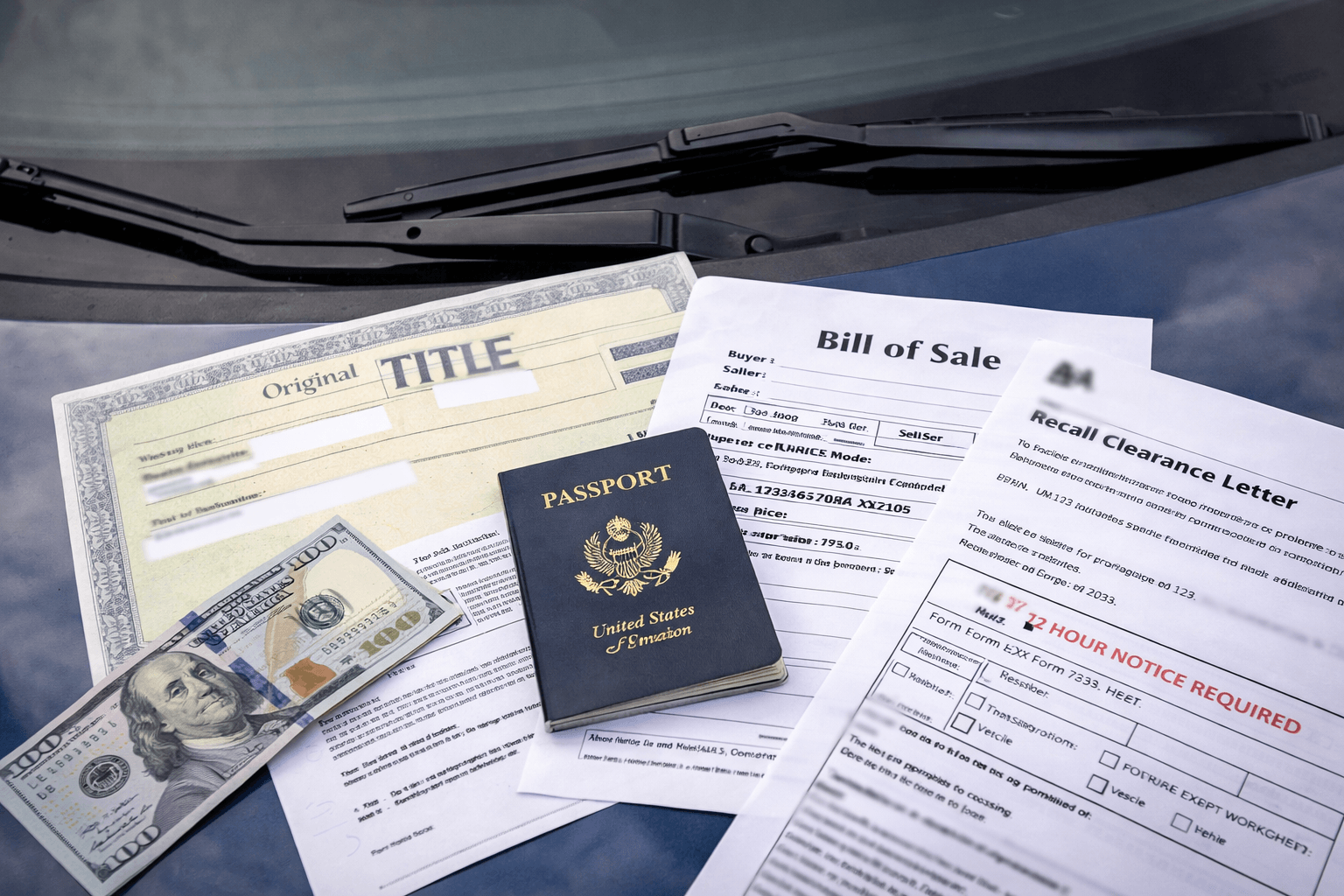
Preparation is the most important step in avoiding delays. Missing or incorrect documents can stop your vehicle at the border.
You’ll need several key documents ready before export:
- Original vehicle title – proves ownership and is required for US export approval
- Bill of sale – confirms purchase details and vehicle value for tax calculation
- Valid identification – passport or government-issued ID for border processing
- Recall clearance letter – verifies there are no outstanding safety recalls (required for RIV)
- Export documents for US Customs – must be submitted at least 72 hours before crossing
In addition to these, Canadian authorities will require Form 1 at the border, which starts the import process officially.
Working with a professional transport provider can help ensure every document is complete, accurate, and submitted on time—reducing the risk of delays.
Step-by-Step Border and Customs Process
Understanding how the process works step by step can help you plan better and avoid costly mistakes.
The process typically follows this sequence:
- Submit export documents to US Customs
You must send your title and export paperwork to the US border crossing at least 72 hours in advance for approval. - Vehicle export clearance from the US
US Customs reviews and clears the vehicle for export before it can leave the country. - Transport to the Canadian border
The vehicle is shipped or driven to the border, depending on your chosen method. - Canadian customs inspection and declaration
At entry, you present all documents, and officials assess taxes, duties, and compliance. - Complete Form 1 and enter RIV program
This step officially registers your vehicle in the import system. - Vehicle inspection and compliance check
You’ll complete an inspection to ensure the vehicle meets Canadian standards before final registration.
Once these steps are completed, the vehicle can be registered and legally driven in your province.
For route planning and transport options, explore US state shipping pages.
Typical Duties, Taxes, and Carrier Fees
Costs can vary depending on your vehicle, route, and province, but understanding the main components helps you budget effectively.
Here are the typical expenses involved:
- GST or HST
Applied based on the vehicle’s value and your province of residence. - Import duty (if applicable)
Usually around 6.1% if the vehicle was manufactured outside North America. - RIV fee
Covers inspection and compliance processing in Canada. - Air conditioning excise tax
A standard fee applied to vehicles equipped with AC systems. - Transport and carrier fees
Vary based on distance, vehicle size, and whether you choose open or enclosed transport.
Open transport is typically more affordable, while enclosed transport offers additional protection for higher-value vehicles.
To get a full breakdown of your expected cost, it’s best to get a cross-border car shipping quote before starting the process.
Common Mistakes That Delay Cross-Border Delivery
Many import delays are preventable. Understanding common mistakes can help you avoid unnecessary setbacks.
One of the biggest issues is failing to confirm whether the vehicle is admissible. Not all US vehicles qualify for import, and discovering this too late can completely halt your plans.
Another frequent mistake is missing the recall clearance letter. Without it, the RIV process cannot be completed, delaying registration.
Timing is also critical. Failing to submit export documents to US Customs at least 72 hours in advance can prevent the vehicle from leaving the US as scheduled.
Other avoidable issues include:
- Incorrect or incomplete paperwork
- Mismatched information between documents
- Underestimating taxes and fees
- Attempting the process without professional guidance
Working with an experienced cross-border auto transport provider significantly reduces these risks and ensures everything is handled correctly from start to finish.
FAQ About Importing a Car From the US to Canada
How long does it take to import a car from the US to Canada?
Most imports take one to two weeks, depending on documentation, transport, and inspection timelines.
Do all US vehicles qualify for import?
No, only vehicles listed as admissible by the RIV can be imported into Canada.
Is the recall clearance letter required?
Yes, it is mandatory to complete the RIV process and confirm the vehicle is safe.
Can I drive the vehicle across the border myself?
Yes, but you must still complete all export and import procedures correctly.
What happens after the vehicle arrives in Canada?
You must complete an inspection through the RIV program and then register the vehicle in your province.
Get Ready to Move Your Car
Importing a car from the US to Canada involves several important steps, but with the right preparation, it becomes a smooth and manageable process. By confirming your vehicle’s eligibility, organizing your documents in advance, and following each stage carefully—from US export to Canadian inspection—you can avoid costly delays and complications.
Partnering with a trusted cross-border transport provider adds confidence and efficiency, ensuring everything is handled correctly. When you’re ready to move your vehicle, request a quote for your route and let experienced professionals take care of the details.