
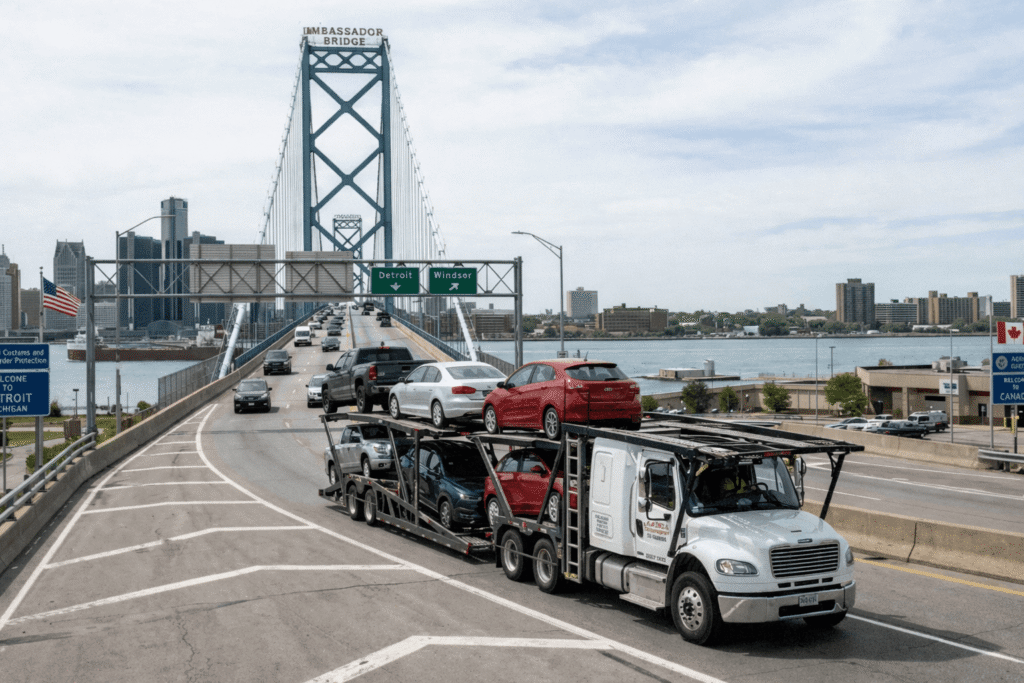
When you decide to ship your vehicle across the border, knowing exactly what to expect keeps the process smooth and budget-friendly. The cost to ship a car from the US to Canada typically falls between $1,000 and $2,500 for most standard sedans, though longer routes or specialty vehicles can push higher. Professional transporters handle the logistics, paperwork, and border procedures so you don’t have to. Factors like distance, vehicle type, and timing play major roles, but clear planning lets you avoid unexpected expenses.
For a complete overview, check our US-Canada car shipping cost guide.
What affects the cost on this cross-border route
Several key elements determine your final shipping price. Distance remains the biggest driver. A short hop from Detroit to Windsor might cost far less than a cross-country move from Los Angeles to Toronto because carriers cover more miles and spread fixed costs. Route popularity matters too—busy corridors with steady traffic often have lower rates than remote or less-traveled paths.
Your vehicle’s size, weight, and condition also influence pricing. A compact sedan travels cheaper than a full-size SUV or lifted truck that takes up extra trailer space. If your car is running and drivable, carriers load and unload it faster, which keeps costs down. Non-running vehicles require special equipment and extra labor, adding to the total.
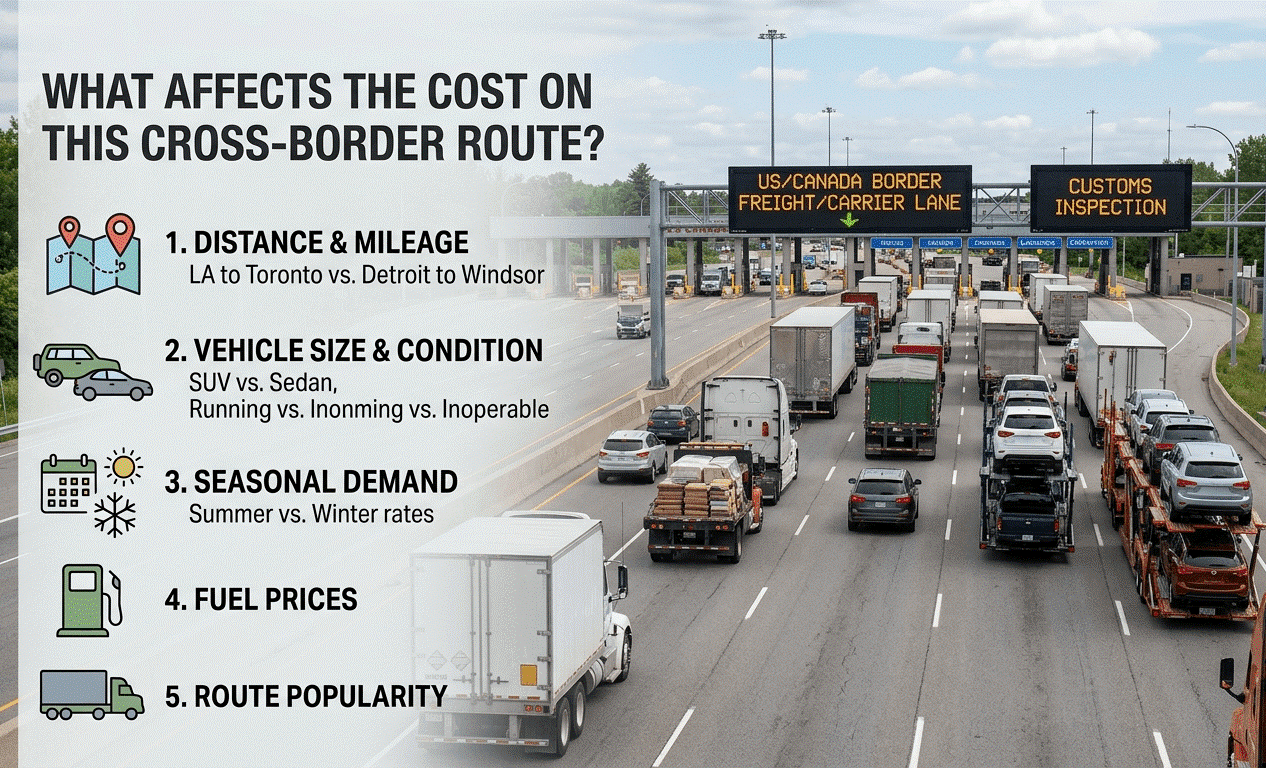
Seasonal demand creates predictable fluctuations. Summer months see higher prices because families move and students relocate, tightening carrier availability. Winter brings its own challenges—snow, ice, and shorter daylight hours can slow routes and raise rates slightly. Fuel prices and overall market demand add another layer; when diesel costs climb, carriers pass a portion of that along.
Pickup and delivery choices affect the bottom line as well. Door-to-door service offers convenience but costs more than terminal-to-terminal, where you drop off and collect at designated yards. You control expenses by choosing the right combination for your schedule and location.
Practical tip: Measure your exact route mileage and note any seasonal travel restrictions in border states or provinces before you get a cross-border car shipping quote.
Typical price range by vehicle and season
Expect a standard sedan or coupe to ship for $1,000 to $1,800 on routes under 1,000 miles, such as Chicago to Toronto. Longer hauls, like Miami to Vancouver, generally run $1,800 to $2,800. SUVs and light trucks add 15 to 25 percent because of their dimensions, while classic cars or exotics may exceed $3,000 if you choose premium handling.
Season matters. Peak summer (June through August) often adds $200 to $400 because of high demand. Winter (December through March) can increase costs by $150 to $300 due to weather-related delays and reduced carrier capacity on northern routes. Shoulder seasons—spring and fall—usually deliver the best value, with prices 10 to 20 percent lower and faster availability.
These ranges assume open transport for a drivable vehicle with standard documentation. Your specific quote will reflect current fuel surcharges, exact mileage, and any required border handling. Keep in mind that prices per mile drop as distance grows, so a 2,000-mile trip can sometimes cost less per mile than a 500-mile one.
You’ll also find detailed US state pages for pickup pricing to help refine your estimate before you begin.
Open vs enclosed trailer pricing
Most shippers use open trailers for everyday vehicles. These carriers stack multiple cars on a multi-level rig, which keeps costs low through shared capacity. Open transport works well for standard cars because modern vehicles handle brief highway exposure without issue. You’ll typically pay $1,000 to $2,000 for an average US-to-Canada route.
Enclosed trailers provide full protection inside a weatherproof box. They shield your car from rain, road debris, dust, and UV rays—ideal for luxury vehicles, classics, or low-mileage cars you want to keep pristine. The trade-off is capacity: enclosed rigs carry fewer vehicles, so prices run 30 to 60 percent higher. The same sedan that costs $1,400 on an open trailer might run $2,000 to $2,500 enclosed.
Choose based on your vehicle’s value and your peace of mind. If your car has custom paint, soft-top convertible, or collectible status, enclosed transport prevents minor dings or fading that could appear over long hauls. For daily drivers, open transport delivers reliable, cost-effective results. Many carriers offer both options, so you can compare side-by-side when you get quotes.
Border fees, duties, and other added costs
Cross-border shipping includes government fees beyond the transport rate. On the Canadian side, you’ll usually pay 5 percent GST on the vehicle’s declared value. Most North American-made vehicles qualify for duty-free entry under trade agreements, but non-qualifying imports face a 6.1 percent duty. An air-conditioning tax of $100 applies to most cars.
The Registrar of Imported Vehicles (RIV) charges a $325 fee (plus applicable tax) for registration and compliance checks. You’ll also cover provincial sales tax or HST when you register the car in your destination province. Inspection fees typically run $100 to $200, and any required modifications—such as daytime running lights or speedometer changes—add extra costs if your vehicle doesn’t meet Canadian standards out of the box.
On the US side, export filing is usually straightforward and low-cost, but you must provide 72 hours’ advance notice to customs. Professional transporters manage this paperwork, coordinate inspections, and ensure your vehicle clears the border efficiently. Budget an additional $400 to $800 total for these border-related expenses on top of the transport rate. Always confirm your vehicle’s eligibility early so you avoid last-minute surprises.
How to lower your shipping cost without cutting corners
Smart planning trims expenses while protecting your vehicle. First, stay flexible with pickup and delivery windows. Giving carriers a 7- to 14-day range instead of demanding exact dates lets them fit your shipment into existing routes and saves you money.
Second, book early—ideally three to four weeks ahead. Last-minute requests force carriers to charge premiums for rushed scheduling. Third, prepare your car properly: wash it, remove personal items, fill the tank to no more than a quarter, and ensure it starts and drives. A clean, ready vehicle speeds loading and reduces labor charges.
Consider terminal-to-terminal service if your schedule allows. You drop the car at a secure yard near your US location and pick it up at a Canadian terminal, cutting door-to-door fees. Ship during shoulder seasons when demand dips. Compare multiple quotes to see how different carriers price your exact route and vehicle. Finally, ask about bundling services or loyalty discounts if you have multiple shipments planned.
These steps keep your costs low without compromising safety or reliability. You still receive full insurance coverage, GPS tracking, and professional handling.
Frequently Asked Questions
How long does it take to ship a car from the US to Canada? Most shipments take 5 to 15 days total. Pickup usually occurs within 1 to 3 days of booking, transit covers 3 to 10 days depending on distance, and customs clearance adds 1 to 2 days. Weather or high volume can extend timelines slightly, so plan a buffer.
Do I need to be present for pickup or delivery? No. You can authorize a family member, friend, or even a valet service with a signed release. Many carriers offer secure terminal options where you simply drop off and collect the keys later.
What documents will I need for the border? You’ll provide the vehicle title, bill of sale or registration, a completed Vehicle Import Form, and proof of insurance. The transporter handles export filing with US Customs and coordinates Canadian customs clearance.
Is my car insured while in transit? Reputable carriers carry $100,000 to $1,000,000 in cargo insurance. Your personal auto policy usually does not cover the vehicle once loaded, so confirm the carrier’s coverage details before shipment.
Can I ship a non-running or salvage vehicle? Yes, but expect higher costs for specialized loading equipment and possible flatbed use. Provide full disclosure upfront so the carrier quotes accurately and prepares the right trailer.
How do I know my vehicle meets Canadian import rules? Check the Registrar of Imported Vehicles website for your make and model. Most recent US-market cars qualify, but older or modified vehicles may need recalls cleared or minor adjustments.
Understanding these details puts you in control. Ready to move your car safely and affordably? Receive a precise, no-obligation price tailored to your exact pickup, vehicle, and destination.
At US Canada Auto Transport, we specialize in seamless cross-border car shipping with transparent pricing, experienced drivers, and full support through every step of the journey. Whether your route spans a few hundred miles or crosses the entire continent, our team makes the process straightforward so you can focus on your next chapter.