

Shipping your car across the border from Canada to the US doesn’t have to be a guessing game. Whether you’re a snowbird heading south for winter, relocating for a new job, or selling a vehicle to a buyer in the States, knowing the real costs upfront helps you plan confidently and avoid surprises. Prices typically range from $1,000 to $2,500 for most common routes, but your exact quote depends on distance, vehicle type, timing, and a few border-specific details. This guide breaks it all down so you can budget accurately and make informed decisions.
What affects the cost on this cross-border route
Several key variables shape your final price when you ship a car from Canada to the US. Distance remains the biggest driver—shorter hops like Toronto to Buffalo stay under $1,000, while longer hauls from Vancouver to Texas or Calgary to Florida push toward $2,000 or more. Fuel surcharges and carrier availability also play roles, especially on routes with fewer trucks.
Your vehicle’s size, weight, and condition matter too. A standard sedan or small crossover fits easily on most carriers and keeps costs lower. Larger SUVs, trucks, or EVs often add 10–20% because they take up more trailer space and weigh more. Non-running vehicles require special handling, which increases the rate further.
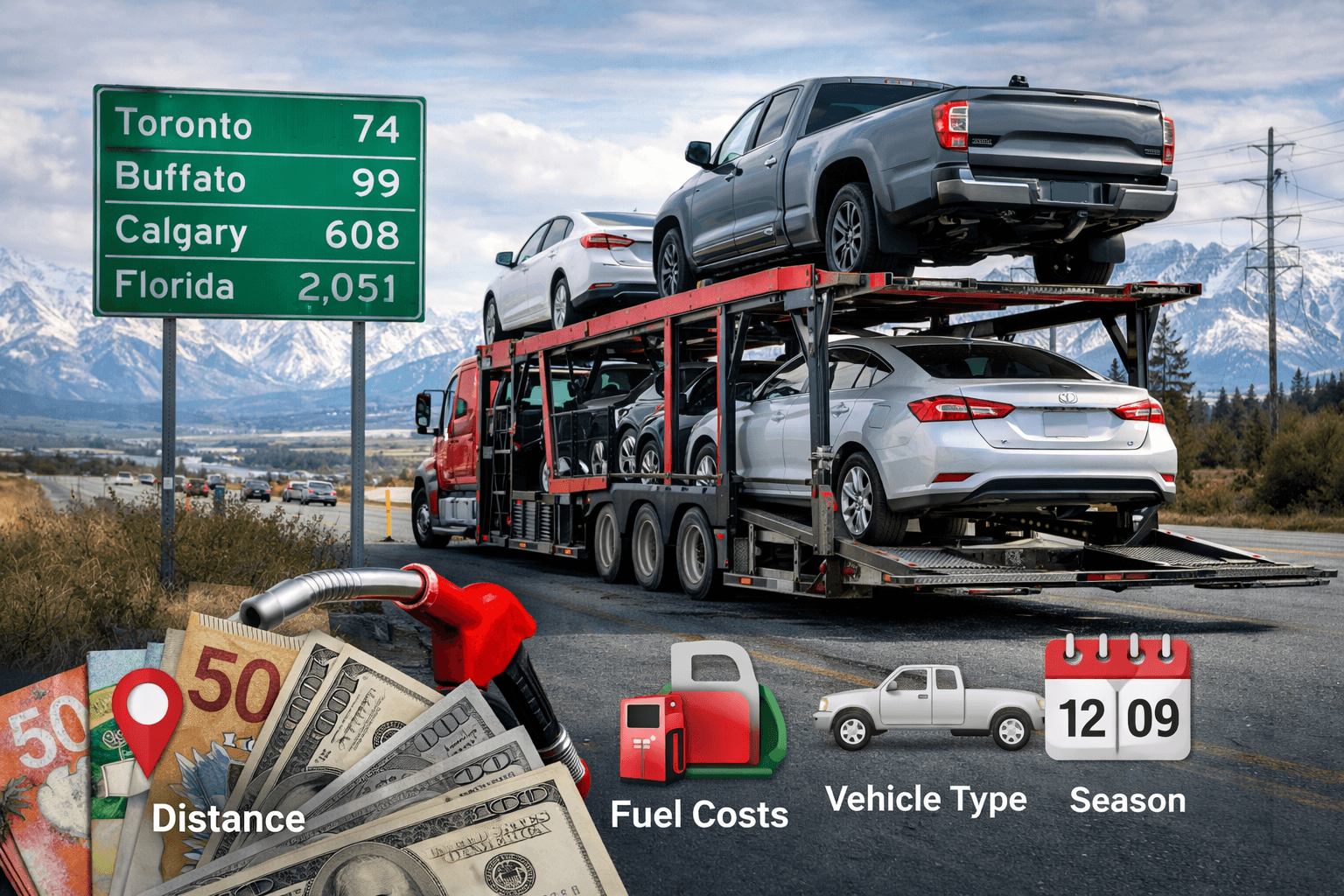
Seasonal demand creates noticeable swings. Peak snowbird months (October through December) see higher rates as carriers fill up fast on southbound routes. Summer moving season can also tighten capacity. Off-peak periods, like late spring or early fall, often deliver the best value.
Pickup and delivery locations affect pricing as well. Major cities with easy highway access cost less than remote rural spots in provinces like Saskatchewan or northern British Columbia, where extra miles or ferry connections add fees. Finally, current fuel prices and overall market demand for cross-border hauls influence every quote. Understanding these factors lets you time your shipment strategically rather than reacting to last-minute surprises.
For a full overview of how these elements interact on every possible route, check our US-Canada car shipping cost guide.
Typical price range by vehicle and season
Realistic quotes give you a clear picture before you commit. For a standard sedan on open transport, expect $1,200–$1,800 on a typical 1,000–1,500-mile route such as Ontario to Florida or Alberta to Arizona. Compact cars or lightweight crossovers often land at the lower end, while mid-size SUVs or light trucks run $1,400–$2,100 because they occupy more space.
Longer distances don’t always mean proportionally higher costs. Per-mile rates drop as the trip lengthens, so a cross-country move from British Columbia to California can still fit comfortably in the $1,600–$2,300 range for most vehicles. Shorter border crossings, like Quebec to New York or Manitoba to North Dakota, frequently stay between $900 and $1,400.
Season makes a real difference. During peak winter demand, add 20–30% to base rates—your $1,500 quote could climb to $1,800–$2,000 if you book at the last minute. Off-peak shipping in April–August or January–February (after the main snowbird rush) often saves you hundreds. Flexible dates and a willingness to ship mid-week can trim another 5–10%.
These numbers reflect current 2026 market conditions for operable, standard vehicles. Your specific quote will vary, which is why checking Canadian province pages for route pricing helps you see tailored examples for your starting point.
Open vs enclosed trailer pricing
Choosing between open and enclosed transport directly impacts your bottom line. Open carriers remain the most popular and affordable option. They haul multiple vehicles at once, keeping costs low—typically 30–60% less than enclosed service. For a standard Canada-to-US run, open transport might cost $1,200–$1,800, while the same route in an enclosed trailer could run $1,600–$2,500.
Open trailers expose your car to weather and road debris, but modern carriers use secure tie-downs and protective coverings that minimize risk for everyday vehicles. Most people choose open because it balances cost and reliability perfectly.
Enclosed trailers provide full protection inside a sealed unit—ideal for luxury cars, classics, or vehicles you want to keep showroom-fresh. The premium reflects limited capacity (fewer cars per truck) and specialized equipment. The extra $400–$700 buys peace of mind during long hauls or through harsh weather zones.
Practical tip: If your car is a daily driver with average value, open transport delivers excellent value. Reserve enclosed only when appearance or sentimental value matters more than budget. Either way, reputable carriers inspect your vehicle before loading and provide photos or condition reports.
Practical tip: Measure your exact route mileage and note any seasonal travel restrictions in border states or provinces before you get a cross-border car shipping quote.
Border fees, duties, and other added costs
Crossing the border adds a layer of fixed costs that many first-time shippers overlook. Good news: under current USMCA rules, most personal vehicles manufactured in North America face little or no duty when imported to the US. Tariffs depend primarily on the vehicle’s country of origin (checked via VIN), not where you ship from. U.S.-built cars often clear with zero tariff for returning residents or temporary imports.
You will still encounter some fees. Customs broker assistance typically runs $150–$300 to handle paperwork efficiently. Merchandise processing fees and basic CBP user charges stay modest—usually under $100 combined. If your vehicle is under 25 years old and non-North American, you may need an HS-7 declaration form for EPA/DOT compliance, but many carriers manage this as part of their service.
Other practical add-ons include:
- Insurance (basic coverage often included; supplemental full-value options cost extra).
- Any required temporary importation bond for short-term stays.
- State registration taxes paid later when you title the car.
Total border-related extras usually fall between $200 and $500 for straightforward personal shipments. Preparing clean title documents, a bill of sale if selling, and your ID in advance prevents delays that could rack up storage fees. Carriers experienced with cross-border runs streamline the entire process so your car clears customs smoothly.
How to lower your shipping cost without cutting corners
You can reduce your quote significantly by making smart, low-effort choices. First, book 3–6 weeks ahead, especially outside peak snowbird season. Early reservations give carriers flexibility to fit your load efficiently and often lock in lower rates.
Second, choose open transport unless your vehicle truly needs enclosed protection. The savings of several hundred dollars rarely justifies the premium for standard cars.
Third, stay flexible on dates and locations. Mid-week pickups, minor adjustments to delivery windows, or terminal-to-terminal options (instead of door-to-door) can shave 10–15% off the price. If you live near a major highway, that accessibility helps too.
Fourth, prepare your car properly: clean it inside and out, remove personal items, and ensure it starts and drives (or note non-running status upfront). These steps avoid extra handling charges.
Fifth, compare multiple quotes from the same trusted network rather than shopping randomly. A single reliable provider often beats scattered bids because they control the entire cross-border logistics.
Finally, bundle services when possible. Some carriers offer discounted insurance or expedited options when you book the full package early.
Follow these steps and you’ll protect your vehicle while keeping costs under control—no shortcuts, just smarter planning.
Ready to move forward? See exact pricing based on your vehicle, dates, and locations.
At US Canada Auto Transport, we specialize in seamless cross-border moves and deliver transparent, reliable service every time. Our team handles the details so you can focus on your next chapter south of the border.
Frequently Asked Questions
1. How long does it take to ship a car from Canada to the US? Most shipments take 3–7 business days depending on distance and route. Shorter border crossings finish faster, while longer hauls or peak-season congestion may add a day or two. Expedited service can shorten this if you need it.
2. Are duties or tariffs usually required? For most personal vehicles made in North America, duties are zero or very low thanks to trade agreements. Foreign-made cars may face tariffs based on origin, but your carrier verifies this via VIN and handles declarations so you know exact costs upfront.
3. What documents do I need to provide? You’ll need the vehicle title or registration, a bill of sale if selling, your government-issued ID, and any power of attorney if someone else handles pickup. The carrier guides you on customs forms.
4. Can I leave personal items in the car? It’s best to remove everything except a small emergency kit. Carriers prohibit loose items for safety and customs reasons. Heavy or valuable belongings should travel separately.
5. Is insurance included in the quote? Standard liability coverage is usually included, but you can upgrade to full-value protection for higher-value vehicles. Always confirm exact coverage limits before booking.
6. How do I get the most accurate price? Provide your exact pickup and delivery addresses, vehicle details (make, model, year, running status), and preferred dates. Instant quotes or a quick call to an experienced cross-border specialist deliver the clearest picture.