
Shipping a car from Florida to Canada involves more than just moving a vehicle from point A to point B. Because it’s a cross-border shipment, you need to account for customs requirements, documentation, and logistics that differ from standard domestic transport. Whether you’re relocating, selling a vehicle, or sending a car to family, understanding the process helps you avoid delays and unexpected costs.
This guide walks you through everything you need to know—from how shipping works to cost factors, timelines, paperwork, and how to choose the right carrier.
How Florida to Canada car shipping works
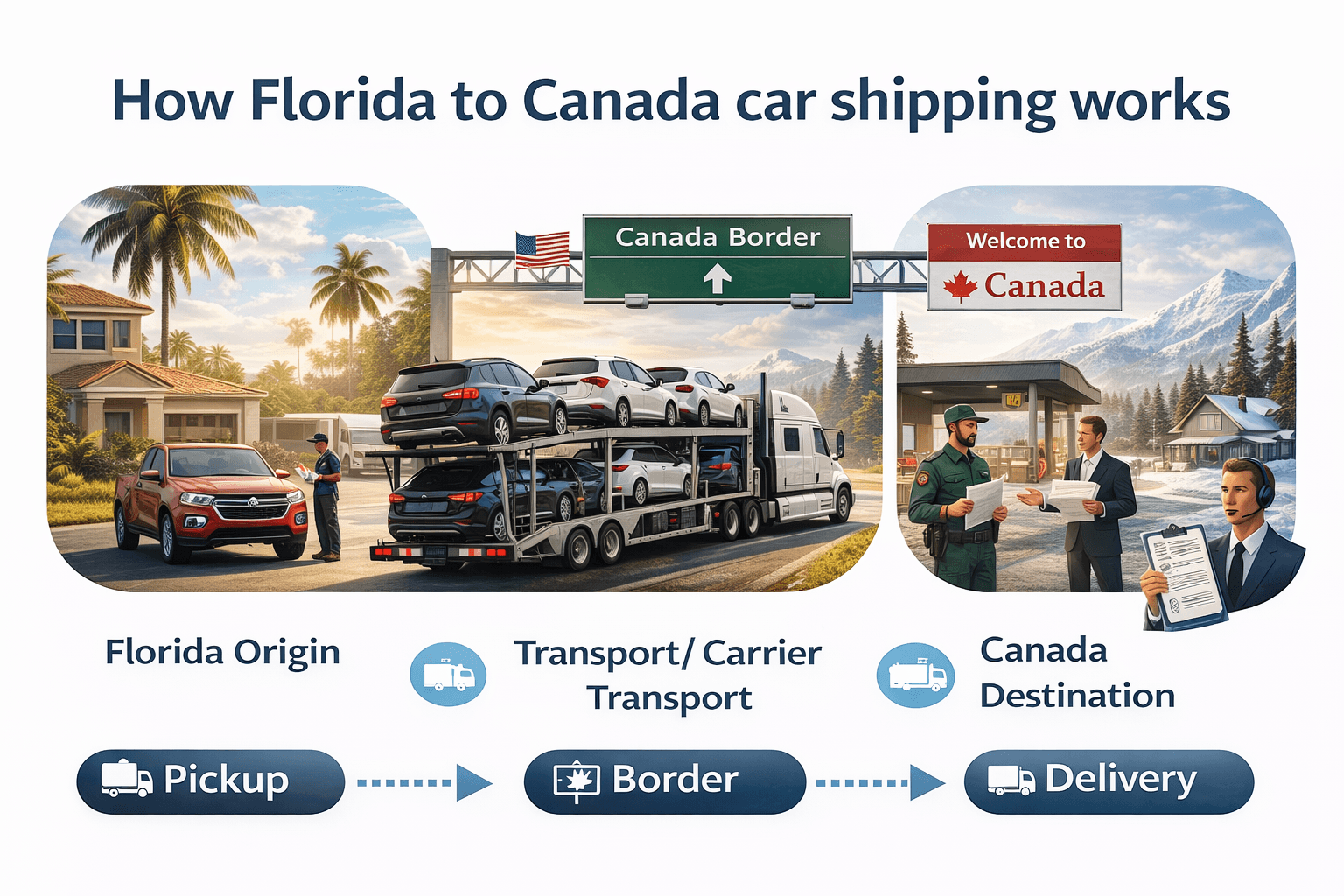
Shipping your car from Florida to Canada typically begins with booking your transport through a licensed carrier or broker. Once your order is confirmed, a driver is assigned to pick up your vehicle from your specified location in Florida—whether that’s a residence, dealership, or business.
From there, your vehicle is transported via open or enclosed carrier toward the Canadian border. Common routes include crossings in states like Michigan (Detroit/Windsor), New York (Buffalo/Toronto), or Washington (for western destinations). The route depends on your final destination in Canada.
At the border, customs clearance becomes the most critical step. Your vehicle must comply with Canadian import regulations, and all required documentation must be submitted in advance. The carrier or a customs broker typically assists with this process, ensuring your vehicle is cleared without unnecessary delays.
Once cleared, your vehicle continues to its destination in Canada, where it is delivered to your specified address or a nearby terminal.
For a broader overview of similar routes and logistics, explore our cross-border car shipping guides.
Cost factors that affect this route
Shipping a car from Florida to Canada can vary widely in cost depending on several key factors. Understanding these helps you estimate your budget more accurately.
Distance and destination
The farther your destination in Canada, the higher the cost. Shipping from Miami to Toronto will typically cost less than shipping to Vancouver or Calgary due to shorter distance and more common routes.
Vehicle size and weight
Larger vehicles like SUVs, trucks, or vans take up more space on the carrier and add weight, which increases shipping costs compared to smaller sedans.
Transport type (open vs. enclosed)
- Open transport is the most affordable and commonly used option.
- Enclosed transport offers added protection from weather and road debris but comes at a higher price—ideal for luxury or classic vehicles.
Seasonality
Shipping demand fluctuates throughout the year. Winter months may increase costs due to weather challenges, while snowbirds traveling between Florida and Canada can also drive up demand during peak seasons.
Pickup and delivery locations
Urban areas are typically cheaper due to easier access and higher carrier availability. Rural or remote locations may require additional fees.
Customs and import fees
While not always included in shipping quotes, duties, taxes (such as GST/HST), and compliance modifications (if needed) can add to the total cost.
For location-specific details, you can also visit the Florida shipping page to better understand regional logistics.
Transit time and border-crossing expectations
Shipping a car from Florida to Canada usually takes between 5 to 10 days, depending on your exact pickup and delivery points.
Here’s a general breakdown:
- Pickup scheduling: 1–3 days after booking
- Transit time (Florida to border): 3–6 days
- Customs clearance: 1–2 days (can vary)
- Final delivery in Canada: 1–3 days
Border crossing is often the most unpredictable part of the journey. Delays can occur if paperwork is incomplete, if inspections are required, or if there are seasonal backlogs.
To minimize delays:
- Ensure all documents are submitted in advance
- Double-check vehicle eligibility for import into Canada
- Work with a carrier experienced in cross-border shipping
Weather conditions, especially during winter, can also affect transit times, particularly in northern regions.
Documents and vehicle prep before pickup
Proper documentation is essential when shipping a vehicle internationally. Missing or incorrect paperwork can delay your shipment at the border.
Required documents typically include:
- Original vehicle title (or lienholder authorization if financed)
- Bill of sale (if recently purchased)
- Valid government-issued ID
- Export declaration (filed through U.S. Customs)
- Import forms required by Canadian authorities
Depending on the vehicle, you may also need to verify compliance with Canadian safety and emissions standards.
Vehicle preparation tips:
- Clean your car thoroughly for inspection
- Remove personal belongings (they are usually not allowed during transport)
- Disable alarms to avoid disruptions
- Keep fuel level at about 1/4 tank
- Take photos of your vehicle to document its condition before pickup
Advance preparation ensures a smoother pickup and reduces the risk of issues during transport.
How to choose the right carrier for this lane
Choosing the right transport partner can make a significant difference in your overall experience. Not all carriers specialize in cross-border shipping, so it’s important to select one with the right expertise.
Look for these key qualities:
Cross-border experience
Ensure the company has proven experience shipping vehicles between the U.S. and Canada. This reduces the risk of delays due to unfamiliarity with customs procedures.
Licensing and insurance
Verify that the carrier is properly licensed and offers adequate insurance coverage for your vehicle.
Transparent pricing
A reliable company provides clear, upfront pricing without hidden fees. Be cautious of quotes that seem unusually low.
Customer support
Responsive communication is essential, especially when dealing with international logistics.
Flexible transport options
The ability to choose between open and enclosed transport, as well as door-to-door or terminal delivery, gives you more control over your shipment.
Before booking, compare quotes and services carefully. When you’re ready, you can get a cross-border car shipping quote tailored to your route.
Practical tips for a smoother experience
- Book early to secure better rates and scheduling flexibility
- Avoid peak seasons if possible to reduce costs and delays
- Work with a customs broker for complex shipments
- Confirm import eligibility before shipping your vehicle
- Stay informed throughout the process with regular updates from your carrier
Taking a proactive approach helps you avoid common pitfalls and ensures your shipment stays on track.
Final thoughts and next steps
Shipping a car from Florida to Canada doesn’t have to be complicated when you understand the process and plan ahead. By preparing the right documents, choosing a qualified carrier, and staying informed throughout the journey, you can ensure a smooth and efficient experience.
When you’re ready to move forward, take the next step and request a quote tailored to your route. US Canada Auto Transport specializes in cross-border vehicle shipping, helping ensure your car reaches Canada safely and on time.
FAQ: Shipping a car from Florida to Canada
How much does it cost to ship a car from Florida to Canada?
Costs typically range from $1,200 to $2,500 or more, depending on distance, vehicle type, and transport method.
How long does the process take?
Most shipments take between 5 to 10 days, though delays can occur at the border.
Do you need a customs broker?
While not always required, a customs broker can simplify the process and help avoid delays, especially for first-time shippers.
Can personal items be left in the car?
Most carriers prohibit personal belongings due to customs regulations and liability concerns.
Is enclosed transport necessary?
Not always. Enclosed transport is recommended for high-value, luxury, or classic vehicles that require extra protection.
What happens if your car doesn’t meet Canadian standards?
You may need to make modifications or your vehicle could be denied entry. Always check compliance before shipping.