
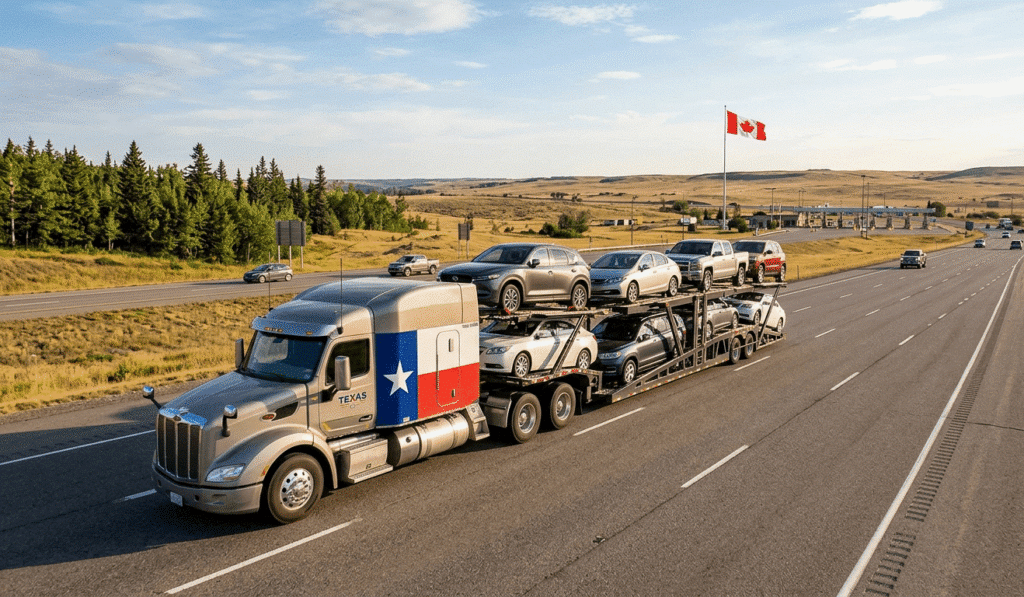
Shipping a vehicle across the U.S.–Canada border can feel complex at first, especially when you’re navigating customs requirements, long-distance transport, and timing considerations. Whether you’re relocating, selling a car, or sending a vehicle to family, understanding the process helps you avoid delays and unexpected costs.
This guide walks you through everything you need to know when you ship a car from Texas to Canada—from how the process works to preparing your vehicle and choosing the right carrier.
How Texas to Canada car shipping works
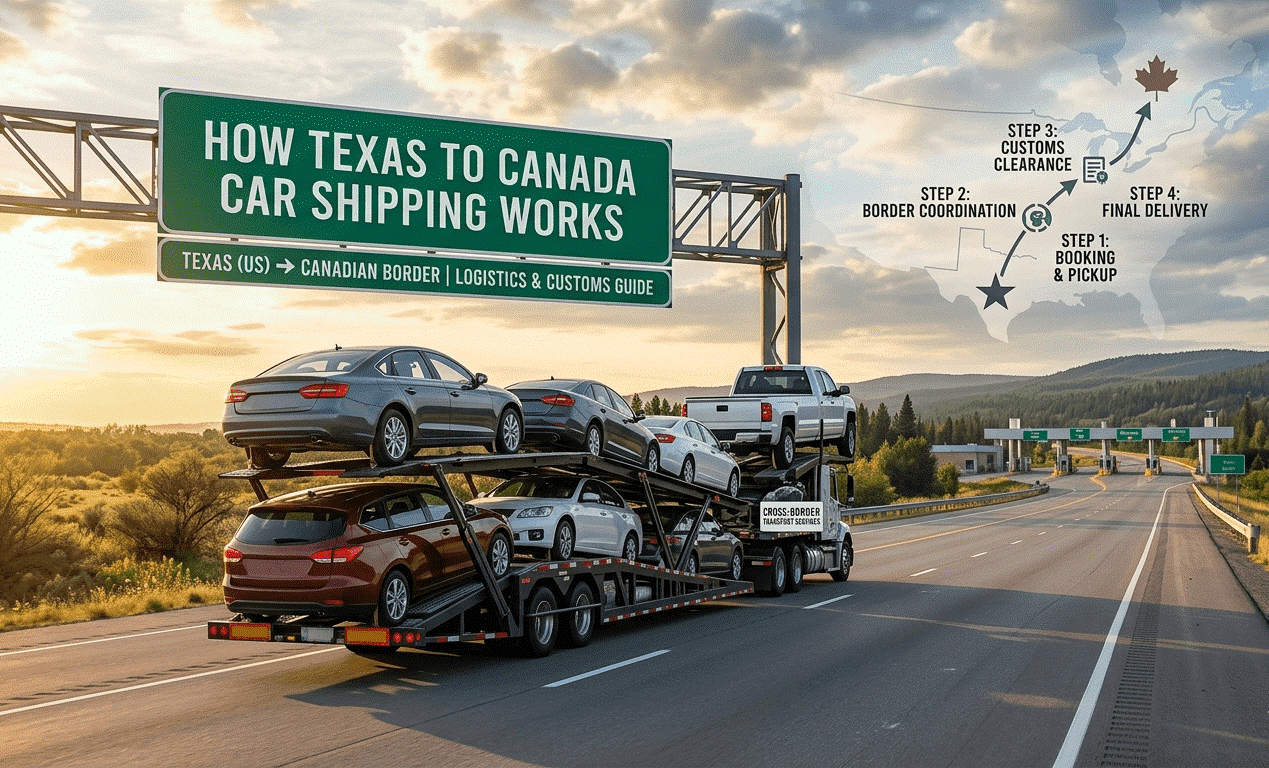
Shipping your car from Texas to Canada involves more than just loading it onto a truck. Because it’s a cross-border move, the process includes logistics coordination, customs clearance, and compliance with Canadian import regulations.
Here’s how it typically works:
1. Request a quote and book your shipment
Start by reviewing our cross-border car shipping guides to understand your options. Then, provide details about your vehicle, pickup location in Texas, and delivery destination in Canada.
2. Schedule pickup in Texas
Once booked, a carrier is assigned to pick up your vehicle from your specified location—whether that’s a major city like Houston, Dallas, or a smaller town. You can also explore your region through the Texas shipping page for route-specific insights.
3. Transport to the border
Your vehicle is transported via open or enclosed carrier toward a designated U.S.–Canada border crossing. The carrier coordinates timing to align with customs clearance schedules.
4. Customs clearance and documentation
Before crossing, required documents are submitted to U.S. and Canadian authorities. This step ensures your vehicle complies with import regulations.
5. Delivery in Canada
After clearance, the vehicle continues to its final destination—delivered directly to your address or a nearby terminal.
Working with a cross-border specialist ensures each step is handled properly, minimizing risks of delays or compliance issues.
Cost factors that affect this route
Shipping a car from Texas to Canada varies in cost depending on several key factors. Understanding these helps you plan your budget more accurately.
Distance and route complexity
Texas is a large state, and shipping from southern areas like San Antonio or Austin to Canada typically costs more than shipping from northern Texas due to longer distances.
Vehicle type and size
Larger vehicles such as trucks, SUVs, and vans take up more space on a carrier and weigh more, increasing the shipping cost compared to compact cars.
Transport method
- Open transport is more affordable and commonly used.
- Enclosed transport offers extra protection but comes at a higher price—ideal for luxury, classic, or high-value vehicles.
Seasonal demand
Shipping rates can rise during peak seasons, such as summer relocations or winter snowbird migrations. Weather conditions can also impact routes and timelines.
Pickup and delivery flexibility
Door-to-door service is convenient but may cost more than terminal-to-terminal shipping. Flexible pickup dates can sometimes help reduce pricing.
Customs and import fees
While shipping costs cover transportation, you may also encounter import duties, taxes, and compliance fees in Canada depending on your vehicle’s origin and specifications.
To get accurate pricing tailored to your route, it’s best to get a cross-border car shipping quote.
Transit time and border-crossing expectations
Timing is an important part of planning your shipment. While exact delivery windows vary, most shipments from Texas to Canada follow a general timeline.
Typical transit time
- 5 to 10 days for transport, depending on the distance and destination city in Canada
- Additional 1 to 3 days for customs clearance and scheduling
Factors that influence delivery time:
- Distance to destination: Shipping to Ontario or Quebec is typically faster than to western provinces like British Columbia.
- Border processing times: Delays can occur if documentation is incomplete or inspections are required.
- Weather conditions: Snow, storms, or extreme temperatures can affect transport routes and schedules.
- Carrier availability: High-demand periods may extend pickup or delivery timelines.
What to expect at the border
Your carrier or broker submits documents in advance to ensure smooth processing. However, inspections can still happen randomly. Being prepared with accurate paperwork reduces the likelihood of delays.
Planning ahead and allowing some flexibility ensures your shipment stays on track.
Documents and vehicle prep before pickup
Proper documentation and preparation are critical when shipping a car internationally. Missing or incorrect paperwork can delay your shipment at the border.
Required documents include:
- Original vehicle title (or a certified copy)
- Bill of sale (if applicable)
- Valid government-issued ID
- Letter of authorization (if someone else is handling the shipment)
- Compliance documents for Canadian import regulations
For U.S. export, the title must typically be submitted to U.S. Customs at least 72 hours before export.
Vehicle preparation checklist:
- Clean your vehicle: This makes inspection easier and helps document any pre-existing damage.
- Remove personal belongings: Most carriers do not allow personal items inside the vehicle.
- Check for leaks and mechanical issues: Your vehicle should be in operable condition unless you’ve arranged for non-running transport.
- Leave about ¼ tank of fuel: Enough for loading and unloading, but not too much to add unnecessary weight.
- Disable alarms and secure loose parts: Prevents unnecessary disruptions during transit.
Taking these steps ensures your vehicle is ready for a smooth pickup and compliant border crossing.
How to choose the right carrier for this lane
Not all car shipping companies are equipped to handle international transport. Choosing the right carrier makes a significant difference in reliability, cost, and overall experience.
Look for cross-border expertise
Shipping between the U.S. and Canada requires familiarity with customs procedures and regulatory requirements. A specialized carrier can manage documentation and compliance efficiently.
Verify licensing and insurance
Ensure the company is properly licensed and offers sufficient insurance coverage for your vehicle during transit.
Check customer reviews and track record
Reliable carriers have consistent positive feedback and transparent communication throughout the shipping process.
Evaluate communication and support
You should receive clear updates about pickup, transit, and delivery. Responsive support is especially important when dealing with cross-border logistics.
Compare quotes carefully
Don’t choose based on price alone. Look at what’s included—such as customs handling, insurance, and delivery options—to understand the full value.
Selecting a trusted carrier reduces stress and helps ensure your vehicle arrives safely and on time.
Practical tips for a smooth shipping experience
- Book early to secure better rates and availability
- Double-check all documents before submission
- Stay flexible with pickup and delivery dates when possible
- Communicate clearly with your carrier about special requirements
- Track your shipment and stay updated throughout the process
Small details can make a big difference in ensuring a hassle-free experience.
Frequently Asked Questions (FAQ)
Q1: How much does it cost to ship a car from Texas to Canada?
Costs typically range from $1,200 to $2,500 depending on distance, vehicle type, and transport method. Enclosed shipping and remote locations may increase the price.
Q2: How long does shipping take?
Most shipments take 5 to 10 days, plus additional time for customs clearance and scheduling.
Q3: Do I need a customs broker?
Many carriers include customs coordination, but a broker may be required for certain shipments or complex cases.
Q4: Can I ship a non-running vehicle?
Yes, but it requires special equipment and may increase the cost.
Q5: What vehicles are allowed into Canada?
Vehicles must comply with Canadian import regulations, including safety and emissions standards.